Adoor Gopalakrishnan
Biography
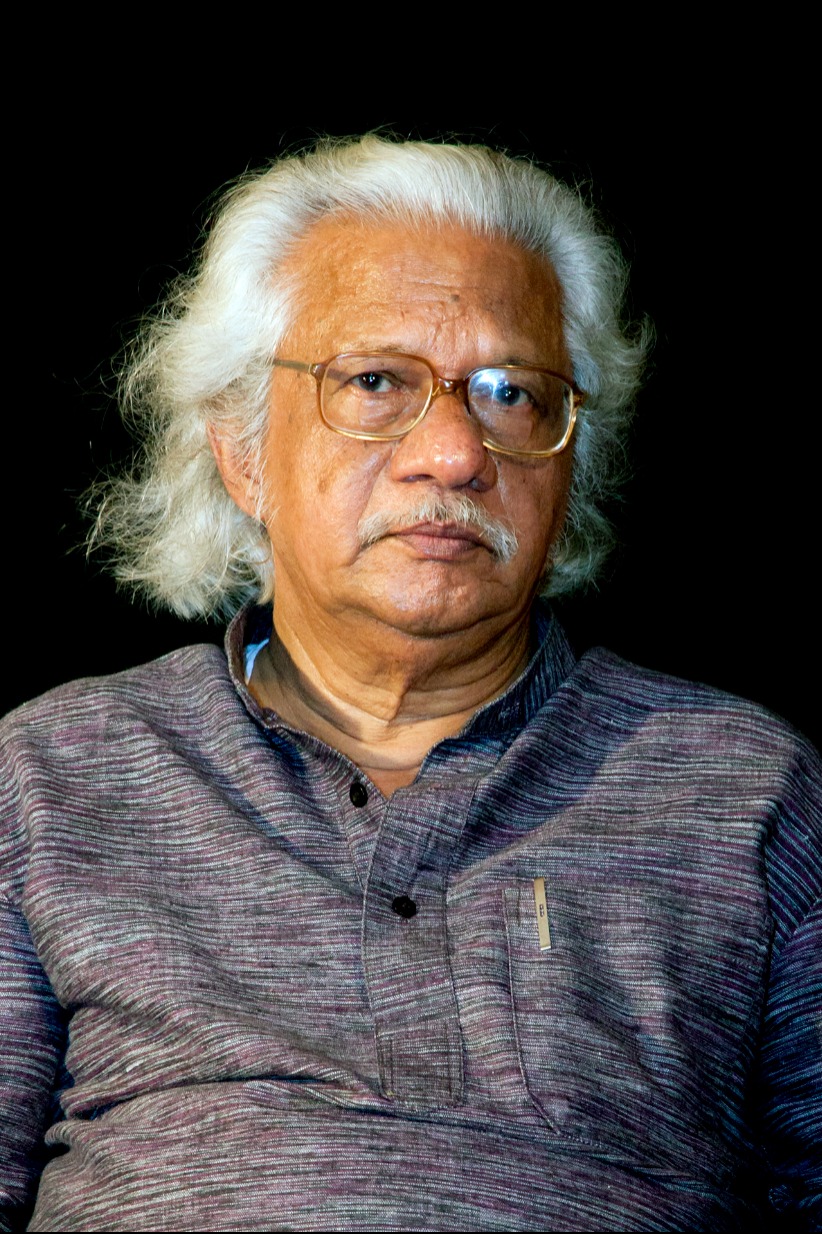
Moutatthu Gopalakrishnan Unnithan (born July 3, 1941), known around the world as Adoor Gopalakrishnan, stands as one of the most distinguished auteurs in global art cinema. Widely regarded as the spiritual successor to Satyajit Ray, Adoor spearheaded the "New Wave" (Parallel Cinema) movement in Malayalam film during the early 1970s. Over a career spanning more than five decades, his minimalist storytelling, profound psychological realism, and deliberate pacing transformed Indian cinema into an internationally recognized art form.
Early Life and Educational Foundations
Adoor was born into a family that patronized traditional Kathakali theater in Adoor, in the former princely state of Travancore (present-day Kerala). Immersed in dramatic arts from early childhood, he began acting in amateur theater productions at the age of eight.
After completing his degree in Political Science from Gandhigram Rural Institute in Tamil Nadu, he made a pivotal career turn in 1962 by enrolling at the newly established Film and Television Institute of India (FTII) in Pune. Graduating with a specialization in Screenplay Writing and Film Direction in 1965, he returned to Kerala equipped with a radical visual philosophy that rejected the melodramatic and song-heavy conventions of commercial cinema.
Establishing the Eco-System: Chitralekha Film Co-operative
Recognizing that art cinema required a supportive ecosystem to survive, Adoor co-founded the Chitralekha Film Co-operative in 1965 alongside fellow FTII graduates. Chitralekha was India’s first film cooperative dedicated to producing, distributing, and exhibiting non-commercial, meaningful cinema. The cooperative established Kerala's first film society—the Chitralekha Film Society—which exposed local audiences to world cinema masters like Ingmar Bergman, Akira Kurosawa, and Federico Fellini.
Major Career Milestones and Masterworks
Adoor has directed 12 feature films, alongside numerous acclaimed documentaries and short subjects. Rather than producing films frequently, he approaches each project with painstaking care, often writing separate audio scripts to capture ambient soundscapes and natural silences.
Landmark Feature Films
Swayamvaram (One's Own Choice, 1972): Adoor’s feature directorial debut revolutionized Malayalam cinema. Exploring the struggles of a young couple defying social norms in a bleak urban environment, it won four National Film Awards (including Best Film and Best Director) and signaled the arrival of Parallel Cinema in South India.
Kodiyettam (The Ascent, 1977): A poignant study of a feckless rural youth named Shankaran (played by Bharat Gopy), detailing his gradual awakening to responsibility against the backdrop of a temple festival.
Elippathayam (The Rat-Trap, 1981): Widely considered his international masterpiece. The film depicts Unni, an autocratic yet helpless middle-aged man trapped in the decaying web of Kerala's feudal landlord system. It earned the prestigious Sutherland Trophy at the 1982 London Film Festival and the British Film Institute Award for the most original and imaginative film of the year.
Mukhamukham (Face to Face, 1984): A complex political commentary examining the internal disillusionment and romanticized ideals within the left-wing political movements of Kerala.
Anantaram (Monologue, 1987): An intricate narrative exploring perception, memory, and psychological isolation through the eyes of a gifted orphan boy.
Mathilukal (Walls, 1989): Based on the semi-autobiographical novel by Vaikom Muhammad Basheer, this film stars Mammootty as a political prisoner who falls in love with the voice of a female inmate across a high prison wall.
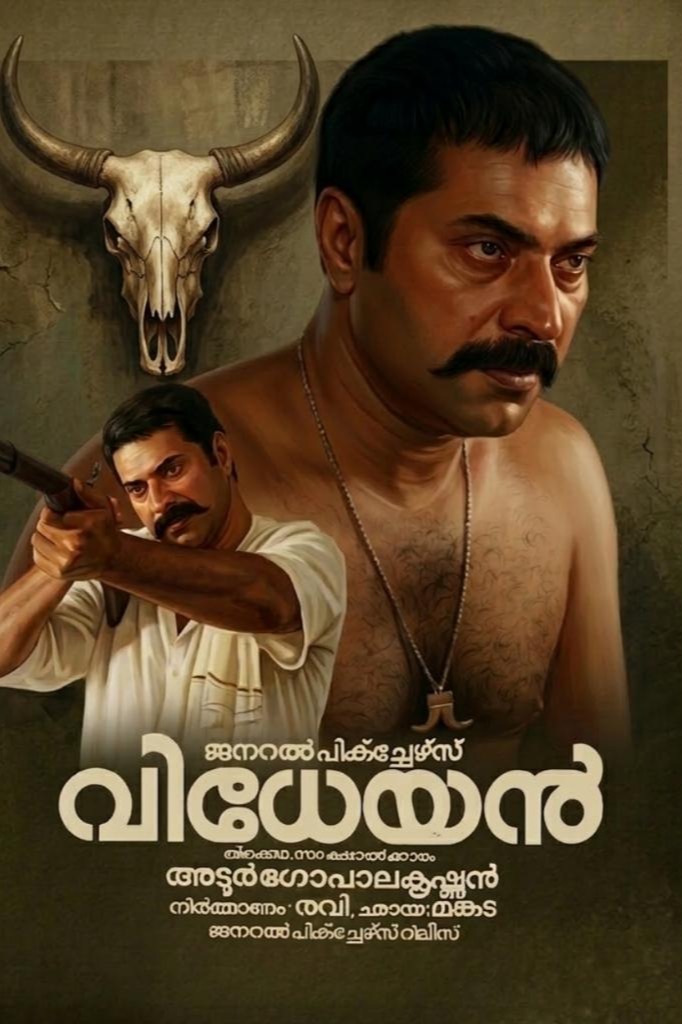
Vidheyan (The Servile, 1993): A chilling exploration of power dynamics, servitude, and existential fear between a tyrannical landlord (Mammootty) and his subservient migrant worker (M.P. Gopakumar).
Kathapurushan (The Man of the Story, 1995): An epic chronicle tracing a man's life alongside the socio-political transformations of modern Kerala.
Nizhalkkuthu (Shadow Kill, 2002), Naalu Pennungal (2007), & Oru Pennum Randaanum (2008): Deeply empathetic studies focusing on executioner psychology, female agency, morality, and justice in historic settings.
Pinneyum (Once Again, 2016): A dark romantic drama examining how greed corrupts human relationships, starring Dileep and Kavya Madhavan.
Major Honors and Global Recognition
Adoor Gopalakrishnan is one of the most decorated filmmakers in Indian history, having won 16 National Film Awards and 17 Kerala State Film Awards.
Award / Honor
Year
Conferred By / Details
Padma Shri
1984
Government of India
Légion d'honneur (Commander of Arts and Letters)
2004
Government of France (Highest cultural honor)
Dadasaheb Phalke Award
2004
India’s highest award in cinema for lifetime achievement
Padma Vibhushan
2006
India’s second-highest civilian honor
J.C. Daniel Award
2017
Government of Kerala’s highest award for lifetime contribution to cinema
FIPRESCI (International Critics Prize)
Won 6 Times
Consecutive victories for feature films like Mukhamukham, Anantaram, Mathilukal, and Vidheyan
In 2013, the University of Wisconsin-Milwaukee established The Adoor Gopalakrishnan Film Archive and Research Fund to preserve his film prints and encourage academic study of his contributions to cinematic literature.
Personal Life and Contemporary Standing
Adoor was married to Sunanda until her passing in 2015. Their daughter, Aswathi Thirunal, works in the Indian Police Service (IPS). He continues to reside in Thiruvananthapuram, Kerala, maintaining an active role as an author, cultural commentator, and mentor to upcoming independent filmmakers.