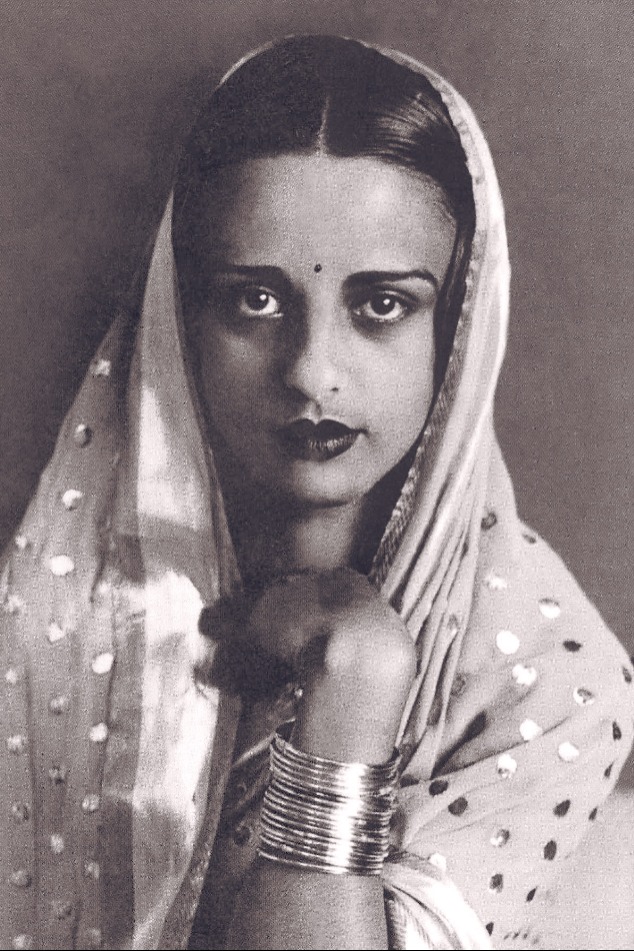
Personal info
Known for
Ultimate Talent
Gender
Female
Birthday
30 January
Location
Budapest, Hungary
Edit pageAmrita Sher-Gil
Biography
Amrita Sher-Gil was an Indian painter widely regarded as one of the pioneers of modern Indian art. Known for combining European artistic techniques with Indian subjects and traditions, she created paintings portraying ordinary people, rural communities, women and everyday life. Her distinctive style featured rich colours, expressive figures and strong compositions.
Born on January 30, 1913, in Budapest, Hungary, she was the daughter of Umrao Singh Sher-Gil, a Sikh scholar and photographer, and Marie Antoinette, a Hungarian musician. In 1921, her family moved to India and settled in Shimla. She developed an interest in painting at an early age and received initial artistic guidance from her uncle, Ervin Baktay.
In 1929, Sher-Gil travelled to Paris to pursue formal art education. She studied at the Académie de la Grande Chaumière and later at the École des Beaux-Arts under Lucien Simon. During her time in Europe, she was influenced by artists such as Paul Cézanne, Paul Gauguin and Amedeo Modigliani. Her painting Young Girls (1932) received a gold medal at the Paris Salon, bringing her considerable recognition.
In 1934, she returned to India, where she developed a distinctive artistic approach inspired by Indian traditions, rural life and the works of Ajanta. She travelled extensively across the country, observing the lives of ordinary people and incorporating their experiences into her paintings. Her works often portrayed the emotions, struggles and dignity of Indian women and rural communities.
Notable Works
Some of her most celebrated paintings include Three Girls (1935), Bride's Toilet (1937), Brahmacharis (1937), South Indian Villagers Going to Market (1937), Village Scene (1938), The Story Teller (1937), Two Women (1939) and The Bride (1940).
Recognition and Achievements
Sher-Gil is considered one of the most influential figures in the history of modern Indian painting. Her artistic achievements helped introduce new approaches to Indian art by blending Western modernism with Indian cultural themes. In 1976, the Government of India declared her works national art treasures.
Death and Legacy
Amrita Sher-Gil died on December 5, 1941, in Lahore, British India (now Pakistan), at the age of 28. Despite her short life, she produced an influential body of work that transformed Indian modern art. She remains celebrated as one of India's most important women artists.