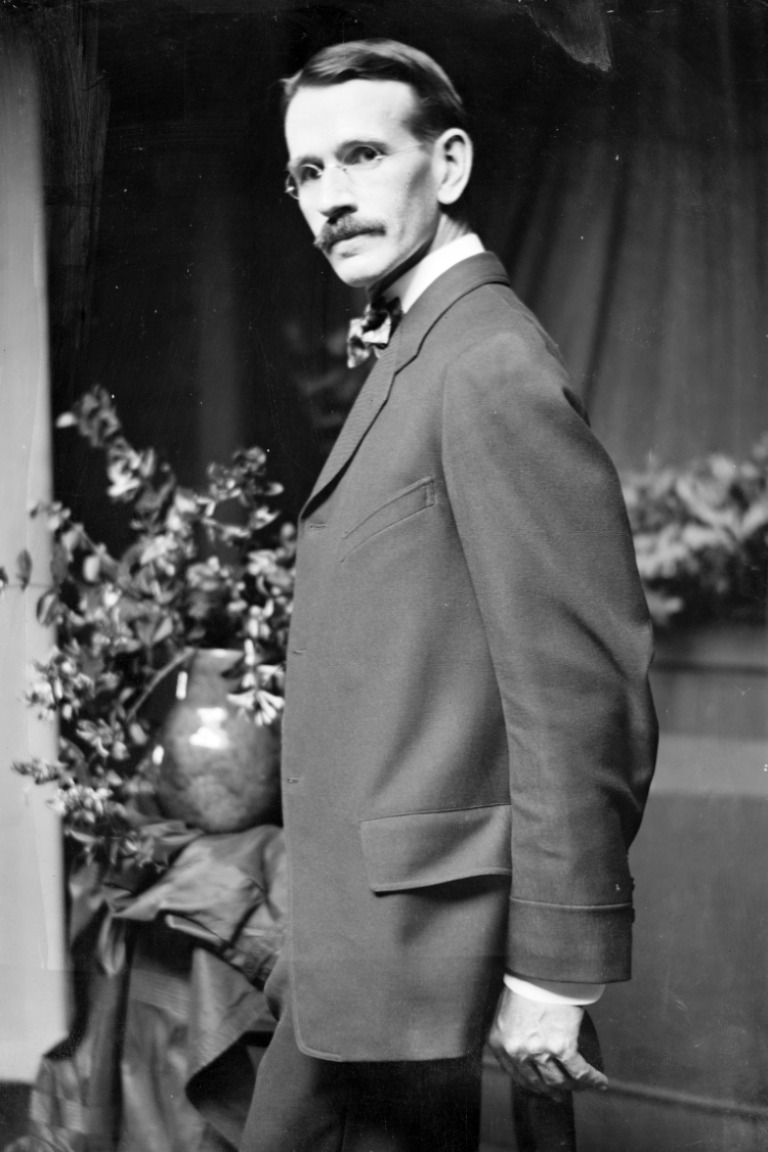
Personal info
Known for
Ultimate Talent
Gender
Male
Birthday
26 September
Location
New York, United States
Edit pageArthur B. Davies
Biography
Arthur Bowen Davies was an American painter, printmaker, and influential arts organizer who played a central role in introducing modern art to the United States. Known for his dreamlike, symbolist imagery and lyrical figures, Davies also helped shape the direction of American art through his leadership in one of the most important exhibitions of the 20th century.
Early Life and Education
Arthur B. Davies was born on September 26, 1862, in Utica, New York. From an early age, he showed strong artistic ability and pursued formal training to refine his skills. Davies studied at the Art Students League of New York, where he received a solid foundation in academic drawing and composition.
Though grounded in traditional techniques, Davies was intellectually curious and open to new ideas, qualities that would later define both his art and his influence on American modernism.
Artistic Career and Development
Davies’s early paintings were influenced by classical mythology and Symbolism. He often depicted idealized nude figures in pastoral or imaginary landscapes, creating scenes that feel timeless and meditative. His work emphasized harmony, rhythm, and spiritual beauty rather than realistic representation.
Unlike many of his contemporaries, Davies was less concerned with depicting modern life directly. Instead, his paintings explore inner worlds, mythic narratives, and emotional states, offering viewers a retreat from the material realities of the industrial age.
Role in American Modernism
Arthur B. Davies is perhaps best known not only as an artist but as a visionary organizer. He was a leading force behind the 1913 International Exhibition of Modern Art, commonly known as the Armory Show. As president of the Association of American Painters and Sculptors, Davies played a key role in bringing European modernist works by artists such as Picasso, Matisse, and Duchamp to American audiences.
The Armory Show profoundly changed the course of American art, introducing radical new styles and sparking widespread debate. Davies’s support of modernism helped legitimize experimental art in the United States, even though his own style remained largely symbolic and classical.
Artistic Style and Themes
Davies’s paintings are characterized by soft contours, muted colors, and graceful figures. His work often features allegorical themes, drawing from classical mythology, literature, and spiritual ideas. The figures in his paintings appear suspended in quiet, dreamlike states, conveying a sense of introspection and emotional balance.
His art bridges the gap between 19th-century Symbolism and early modern abstraction, emphasizing mood and form over narrative clarity.
Personal Life and Later Years
Davies led a complex personal life, maintaining a public image as a respected artist while secretly supporting a second family for many years. Despite this, he remained highly active in artistic circles, continuing to paint, exhibit, and advocate for modern art.
Arthur B. Davies died suddenly on October 24, 1928, while traveling in Italy.