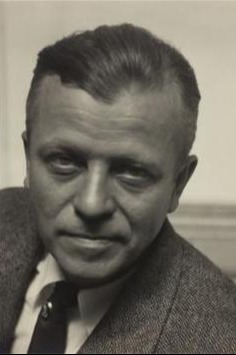
Personal info
Known for
Ultimate Talent
Gender
Male
Birthday
02 August
Location
New York, United States
Edit pageArthur G. Dove
Biography
Arthur G. Dove was an American modernist painter and one of the earliest abstract artists in the United States. Known for translating natural forms into bold, simplified shapes and vibrant colors, Dove played a crucial role in the development of American abstraction in the early 20th century.
Early Life and Education
Arthur Garfield Dove was born on August 2, 1880, in Canandaigua, New York. He initially studied law at Cornell University but soon shifted his focus to art. After graduating, he worked as a commercial illustrator in New York City before traveling to Europe in 1907.
During his time in Paris, Dove encountered avant-garde movements such as Fauvism and early abstraction, which deeply influenced his artistic direction.
Move Toward Abstraction
Upon returning to the United States, Dove began creating some of the first non-objective paintings by an American artist. Unlike European abstractionists who often focused on geometry or industrial themes, Dove’s work remained deeply connected to nature.
He abstracted elements such as:
Sunlight
Water
Trees and foliage
Sound and atmosphere
Rather than painting realistic landscapes, he distilled the essence of natural forms into rhythmic shapes and expressive color harmonies.
Artistic Style
Arthur Dove’s style is characterized by:
Organic, flowing forms
Bold yet harmonious color palettes
Simplified, symbolic representation
Emotional responses to nature
He often worked in oil, pastel, and mixed media, sometimes incorporating unconventional materials. His compositions evoke mood and sensation rather than literal depiction.
Relationship with Alfred Stieglitz
Dove was strongly supported by photographer and art promoter Alfred Stieglitz, who exhibited his work at the influential 291 Gallery in New York. Stieglitz’s patronage helped introduce Dove’s innovative abstraction to American audiences and positioned him among early modernist pioneers.
Later Years
In the 1920s and 1930s, Dove lived in relative isolation, focusing on his art while facing financial challenges and health issues. Despite these difficulties, he continued to experiment and refine his abstract language.
His later works often became darker and more introspective, reflecting both personal struggles and broader social concerns of the time.
Legacy
Arthur G. Dove passed away on November 23, 1946. Though not widely celebrated during his lifetime compared to some contemporaries, he is now recognized as a foundational figure in American abstract art.