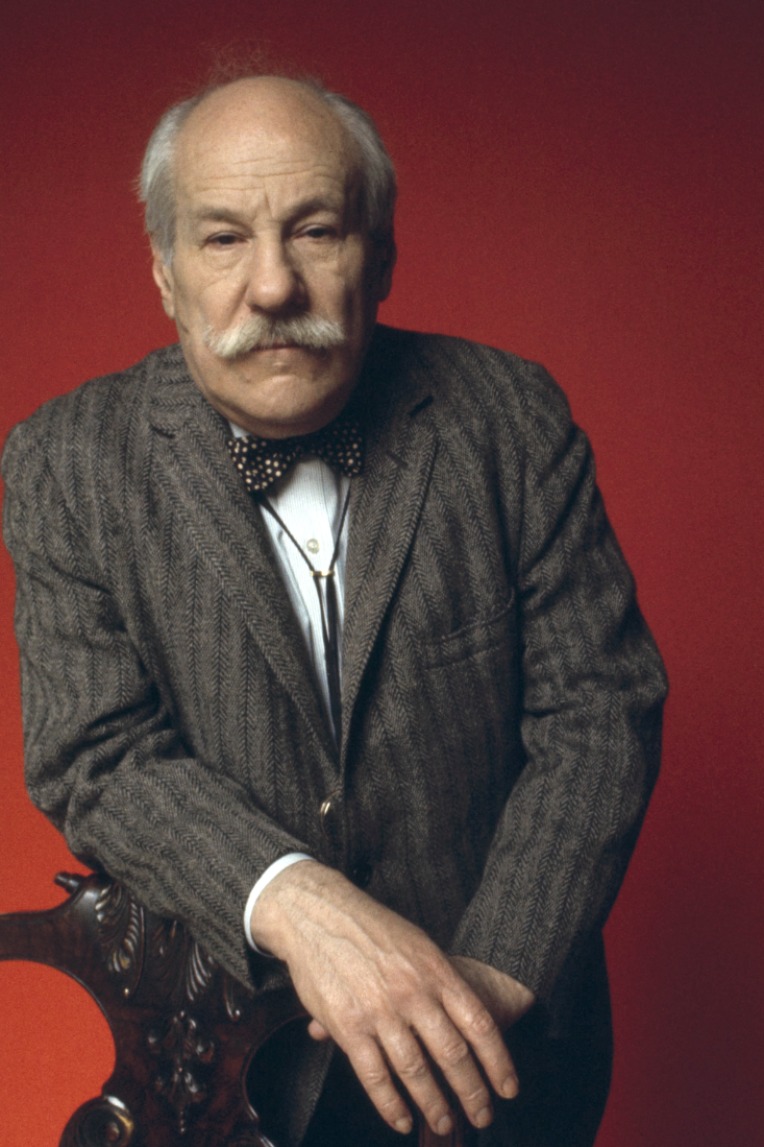
Personal info
Known for
Ultimate Talent
Gender
Male
Birthday
29 January
Location
New York, United States
Edit pageBarnett Newman
Biography
Barnett Newman (January 29, 1905 – July 4, 1970) was an American painter, sculptor, and one of the leading figures of Abstract Expressionism. Known for his large-scale color field paintings and his signature vertical lines called “zips,” Newman developed a revolutionary approach to abstraction that emphasized spirituality, emotion, and the viewer’s personal experience. He played a major role in the development of postwar American art and influenced later movements such as Color Field painting and Minimalism.
Early Life and Education
Barnett Newman was born on January 29, 1905, in New York City, United States, to Jewish immigrant parents from Poland. He grew up in a culturally active environment and developed an early interest in art, philosophy, and literature.
He studied at City College of New York, where he earned a Bachelor of Arts degree in philosophy in 1927. Although he did not initially pursue formal art training, he studied painting independently and became deeply interested in modern European artists, including Pablo Picasso, Henri Matisse, and the Surrealists.
Career
Newman began his career as an artist, writer, and critic during the 1930s. Before becoming widely recognized as a painter, he worked as an art critic and wrote essays about modern art and the role of artists in society.
In the 1940s, Newman became associated with the emerging New York School and developed friendships with artists such as Mark Rothko, Jackson Pollock, and Willem de Kooning. Together, they helped establish New York as the center of the international art world.
Newman's breakthrough came in the late 1940s when he created his mature style of large-scale abstract paintings featuring fields of intense color divided by narrow vertical bands. He called these vertical elements “zips,” describing them not as boundaries but as active elements that created structure and energy within the paintings.
His famous series Onement (1948–1953) marked an important turning point in his career. These paintings explored ideas of existence, individuality, and human presence.
During the 1950s and 1960s, Newman continued creating monumental paintings and sculptures. His works challenged traditional ideas about scale, encouraging viewers to physically experience the artwork.
Artistic Style
Barnett Newman's work is characterized by:
- Color Field painting.
- Large-scale abstract compositions.
- Vertical “zip” lines.
- Minimal geometric forms.
- Exploration of spirituality and human experience.
- Emphasis on color and space.
- Monumental scale.
His paintings often sought to create a direct emotional and intellectual connection between the artwork and the viewer.
Notable Works
Some of Barnett Newman's most important works include:
- Onement I (1948)
- Vir Heroicus Sublimis (1950–1951)
- Adam (1951–1952)
- Eve (1950–1952)
- The Stations of the Cross series (1958–1966)
- Who’s Afraid of Red, Yellow and Blue series (1966–1970)
These works represent his exploration of color, scale, and philosophical ideas.
Awards and Recognition
Newman received major recognition later in his career. His works are included in leading museum collections worldwide, including the Museum of Modern Art (MoMA), the Solomon R. Guggenheim Museum, the Whitney Museum of American Art, the Tate Modern, and the National Gallery of Art.
His influence grew significantly after his death, and he is now considered one of the most important figures in 20th-century American painting.
Personal Life
Barnett Newman married Annalee Greenhouse in 1936, and they remained together throughout his life. He was known for his intellectual interests and his belief that art could address profound questions about human existence.
Although he experienced periods of limited public recognition and criticism during his career, he remained committed to his artistic vision.
Death
Barnett Newman died on July 4, 1970, in New York City, at the age of 65, following a heart attack.