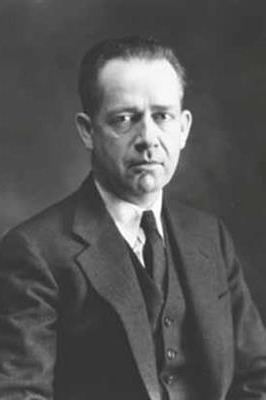
Personal info
Known for
Ultimate Talent
Gender
Male
Birthday
09 April
Location
Ohio, United States
Edit pageCharles Burchfield
Biography
Charles Ephraim Burchfield was an American painter and watercolorist best known for his emotionally charged landscapes and visionary interpretations of nature. His work stands apart in American art for its expressive intensity, symbolic imagery, and deeply personal response to the natural world. Blending realism with abstraction and mysticism, Burchfield created a unique visual language that transformed ordinary environments into powerful psychological landscapes.
Early Life and Education
Charles Burchfield was born on April 9, 1893, in Ashtabula Harbor, Ohio, and was raised primarily in Salem, Ohio. From an early age, he showed a strong interest in both art and nature. He spent long hours observing plants, insects, weather, and rural surroundings, developing a sensitivity to natural forms that would later define his work.
Burchfield studied at the Cleveland School of Art from 1912 to 1916. During this period, he was influenced by Art Nouveau, Symbolism, and Post-Impressionism, as well as by Asian art and American folk traditions. He kept extensive journals, recording not only visual observations but also emotional and spiritual responses to the environment.
Early Career and Development
In the years following his education, Burchfield produced a remarkable series of watercolor paintings between 1915 and 1917 that are often considered among his most innovative works. These early pieces feature vibrating lines, anthropomorphic plants, and landscapes that seem alive with sound and movement. Nature in these paintings appears animated and expressive, reflecting Burchfield’s belief that the natural world carried emotional and spiritual meaning.
During World War I, Burchfield served briefly in the U.S. Army, after which he worked as a designer in the wallpaper industry. Though this commercial work limited his time for painting, it provided him with financial stability and further refined his sense of pattern and design.
Mature Career and Artistic Style
In the 1920s and 1930s, Burchfield shifted toward a more representational style, creating detailed watercolors of houses, factories, and small towns. These works often convey a sense of isolation, anxiety, or quiet unease, reflecting the social and psychological climate of the era.
Later in his career, particularly from the 1940s onward, Burchfield returned to a more expressive and visionary approach. His mature works combine elements of his early symbolic style with representational imagery, resulting in large-scale compositions filled with dynamic brushwork, intense color, and spiritual symbolism. Trees pulse with energy, skies radiate emotion, and landscapes seem infused with unseen forces.
Watercolor was Burchfield’s primary medium, though he used it with a density and scale more commonly associated with oil painting. His innovative techniques expanded the expressive potential of watercolor and influenced generations of artists.
Themes and Influences
Recurring themes in Burchfield’s work include the spiritual power of nature, human alienation, the passage of time, and the emotional resonance of place. He often portrayed modest, overlooked environments—backyards, swamps, rural roads—and elevated them into subjects of profound artistic significance.
Burchfield’s art was deeply introspective, shaped by his personal beliefs, psychological struggles, and fascination with mysticism. He viewed painting as a means of expressing inner states and connecting with larger universal truths.
Recognition and Legacy
Though his work did not always align with dominant modernist trends, Burchfield gained increasing recognition later in his life. Major museums collected his work, and retrospectives helped establish his importance in American art history.
Charles Burchfield died on January 10, 1967, in West Seneca, New York. His legacy is preserved through his influential body of work and through institutions dedicated to studying and exhibiting his art.
Today, Burchfield is regarded as one of America’s most original artists. His paintings continue to resonate for their emotional honesty, spiritual depth, and visionary portrayal of the American landscape.