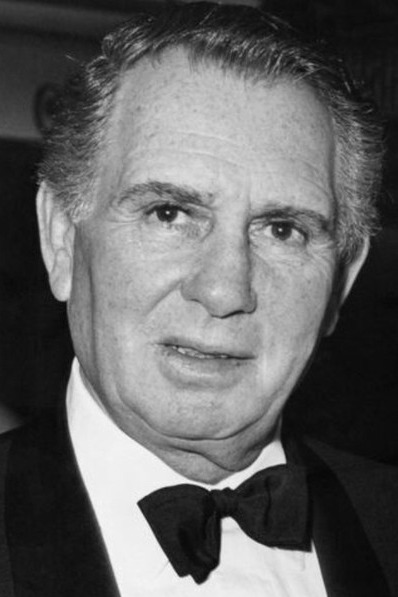
Personal info
Known for
Producer
Gender
Male
Birthday
26 April
Location
New York, United States
Edit pageCharles K. Feldman
Biography
Charles K. Feldman was an influential American talent agent, attorney, and film producer whose career played an important role in the development of Hollywood's modern star and packaging system. He became particularly famous for representing major Hollywood personalities and later producing or overseeing several important films, including The Glass Menagerie, A Streetcar Named Desire, The Seven Year Itch, and Casino Royale.
Early Life
Charles K. Feldman was born on April 26, 1904, in New York City. His birth name is variously recorded as Charles Gould and Charles Kenneth Gould. He eventually moved into the entertainment industry after studying law and working in the film business to finance his education.
While pursuing his education, Feldman worked as a postman and also in studio camera departments. His early experience around filmmaking gave him an understanding of both the technical and business sides of Hollywood. He later became a lawyer before deciding to pursue a career as a talent agent.
Career as a Talent Agent
Feldman became one of Hollywood's most prominent talent agents and founded the Famous Artists talent agency. He represented hundreds of performers and filmmakers, including major stars such as Greta Garbo, Marlene Dietrich, Susan Hayward, Lana Turner, Ida Lupino, John Wayne, Richard Burton, Charles Boyer, William Holden, and Kirk Douglas.
One of Feldman's most important innovations was his promotion of the one-picture deal instead of the traditional long-term studio contract. He also pioneered the Hollywood package deal, bringing together a story, writer, director, and star and then negotiating the resulting project with a studio. This approach became an influential part of the film industry's business structure.
During World War II, Feldman collaborated with filmmaker Howard Hawks through H-F Productions. Their business activities included packaging projects for studios, and their association eventually contributed to films such as Red River.
Career as a Producer
Feldman eventually moved from talent representation into film production. His producing career included some of the most respected films of the 1940s through the 1960s.
Among his notable productions and executive-production credits were:
- Follow the Boys (1944)
- The Strange Affair of Uncle Harry (1945)
- Macbeth (1948)
- Red River (1948)
- The Red Pony (1949)
- The Glass Menagerie (1950)
- A Streetcar Named Desire (1951)
- The Seven Year Itch (1955)
- Walk on the Wild Side (1962)
- The 7th Dawn (1964)
- What's New Pussycat? (1965)
- The Group (1966)
- The Honey Pot (1967)
- Casino Royale (1967)
Association with Tennessee Williams
One of Feldman's most significant contributions to cinema was his involvement with the screen adaptations of Tennessee Williams' work. He produced The Glass Menagerie (1950) and A Streetcar Named Desire (1951).
A Streetcar Named Desire, directed by Elia Kazan and starring Vivien Leigh and Marlon Brando, became a landmark of American cinema. Feldman's work on the production earned him an Academy Award nomination for Best Picture.
Later Career
Feldman continued producing and presenting films throughout the 1960s. His later projects included What's New Pussycat?, The Group, The Honey Pot, and the ambitious 1967 comedy Casino Royale. His career demonstrated his ability to move between talent representation, financing, packaging, and production.
Although he was highly influential, Feldman was known for being private and avoiding publicity. He was often regarded as an enigmatic figure within Hollywood, despite his extensive connections and influence.
Personal Life
Feldman was married to actress Jean Howard, with their marriage lasting from the 1930s until 1948. Shortly before his death, he married Clotilde Barot in April 1968.
Death
Charles K. Feldman died on May 25, 1968, in Beverly Hills, California, at the age of 64. Sources identify cancer, including pancreatic cancer, as the cause of his death.