Personal info
Known for
Ultimate Talent
Gender
Male
Birthday
15 April
Location
Maryland, United States
Edit pageCharles Willson Peale
Biography
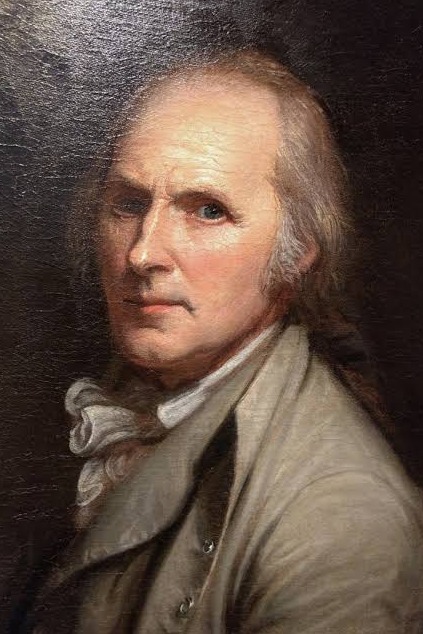
Charles Willson Peale (April 15, 1741 – February 22, 1827) was an American painter, naturalist, inventor, museum founder, and educator best known for his portraits of prominent figures from the American Revolution and for establishing one of the earliest museums in the United States. A major figure in early American art, Peale played an important role in developing portrait painting, scientific education, and cultural institutions in the young nation.
Early Life and Education
Charles Willson Peale was born on April 15, 1741, in Chester, Maryland, British America. His father died when Peale was young, and he initially worked in various trades, including saddlery and clockmaking.
After discovering his passion for painting, Peale studied art with John Hesselius and later traveled to England in 1767, where he studied under renowned American-born artist Benjamin West. His time in Europe exposed him to European artistic traditions and helped refine his portrait techniques.
Career
After returning to America, Peale established himself as a portrait painter in Philadelphia. He became one of the most important artists of the Revolutionary era, creating portraits of political leaders, military figures, and intellectuals.
During the American Revolution, Peale served in the Continental Army and used his artistic skills to document important figures of the independence movement. His portraits of revolutionary leaders helped create lasting images of the nation's founders.
Among his most famous subjects was George Washington, whom Peale painted several times. His 1772 portrait of Washington became one of the earliest and most recognizable images of the future president.
In 1786, Peale founded the Peale Museum in Philadelphia, one of America's first museums open to the public. The museum displayed portraits, natural history specimens, scientific objects, and historical artifacts. It reflected Peale's belief that art and science could educate society.
Peale was also an inventor and innovator. He developed methods for preserving museum specimens and created mechanical devices, including improvements related to painting and display techniques.
Artistic Style
Charles Willson Peale's work is characterized by:
- Realistic portraiture.
- Detailed observation of personality.
- Classical European influences.
- Historical and political subjects.
- Accurate representation of clothing and objects.
- Combination of art and scientific documentation.
His portraits aimed not only to capture physical appearance but also the character and achievements of his subjects.
Notable Works
Some of Charles Willson Peale’s most famous works include:
- George Washington (1772)
- George Washington at Princeton (1779)
- The Staircase Group (1795)
- Portraits of Thomas Jefferson, Benjamin Franklin, and other Revolutionary figures
- Self-portraits and family portraits
His portraits became important visual records of early American history.
Awards and Recognition
Peale was one of the founding members of the Pennsylvania Academy of the Fine Arts in 1805, helping establish one of America's oldest art institutions.
His paintings are preserved in major collections, including the Metropolitan Museum of Art, the National Portrait Gallery, the Smithsonian American Art Museum, and the Philadelphia Museum of Art.
Personal Life
Charles Willson Peale was married several times and had many children, several of whom became notable artists and scientists. His family became known as the Peale family, one of the most influential artistic families in early America.
His children included artists such as Raphaelle Peale, Rembrandt Peale, and Anna Claypoole Peale, who continued his artistic legacy.
Peale was deeply interested in education, science, and natural history, believing that knowledge should be accessible to the public.
Death
Charles Willson Peale died on February 22, 1827, in Philadelphia, Pennsylvania, at the age of 85.