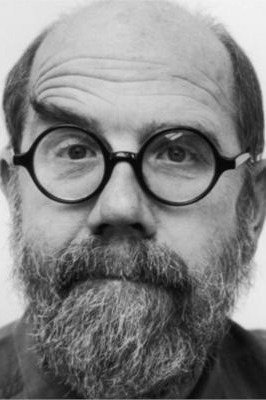
Personal info
Known for
Ultimate Talent
Gender
Male
Birthday
05 July
Location
Washington, United States
Edit pageChuck Close
Biography
Chuck Close was an influential American painter and photographer best known for his large-scale, highly detailed portraits that challenged traditional ideas of realism and abstraction. By transforming photographic images into complex, methodical compositions, Close reshaped contemporary portraiture and became one of the most significant artists of the late 20th and early 21st centuries.
Early Life and Education
Charles Thomas “Chuck” Close was born on July 5, 1940, in Monroe, Washington. His early life was marked by significant challenges, including dyslexia and a learning disability, which influenced his later artistic methods and reliance on systematic processes. Close also experienced physical health difficulties, including partial hearing loss as a child.
He studied art at the University of Washington and later earned an MFA from Yale University, where he was influenced by leading figures in modern art. During his education, Close explored Abstract Expressionism but eventually rejected it, turning instead toward representational imagery grounded in photography.
Career and Breakthrough
Close rose to prominence in the late 1960s with his monumental, black-and-white portraits based on photographs. These works, often depicting friends, fellow artists, and himself, were notable for their scale and precision. Painted with meticulous attention, they challenged viewers to reconsider the relationship between photography and painting.
One of his early landmark works, Big Self-Portrait (1967–1968), established his reputation and positioned him as a leading figure in the emerging Photorealist movement. However, Close resisted strict categorization, viewing his work as an exploration of perception rather than realism alone.
Artistic Process and Style
Close developed a distinctive grid-based method in which he divided photographic images into small squares, translating each section onto canvas. Over time, this approach evolved: from airbrushed black-and-white realism to colorful, abstract marks that resolved into faces when viewed from a distance.
His later works use looser, more painterly techniques, incorporating bright colors and varied textures. This evolution demonstrated Close’s belief that images could be built through accumulation and process rather than spontaneous gesture.
Portraits were his exclusive subject matter, not out of personal fascination with celebrity, but because the human face provided endless formal and perceptual challenges.
Physical Challenges and Resilience
In 1988, Close suffered a spinal artery collapse that left him partially paralyzed. Despite severe physical limitations, he continued to work with the help of assistants and adaptive tools. This period marked a significant chapter in his career, as his paintings became more experimental and abstract while maintaining their monumental presence.
Close’s perseverance became an important part of his public identity, highlighting his commitment to artistic practice regardless of physical obstacles.
Recognition and Later Years
Throughout his career, Close received numerous honors and exhibited widely in major museums around the world. His work influenced generations of artists interested in realism, photography, and process-based art.
In his later years, Close’s reputation became more complex as allegations of inappropriate behavior emerged, leading to reevaluations of his legacy. Nonetheless, his artistic contributions remain central to discussions of contemporary portraiture and visual perception.
Chuck Close died on August 19, 2021, at the age of 81.