Personal info
Known for
Ultimate Talent
Gender
Male
Birthday
05 June
Location
Massachusetts, United States
Edit pageConrad Marca-Relli
Biography
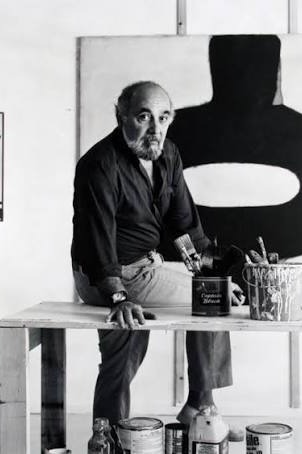
Conrad Marca-Relli (June 5, 1913 – August 29, 2000) was an Italian-American painter and one of the important figures of the New York School of Abstract Expressionism. Best known for his large-scale collage paintings made from canvas, fabric, and painted materials, Marca-Relli helped expand the possibilities of abstract art during the mid-20th century. His work combined the physical qualities of collage with the expressive energy of Abstract Expressionism.
Early Life and Education
Conrad Marca-Relli was born Corrado Marcarelli on June 5, 1913, in Boston, Massachusetts, United States, to Italian immigrant parents. He grew up in Italy after his family returned there during his childhood before eventually moving back to the United States.
As a young artist, Marca-Relli studied at the Cooper Union School of Art in New York City. He developed an early interest in drawing, painting, and modern artistic experimentation.
During the 1930s, he worked on the Works Progress Administration (WPA) Federal Art Project, which employed artists during the Great Depression. This experience helped him establish himself within the American art community.
Career
Marca-Relli began his career as a painter and illustrator, initially creating figurative works influenced by European traditions. After World War II, he became increasingly interested in abstraction and developed the collage technique that would define his career.
In the late 1940s and 1950s, he became associated with the New York School, a group of artists that included Jackson Pollock, Willem de Kooning, Franz Kline, and Mark Rothko. Like his contemporaries, Marca-Relli sought to create art that emphasized gesture, material, and emotional expression.
His breakthrough came through his large collage paintings, in which he cut, layered, and attached pieces of canvas to create bold geometric forms. Unlike traditional collage artists who often used paper and found objects, Marca-Relli used heavy canvas, giving his works a monumental and sculptural quality.
Throughout his career, he lived and worked in various locations, including New York, Italy, and Spain. His work was exhibited internationally and influenced later generations of abstract artists.
Artistic Style
Conrad Marca-Relli's work is characterized by:
- Large-scale abstract collage.
- Use of canvas and fabric materials.
- Strong geometric shapes.
- Expressive surfaces and textures.
- Balance between construction and spontaneity.
- Influences from Cubism and Abstract Expressionism.
- Monumental compositions.
His collages often appear architectural, combining fragmented forms into powerful visual structures.
Notable Works
Some of Conrad Marca-Relli's significant works include:
- The Captain (1956)
- The River series
- The Chessman series
- The Window series
- Large-scale abstract collage compositions from the 1950s and 1960s
These works demonstrate his innovative approach to combining painting and collage.
Awards and Recognition
Marca-Relli received international recognition during his career and exhibited at major galleries and museums worldwide. His works are included in collections such as the Museum of Modern Art (MoMA), the Whitney Museum of American Art, the Solomon R. Guggenheim Museum, and other leading institutions.
He is regarded as one of the important contributors to the development of postwar American abstraction.
Personal Life
Marca-Relli was deeply connected to the artistic community of New York and maintained friendships with many leading Abstract Expressionists. He was known for his independent approach and his commitment to exploring new methods of artistic expression.
In his later years, he spent significant time in Italy and Spain while continuing to create and exhibit his work.
Death
Conrad Marca-Relli died on August 29, 2000, in Parma, Italy, at the age of 87.