Personal info
Known for
Editor
Gender
Male
Birthday
21 January
Location
California, United States
Edit pageDavid Weisbart
Biography
David Weisbart was an American film editor and producer whose career was closely associated with Warner Bros. and 20th Century Fox. Working during Hollywood's Golden Age, he contributed to several acclaimed films, including Mildred Pierce, A Streetcar Named Desire, Rebel Without a Cause, Them!, and several films starring Elvis Presley.
Early Life
David M. Weisbart was born on January 21, 1915, in Los Angeles, California, United States. He graduated from Fairfax High School in Los Angeles in 1932, where he served as president of his graduating class. He later entered the motion-picture industry and developed his career primarily as an editor before moving into production.
Career as a Film Editor
Weisbart began working as a film editor at Warner Bros. in 1942. During the 1940s and early 1950s, he edited around twenty films, gaining a reputation as a skilled and dependable editor.
Among his important editing credits were:
- The Constant Nymph (1943)
- Mildred Pierce (1945)
- Night and Day (1946)
- Dark Passage (1947)
- Johnny Belinda (1948)
- The Fountainhead (1949)
- The Glass Menagerie (1950)
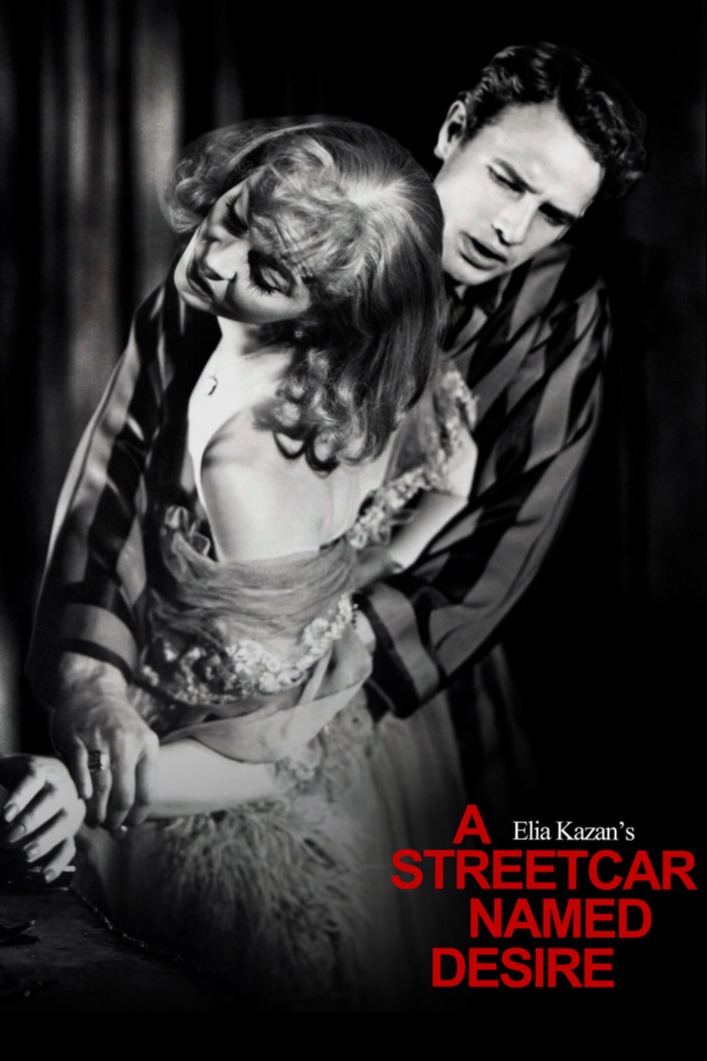
- A Streetcar Named Desire (1951)
His editing work on Johnny Belinda earned him an Academy Award nomination for Film Editing.
A Streetcar Named Desire
One of Weisbart's most notable editing achievements was A Streetcar Named Desire (1951), directed by Elia Kazan and adapted from Tennessee Williams' celebrated play.
The film starred Vivien Leigh, Marlon Brando, Kim Hunter, and Karl Malden. Weisbart served as editor, working alongside producer Charles K. Feldman, cinematographer Harry Stradling Sr., and composer Alex North.
The film became an important landmark of American cinema and received four Academy Awards. Weisbart's editing helped shape the film's dramatic rhythm and transitions between its emotionally intense scenes.
Transition to Producing
In 1952, Weisbart moved from editing into producing and became the youngest producer under contract at Warner Bros. His first production was Mara Maru (1952), starring Errol Flynn and Ruth Roman.
His move into production marked a major second phase of his career. He became responsible for films in a variety of genres, including science fiction, drama, romance, westerns, and youth-oriented movies.
Among his notable productions at Warner Bros. was Them! (1954), a science-fiction film about giant mutated ants threatening humanity. The film became a well-known example of 1950s science-fiction cinema.
Rebel Without a Cause
Weisbart is perhaps best remembered as the producer of Rebel Without a Cause (1955), directed by Nicholas Ray and starring James Dean, Natalie Wood, Sal Mineo, and Dennis Hopper.
The film explored teenage alienation, family conflict, identity, and social pressures. It became one of James Dean's defining films and later achieved lasting cultural significance. Weisbart's association with the production remains one of the most important achievements of his career.
20th Century Fox and Elvis Presley Films
In 1956, Weisbart moved from Warner Bros. to 20th Century Fox. There he became involved in several commercially successful productions.
He produced Love Me Tender (1956), which marked Elvis Presley's film debut. Weisbart subsequently produced three additional Presley films, making him an important figure during the early development of Presley's Hollywood career.
His other productions included April Love (1957), starring Pat Boone, and The Pleasure Seekers (1964).
Television Work
Toward the end of his career, Weisbart expanded into television. Working with writer Samuel A. Peeples, he helped create Custer, also known as The Legend of Custer, a television western series that aired in 1967.
The series ran for 17 episodes. Weisbart was credited as its creator and executive producer.
Valley of the Dolls
At the time of his death, Weisbart was producing Valley of the Dolls (1967), directed by Mark Robson and based on Jacqueline Susann's bestselling novel.
The film was released after Weisbart's death and became 20th Century Fox's biggest box-office hit of 1967, despite receiving largely negative critical reviews.
Death
David Weisbart died on July 21, 1967, in Los Angeles County, California, at the age of 52. He died while playing golf with director Mark Robson at a Los Angeles golf course. Contemporary accounts and biographical sources identify heart failure as the apparent cause of death.