Personal info
Known for
Ultimate Talent
Gender
Male
Birthday
04 April
Location
Pennsylvania, United States
Edit pageEdward Hicks
Biography
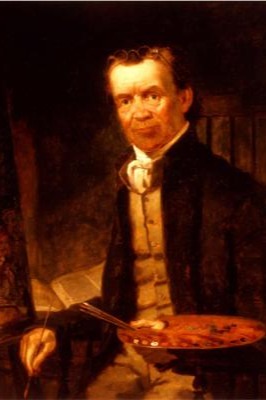
Edward Hicks (April 4, 1780 – August 23, 1849) was an American folk painter and Quaker minister best known for his iconic Peaceable Kingdom series. One of the most celebrated figures in American folk art, Hicks combined his religious beliefs with his artistic talent to create paintings that conveyed messages of peace, harmony, faith, and reconciliation. His works remain among the most recognizable and influential examples of early American art.
Early Life and Education
Edward Hicks was born on April 4, 1780, in Attleboro (now Langhorne), Pennsylvania, United States. His mother died shortly after his birth, and he was raised by family friends who were members of the Religious Society of Friends (Quakers).
As a young man, Hicks apprenticed to a coach maker, where he learned decorative painting and ornamental design. His training included lettering, sign painting, and the decoration of carriages, skills that later influenced his distinctive artistic style.
Although largely self-taught as a fine artist, Hicks developed a remarkable ability to create expressive compositions rooted in his religious convictions.
Career
Hicks worked for many years as a coach and sign painter before becoming a Quaker minister in 1811. While some members of the Quaker community viewed painting as a worldly pursuit, Hicks continued creating artwork as a practical means of supporting his growing family.
His artistic career flourished during the 1820s and 1830s. He became best known for painting numerous versions of The Peaceable Kingdom, inspired by the biblical prophecy found in the Book of Isaiah, which describes a world in which humans and animals live together in harmony.
Over the course of his life, Hicks painted more than 60 versions of the Peaceable Kingdom, each reflecting subtle differences in composition, symbolism, and color. Many of these paintings also included scenes depicting the 1682 treaty between William Penn and the Lenape people, symbolizing peaceful coexistence and mutual respect.
In addition to the Peaceable Kingdom series, Hicks produced portraits, landscapes, and religious subjects, though these works are less well known.
Artistic Style
Edward Hicks' work is characterized by:
- Simple, direct compositions typical of American folk art.
- Symbolic religious imagery.
- Bright yet harmonious color palettes.
- Careful attention to animals and nature.
- Themes of peace, tolerance, and spiritual harmony.
- Narrative scenes inspired by biblical teachings.
His paintings emphasize moral values over technical realism, using symbolism to communicate spiritual truths.
Notable Works
Some of Edward Hicks' most celebrated works include:
- The Peaceable Kingdom series
- The Residence of David Twining
- William Penn's Treaty with the Indians
- The Cornell Farm
- Various Quaker-inspired religious paintings
The Peaceable Kingdom series remains his greatest artistic achievement and one of the defining works of American folk art.
Recognition and Legacy
Although Hicks received limited recognition during his lifetime outside his local community, his reputation grew significantly in the 20th century. Today, he is regarded as one of America's greatest folk artists.
His paintings are housed in leading museums, including the National Gallery of Art, the Philadelphia Museum of Art, the Smithsonian American Art Museum, the Metropolitan Museum of Art, and numerous regional collections.
Personal Life
Edward Hicks married Sarah Worstall in 1803, and the couple had a large family. Throughout his life, he balanced his responsibilities as a Quaker minister, family man, and artist.
His deeply held religious beliefs shaped every aspect of his work, inspiring paintings that reflected ideals of compassion, humility, and peaceful living.
Death
Edward Hicks died on August 23, 1849, in Newtown, Pennsylvania, at the age of 69.