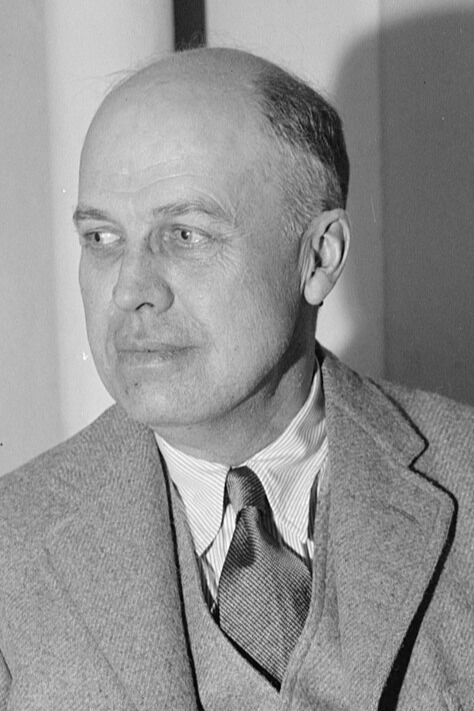
Personal info
Known for
Ultimate Talent
Gender
Male
Birthday
22 July
Location
New York, United States
Edit pageEdward Hopper
Biography
Edward Hopper (July 22, 1882 – May 15, 1967) was an American realist painter and printmaker renowned for his evocative depictions of modern American life. His paintings, often portraying solitary figures, quiet urban streets, rural landscapes, and stark interiors, capture themes of isolation, contemplation, and the passage of time. Hopper is widely regarded as one of the most influential American artists of the 20th century, and his work has had a lasting impact on painting, photography, literature, and cinema.
Early Life and Education
Edward Hopper was born on July 22, 1882, in Nyack, New York, United States. Raised in a supportive middle-class family, he displayed artistic talent from an early age and was encouraged to pursue drawing and painting.
In 1900, Hopper enrolled at the New York School of Art, where he studied under prominent artists including Robert Henri, a leading figure of the Ashcan School. Henri encouraged Hopper to observe everyday life and paint with honesty, an approach that profoundly influenced his artistic development.
Between 1906 and 1910, Hopper traveled to Europe several times, spending much of his time in Paris. While he admired the work of the French Impressionists, he ultimately developed a distinctly personal style rooted in realism rather than modernist experimentation.
Career
Hopper began his professional career as a commercial illustrator to support himself, though he found the work unfulfilling. He continued painting independently, gradually earning recognition for his etchings and oil paintings.
His breakthrough came in the 1920s, when his paintings of American houses, streets, and landscapes attracted widespread attention. In 1924, he married fellow artist Josephine "Jo" Nivison Hopper, who became his lifelong companion, model, and manager.
During the 1930s and 1940s, Hopper produced many of his most celebrated works, portraying diners, hotels, theaters, offices, gas stations, and quiet neighborhoods. His ability to transform ordinary scenes into emotionally resonant images made him one of the defining artists of American Realism.
Throughout his career, Hopper remained independent of major artistic movements such as Abstract Expressionism, choosing instead to focus on representational painting and the psychological atmosphere of everyday life.
Artistic Style
Edward Hopper's work is characterized by:
- Realistic depictions of urban and rural America.
- Dramatic use of natural and artificial light.
- Strong geometric compositions.
- Quiet, contemplative moods.
- Solitary figures and themes of isolation.
- Architectural precision and clean lines.
- Subtle psychological storytelling.
His paintings invite viewers to interpret the emotions and narratives suggested by seemingly ordinary moments.
Notable Works
Some of Edward Hopper's most celebrated paintings include:
- Nighthawks (1942)
- Early Sunday Morning (1930)
- Gas (1940)
- Automat (1927)
- House by the Railroad (1925)
- Morning Sun (1952)
These works are regarded as masterpieces of American art and remain among the most recognizable paintings of the 20th century.
Awards and Recognition
During his lifetime, Hopper received numerous honors and exhibited extensively in the United States and internationally. His paintings are housed in leading institutions such as the Museum of Modern Art (MoMA), the Whitney Museum of American Art, the Art Institute of Chicago, the Metropolitan Museum of Art, and the National Gallery of Art.
Today, he is recognized as one of the foremost American realist painters and one of the most influential artists in modern history.
Personal Life
Edward Hopper married artist Josephine Nivison Hopper in 1924. Jo played a vital role in his career by serving as his model for many paintings, maintaining detailed records of his work, and helping organize exhibitions.
The couple spent much of their lives in New York City and at their summer home in South Truro, Massachusetts, where Hopper found inspiration in the landscapes of Cape Cod.
Death
Edward Hopper died on May 15, 1967, in New York City at the age of 84.