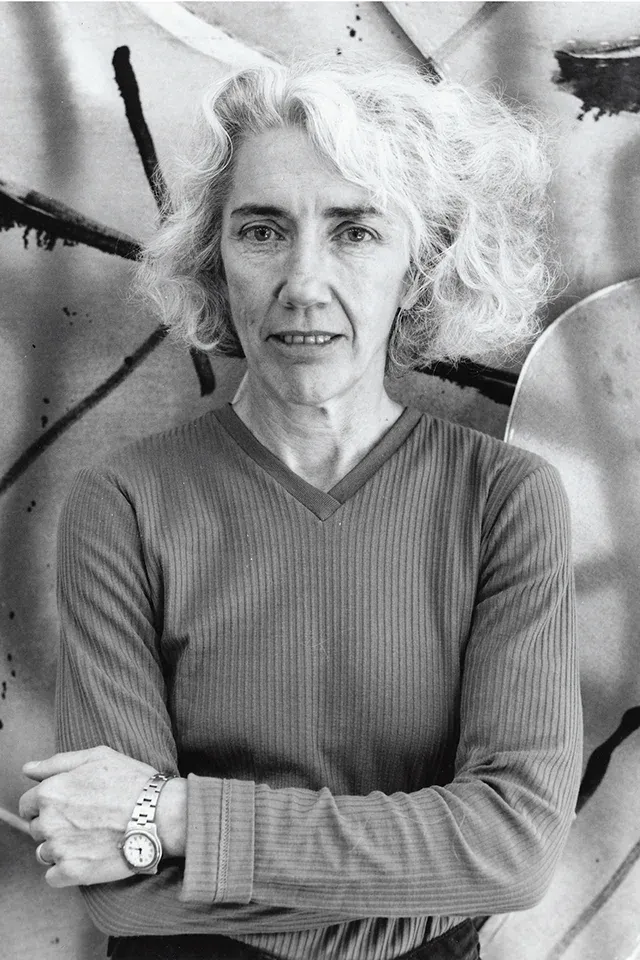
Personal info
Known for
Ultimate Talent
Gender
Female
Birthday
06 September
Location
Illinois, United States
Edit pageElizabeth Murray
Biography
Elizabeth Murray (September 6, 1940 – August 12, 2007) was an American painter known for her colorful, energetic, and unconventional works that combined elements of abstraction, cartoon imagery, and everyday experiences. A major figure in contemporary American art, Murray challenged traditional ideas about painting by creating shaped canvases, playful compositions, and expressive images that explored family life, relationships, and popular culture.
Early Life and Education
Elizabeth Murray was born on September 6, 1940, in Chicago, Illinois, United States. She grew up in a working-class family and developed an interest in drawing and painting at an early age.
Encouraged by her mother, Murray pursued her artistic ambitions and studied at the School of the Art Institute of Chicago, where she earned a Bachelor of Fine Arts degree in 1962. She later received a Master of Fine Arts degree from Mills College in California in 1964.
After completing her studies, Murray moved to New York City, where she became part of the vibrant contemporary art scene.
Career
Murray began her career during a period when Abstract Expressionism and Minimalism dominated the American art world. While she was influenced by modernist painters, she developed a unique style that combined abstraction with recognizable images and personal narratives.
In the 1970s, she gained attention for her bold, irregularly shaped canvases and expressive use of color. She rejected the traditional rectangular format of painting, creating works that interacted with the surrounding space and challenged viewers' expectations.
During the 1980s and 1990s, Murray became one of the most influential contemporary painters in the United States. Her paintings often included cartoon-like forms, domestic objects, and emotional scenes that explored themes of love, conflict, family, and human relationships.
Her work was praised for combining humor and seriousness, bringing personal experiences into large-scale abstract compositions.
Artistic Style
Elizabeth Murray's work is characterized by:
- Bright and expressive colors.
- Abstract and figurative elements.
- Cartoon-inspired imagery.
- Irregularly shaped canvases.
- Playful yet emotional compositions.
- Influences from Cubism, Pop Art, and Abstract Expressionism.
- Exploration of domestic and personal themes.
Her paintings often transformed ordinary objects, such as cups, hearts, shoes, and furniture, into powerful symbols.
Notable Works
Some of Elizabeth Murray's most celebrated works include:
- Children Meeting (1978)
- Can You Hear Me? (1984)
- Wake Up (2004)
- Terrifying Terrain (1989)
- Blooming (2005)
- Bop (1999)
These works demonstrate her ability to combine personal storytelling with bold visual experimentation.
Awards and Recognition
Murray received numerous honors during her career and became one of the most respected artists of her generation. She was elected as a member of the American Academy of Arts and Letters and received a MacArthur Fellowship ("Genius Grant") in 1999.
Her works are held in major museum collections, including the Museum of Modern Art (MoMA), the Whitney Museum of American Art, the Metropolitan Museum of Art, and the Guggenheim Museum.
Personal Life
Elizabeth Murray was married to sculptor Don Sunseri, with whom she had two children. Later, she married artist Bob Holman, a poet and performance artist.
Murray balanced her artistic career with family life, and many of her works reflected her experiences as a mother, partner, and individual navigating personal relationships.
Death
Elizabeth Murray died on August 12, 2007, in Washington County, New York, at the age of 66, after suffering from lung cancer.