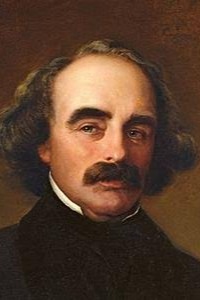
Personal info
Known for
Ultimate Talent
Gender
Male
Birthday
24 May
Location
Baden-Württemberg, Germany
Edit pageEmanuel Gottlieb Leutze
Biography
Emanuel Gottlieb Leutze (May 24, 1816 – July 18, 1868) was a German-born American history painter best known for his iconic masterpiece Washington Crossing the Delaware. A leading figure in 19th-century American art, Leutze specialized in large-scale historical paintings that celebrated themes of patriotism, freedom, and heroism. His dramatic compositions and meticulous attention to detail made him one of the most respected history painters of his era.
Early Life and Education
Emanuel Gottlieb Leutze was born on May 24, 1816, in Schwäbisch Gmünd, Kingdom of Württemberg (now Baden-Württemberg, Germany). In 1825, his family emigrated to the United States and settled in Philadelphia, Pennsylvania.
Leutze initially worked as a portrait painter to support his family after his father's illness. Recognizing his artistic talent, he continued his studies and eventually returned to Germany in 1840 to enroll at the Kunstakademie Düsseldorf (Düsseldorf Academy of Art). There, he became associated with the Düsseldorf School of Painting, which emphasized historical subjects, detailed realism, and carefully structured compositions.
Career
While living in Düsseldorf, Leutze developed a reputation as a history painter. Inspired by democratic ideals and political movements in Europe and America, he created works that celebrated the struggle for liberty and national independence.
His most famous painting, Washington Crossing the Delaware (1851), depicts General George Washington leading Continental Army troops across the icy Delaware River on the night of December 25–26, 1776, during the American Revolutionary War. Although the painting contains several historical inaccuracies, it became one of the most enduring symbols of American patriotism and determination.
Leutze returned permanently to the United States in 1859 and established a studio in Washington, D.C. He received numerous commissions for murals and historical paintings, including works for the United States Capitol.
Among his important public commissions was Westward the Course of Empire Takes Its Way (1862), a monumental mural installed in the U.S. Capitol that celebrates the westward expansion of the United States.
Throughout his career, Leutze sought to inspire viewers by portraying moments of courage, sacrifice, and national unity.
Artistic Style
Emanuel Leutze's work is characterized by:
- Monumental historical compositions.
- Dramatic storytelling.
- Careful attention to historical costume and setting.
- Strong use of light and color.
- Heroic figures and patriotic themes.
- Influences from the Düsseldorf School of Painting.
- Romantic realism.
His paintings combined historical narrative with emotional intensity, making them both educational and inspirational.
Notable Works
Some of Emanuel Leutze's most celebrated works include:
- Washington Crossing the Delaware (1851)
- Westward the Course of Empire Takes Its Way (1862)
- Mrs. Schuyler Burning Her Wheat Fields on the Approach of the British
- Columbus Before the Queen
- The Storming of the Teocalli by Cortés and His Troops
- Cromwell and His Daughter
These works established Leutze as one of the foremost history painters of the 19th century.
Awards and Recognition
Leutze's paintings were widely admired during his lifetime in both Europe and the United States. His works are now housed in major museums and public collections, including the Metropolitan Museum of Art, the Smithsonian American Art Museum, the National Gallery of Art, and the United States Capitol.
Washington Crossing the Delaware remains one of the most recognizable paintings in American history.
Personal Life
Although born in Germany, Leutze became a passionate supporter of American democratic ideals. His experiences in both Europe and the United States shaped his belief that art should promote freedom, civic responsibility, and national pride.
He maintained strong connections with artists in both countries and contributed to the cultural exchange between Europe and America.
Death
Emanuel Gottlieb Leutze died on July 18, 1868, in Washington, D.C., at the age of 52.