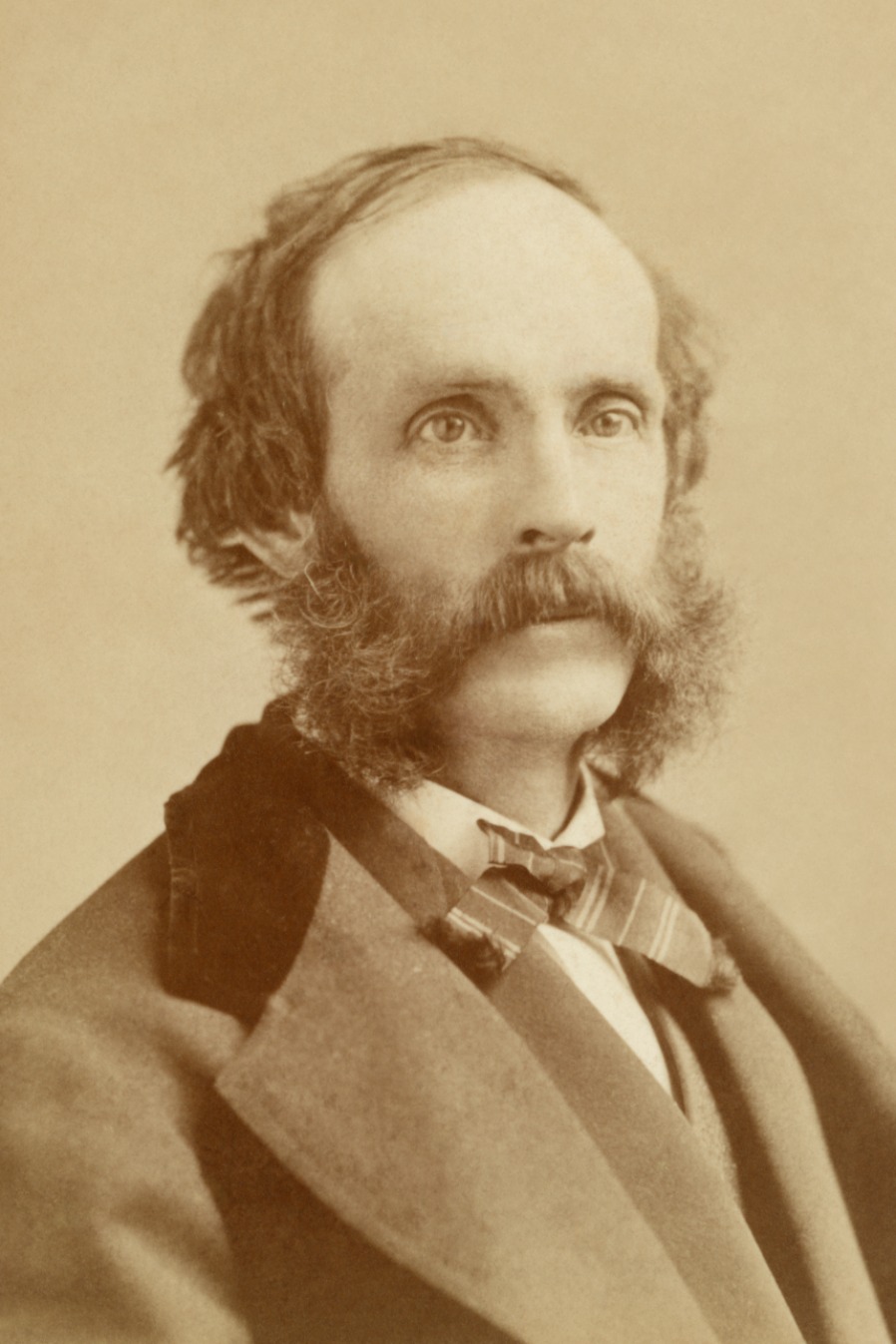
Personal info
Known for
Ultimate Talent
Gender
Male
Birthday
04 May
Location
Connecticut, United States
Edit pageFrederic Edwin Church
Biography
Frederic Edwin Church was one of the most celebrated American landscape painters of the 19th century and a leading figure of the Hudson River School. Known for his monumental canvases, dramatic use of light, and meticulous attention to natural detail, Church transformed landscape painting into an expression of national identity, scientific curiosity, and spiritual wonder.
Early Life and Education
Frederic Edwin Church was born on May 4, 1826, in Hartford, Connecticut, into a prosperous family. His father, a successful businessman, recognized his son’s artistic talent and supported his early training. At a young age, Church became the pupil of Thomas Cole, the founder of the Hudson River School.
Under Cole’s mentorship, Church learned to combine careful observation of nature with romantic and symbolic interpretation. Unlike his teacher, however, Church would eventually focus less on moral allegory and more on realism, scale, and sensory impact.
Career and Artistic Development
By his early twenties, Church had established himself as a professional artist. He gained national attention for his detailed landscapes of the American Northeast, including scenes of the Catskill Mountains and Niagara Falls. His painting Niagara (1857) was especially influential, praised for its realism and immersive scale.
Church traveled extensively in search of dramatic natural subjects. Inspired by the writings of Alexander von Humboldt, he journeyed to South America, painting volcanic landscapes, tropical vegetation, and vast panoramas. These travels culminated in his masterpiece The Heart of the Andes (1859), which was exhibited as a single painting and attracted thousands of viewers.
He later traveled to the Arctic, the Middle East, and Europe, further expanding the geographic and thematic range of his work.
Artistic Style and Themes
Frederic Edwin Church’s paintings are characterized by luminous light, precise detail, and sweeping compositions. He often combined multiple viewpoints and studies into a single, idealized image, creating landscapes that were scientifically informed yet emotionally powerful.
His work reflects 19th-century interests in exploration, geology, botany, and theology. Nature in Church’s paintings is both awe-inspiring and harmonious, suggesting divine order and human humility in the face of the natural world.
Unlike many of his contemporaries, Church rarely included human figures, allowing the landscape itself to dominate the viewer’s experience.
Public Reception and Success
Church achieved extraordinary fame during his lifetime. His large-scale exhibition paintings were treated as major public events, with viewers paying admission to see them. Reproductions of his works circulated widely, making his imagery familiar to audiences across the United States and abroad.
His success allowed him to build Olana, an elaborate estate overlooking the Hudson River in New York. Designed with influences from Middle Eastern architecture, Olana reflectedthe Church’s artistic vision and global interests.
Later Years and Death
In the later years of his life, Church’s productivity declined due to health issues, including arthritis and vision problems. As artistic tastes shifted toward modernism, his work fell out of favor, though he continued to be respected as a major figure of his era.
Frederic Edwin Church died on April 7, 1900, at Olana.