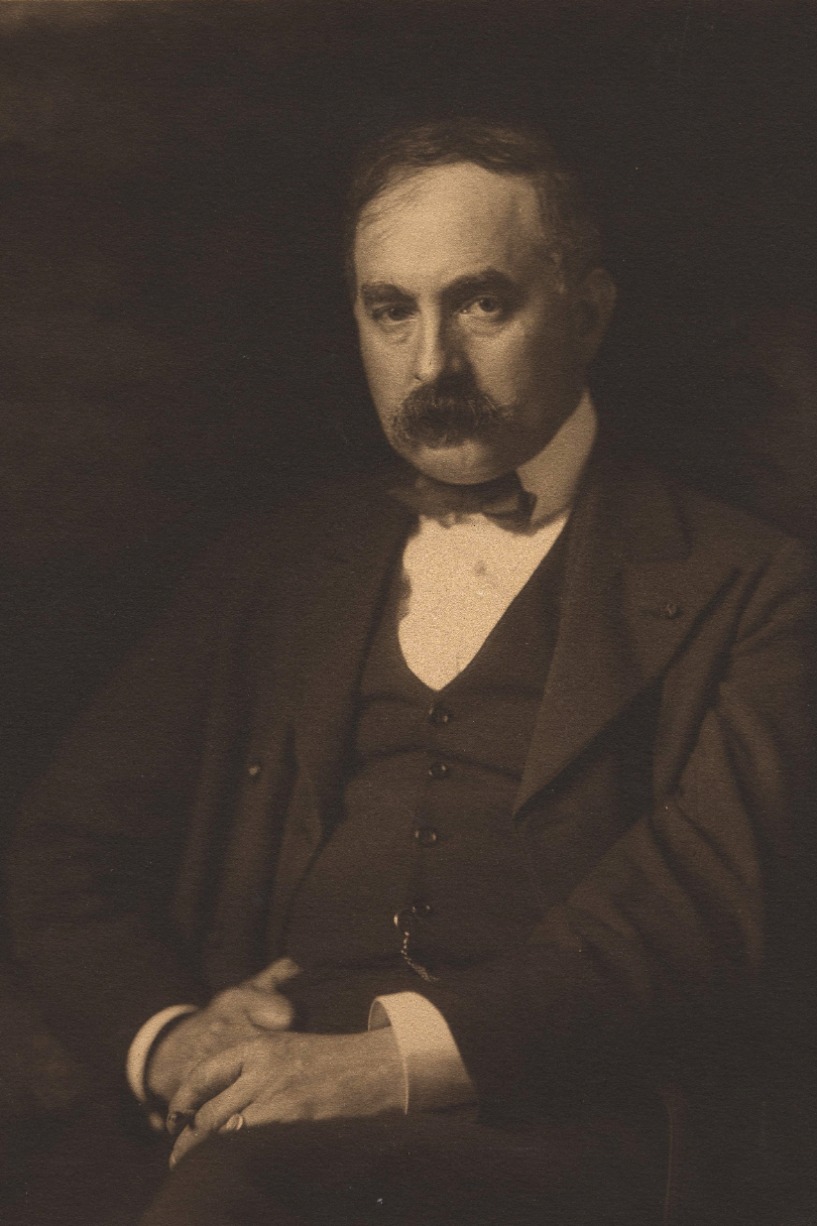
Personal info
Known for
Ultimate Talent
Gender
Male
Birthday
11 August
Location
Michigan, United States
Edit pageGari Melchers
Biography
Gari Melchers (born Julius Garibaldi Melchers; August 11, 1860 – November 30, 1932) was an American painter and muralist known for his naturalistic paintings, portraits, landscapes, and scenes of everyday life. A major figure in late 19th- and early 20th-century American art, Melchers gained international recognition for his academic realism, Impressionist influences, and sensitive portrayals of human experiences.
Early Life and Education
Gari Melchers was born on August 11, 1860, in Detroit, Michigan, United States. He was the son of Julius Theodore Melchers, a German-born sculptor, who encouraged his son's artistic development from an early age.
At the age of seventeen, Melchers traveled to Germany to study at the Royal Academy of Art in Düsseldorf, where he received rigorous training in drawing and figure painting. He later moved to Paris, studying at the Académie Julian and the École des Beaux-Arts, where he was influenced by contemporary European art movements.
Career
Melchers began gaining recognition in Europe during the 1880s. His painting The Letter was accepted by the Paris Salon in 1882, marking an important early achievement in his career. He later settled in Egmond aan Zee, Netherlands, where he created paintings depicting Dutch village life, fishermen, and rural communities.
His painting The Sermon (1886) brought him international attention and established his reputation as a leading painter of everyday life. His works combined academic precision with emotional warmth and naturalistic observation.
In 1889, Melchers and John Singer Sargent became the first American painters to receive a Grand Prize at the Paris Universal Exposition, greatly enhancing his international reputation.
During his later career, Melchers returned frequently to the United States and became known for portraits, murals, and landscapes. He created important mural decorations, including Peace and War for the World’s Columbian Exposition of 1893, which are now associated with the University of Michigan.
He eventually established his home and studio at Belmont in Virginia, where he continued painting and became an important supporter of American art organizations.
Artistic Style
Gari Melchers' work is characterized by:
- Naturalistic painting style.
- Academic realism combined with Impressionist influences.
- Portraiture and figure painting.
- Scenes of rural and everyday life.
- Soft, atmospheric landscapes.
- Religious and symbolic subjects.
- Careful attention to human emotion.
His style evolved from the detailed realism of his early training toward a lighter, more Impressionistic approach in his later works.
Notable Works
Some of Gari Melchers' most celebrated works include:
- The Letter (1882)
- The Sermon (1886)
- The Family
- The Supper at Emmaus
- Mother and Child
- Peace and War murals
- Portraits of prominent American figures, including President Theodore Roosevelt
Awards and Recognition
Melchers received numerous honors during his lifetime. He became a member of prestigious artistic organizations, including the National Academy of Design, the Royal Academy of Berlin, and the Société Nationale des Beaux-Arts in Paris. He was also awarded the French Legion of Honor and other international distinctions.
His works are held in major museum collections, including the National Gallery of Art, Smithsonian American Art Museum, Metropolitan Museum of Art, and other institutions.
Personal Life
In 1903, Melchers married Corinne Lawton Mackall, an American painter and supporter of the arts. Together they lived at Belmont, which became both a home and a creative center for Melchers' later work.
Beyond painting, Melchers contributed to the development of American cultural institutions and served in advisory roles for museums and art organizations.
Death
Gari Melchers died on November 30, 1932, at his home in Falmouth, Virginia, at the age of 72.