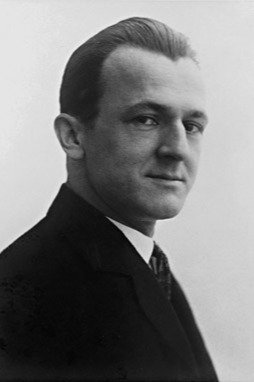
Personal info
Known for
Public Figures
Gender
Male
Birthday
26 July
Location
Berlin, Germany
Edit pageGeorge Grosz
Biography
George Grosz (born Georg Ehrenfried Groß; July 26, 1893 – July 6, 1959) was a German-American painter, illustrator, caricaturist, and printmaker renowned for his sharp satirical depictions of German society during the Weimar Republic. One of the leading figures of the Neue Sachlichkeit (New Objectivity) movement, Grosz used his art to expose corruption, militarism, greed, and social inequality. His bold, uncompromising style made him one of the most influential political artists of the 20th century.
Early Life and Education
George Grosz was born in Berlin, Germany. From an early age, he displayed a talent for drawing and studied at the Dresden Academy of Fine Arts before continuing his education at the Berlin College of Arts and Crafts.
During World War I, Grosz served briefly in the German Army. The horrors of war deeply affected him and shaped his lifelong opposition to militarism and authoritarianism. After the war, he became involved with Berlin's avant-garde art scene and embraced radical political and artistic ideas.
Career
Grosz began his professional career as an illustrator and cartoonist, contributing satirical drawings to magazines and journals. During the 1910s and 1920s, he became associated with the Dada movement in Berlin, producing provocative works that criticized war, nationalism, and bourgeois society.
In the 1920s, Grosz emerged as one of the leading artists of the New Objectivity movement. His paintings and drawings portrayed politicians, military officers, businessmen, clergy, and ordinary citizens with exaggerated features and biting irony, exposing the moral and social decay of post-World War I Germany.
His outspoken political views frequently brought him into conflict with authorities, leading to several court cases over accusations of insulting the military and religious institutions.
With the rise of the Nazi Party in 1933, Grosz emigrated to the United States, where he accepted a teaching position at the Art Students League of New York. In America, his artistic style gradually shifted toward landscapes, still lifes, and more traditional subjects, although he continued to produce socially conscious works.
He became a naturalized U.S. citizen in 1938 and remained active as both an artist and educator for many years.
Artistic Style
George Grosz's work is characterized by:
- Sharp political and social satire.
- Distorted, caricature-like figures.
- Expressionist and New Objectivity influences.
- Bold line work and dramatic compositions.
- Critiques of war, corruption, capitalism, and social injustice.
- Vivid portrayals of urban life and moral decline.
His works often combined humor with harsh social criticism, making them powerful visual commentaries on the political climate of his time.
Notable Works
Some of George Grosz's most celebrated works include:
- The Pillars of Society (1926)
- Eclipse of the Sun (1926)
- Fit for Active Service (1917)
- The Funeral (Dedicated to Oskar Panizza) (1918)
- Republican Automatons (1920)
- Metropolis (1916–1917)
These works remain among the defining masterpieces of modern political art.
Awards and Recognition
Although controversial during his lifetime, Grosz eventually gained international recognition as one of the most important artists of the 20th century. His paintings, drawings, and prints are housed in major museums, including the Museum of Modern Art (MoMA), the Metropolitan Museum of Art, the National Gallery of Art, the Tate, and numerous collections across Europe and North America.
His influence extends beyond painting, inspiring generations of political cartoonists, illustrators, and socially engaged artists.
Personal Life
George Grosz married Eva Louise Peter in 1920, and the couple had two sons. While living in the United States, he devoted much of his time to teaching, painting, and writing. In 1959, he returned to Berlin for a visit after more than two decades abroad.
Death
George Grosz died on July 6, 1959, in West Berlin, Germany, at the age of 65.