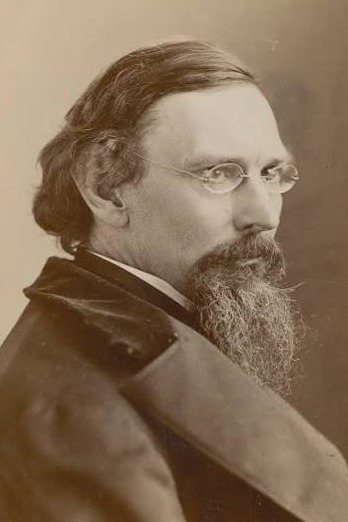
Personal info
Known for
Ultimate Talent
Gender
Male
Birthday
01 May
Location
New York, United States
Edit pageGeorge Inness
Biography
George Inness (May 1, 1825 – August 3, 1894) was an American landscape painter widely regarded as one of the greatest artists in the history of American art. Known for his poetic and atmospheric landscapes, Inness combined realism with spiritual symbolism, helping to shape the development of Tonalism in the United States. His paintings emphasized mood, light, and emotion over precise detail, earning him recognition as one of the most influential American landscape painters of the 19th century.
Early Life and Education
George Inness was born on May 1, 1825, in Newburgh, New York, United States. His family later moved to Newark, New Jersey, where he spent much of his youth.
Because of poor health during childhood, Inness received only a limited formal education. He showed an early interest in art and briefly studied with French-born landscape painter Régis François Gignoux. Much of his artistic development, however, came through self-study and direct observation of nature.
Inness was also deeply influenced by the writings of Swedish philosopher and theologian Emanuel Swedenborg, whose spiritual ideas profoundly shaped his artistic philosophy.
Career
George Inness began exhibiting his landscapes in the 1840s and quickly established himself as one of America's leading painters. His early works reflected the detailed realism of the Hudson River School, but he gradually developed a more personal and expressive approach.
Throughout his career, Inness traveled extensively across the United States and Europe, painting landscapes in New York, New Jersey, New England, Italy, France, and England. His exposure to the French Barbizon School, particularly the work of Jean-Baptiste-Camille Corot and Théodore Rousseau, encouraged him to adopt softer forms, subdued colors, and atmospheric effects.
By the 1870s and 1880s, Inness had evolved a mature style characterized by harmonious color, diffused light, and spiritual symbolism. Rather than depicting landscapes with strict realism, he sought to convey their emotional and spiritual essence.
His works were widely exhibited and admired during his lifetime, and he became one of the most respected landscape painters in the United States.
Artistic Style
George Inness's work is characterized by:
- Atmospheric and poetic landscapes.
- Soft, harmonious color palettes.
- Diffused light and subtle tonal transitions.
- Spiritual and philosophical themes.
- Influences from the Barbizon School.
- Tonalist compositions emphasizing mood over detail.
His paintings often evoke a sense of tranquility, contemplation, and the spiritual unity of humanity and nature.
Notable Works
Some of George Inness's most celebrated paintings include:
- The Lackawanna Valley (1855)
- Peace and Plenty (1865)
- The Home of the Heron (1893)
- Sunset in the Woods (1891)
- October (1886)
- Early Autumn, Montclair (1891)
These works are considered masterpieces of American landscape painting and Tonalism.
Awards and Recognition
During his lifetime, Inness received widespread acclaim in both the United States and Europe. He exhibited at major international exhibitions and was elected to prestigious art organizations.
Today, his paintings are housed in leading museums, including the Metropolitan Museum of Art, the National Gallery of Art, the Museum of Fine Arts, Boston, the Art Institute of Chicago, the Smithsonian American Art Museum, and many other public collections.
He is regarded as one of the founders of American Tonalism and one of the nation's greatest landscape painters.
Personal Life
George Inness married Delia Miller in 1853, and the couple had several children. Throughout his life, he maintained a deep interest in philosophy, religion, and spirituality, particularly the teachings of Emanuel Swedenborg. These beliefs profoundly influenced both his personal life and artistic vision.
He continued painting almost until the end of his life, constantly refining his expressive approach to landscape art.
Death
George Inness died on August 3, 1894, in Bridge of Allan, Scotland, while traveling in Europe, at the age of 69.