Personal info
Known for
Ultimate Talent
Gender
Male
Birthday
03 December
Location
Rhode Island, United States
Edit pageGilbert Stuart
Biography
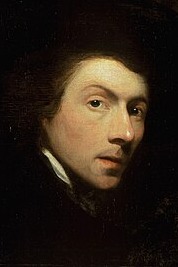
Gilbert Stuart (December 3, 1755 – July 9, 1828) was an American portrait painter widely regarded as one of the greatest portraitists of the early United States. He was particularly famous for his portraits of George Washington, including the unfinished Athenaeum Portrait, which became the model for Washington's image on the American one-dollar bill. His paintings also captured several other prominent political leaders, statesmen, and members of American society.
Early Life and Education
Gilbert Charles Stuart was born on December 3, 1755, in Saunderstown, Rhode Island, in the American colonies. His father, Gilbert Stuart Sr., was a Scottish immigrant who operated a snuff mill, while his mother was Elizabeth Anthony.
Stuart demonstrated an early interest in drawing and painting. In 1769, he began receiving artistic instruction from Scottish painter Cosmo Alexander, who recognised his talent and took him to Scotland in 1771. Following Alexander's death in 1772, Stuart returned to Rhode Island and continued developing his artistic skills.
Career
Stuart began his professional career as a portrait painter in Newport and Boston, where he received commissions from wealthy merchants and prominent local families.
In 1775, he travelled to London to pursue further artistic training. Initially, he struggled financially but later received support from American-born painter Benjamin West, who helped him develop his painting techniques. Under West's guidance, Stuart studied European portrait traditions and gradually established himself as a successful artist.
In 1782, he exhibited The Skater, a portrait of William Grant, at the Royal Academy in London. The painting attracted considerable attention and helped establish his reputation as a talented portraitist.
In 1787, he moved to Dublin, Ireland, where he became a popular portrait painter among wealthy and influential clients. After several successful years there, he returned to the United States in 1793.
Stuart initially settled in New York before moving to Philadelphia, where he received an important commission to paint President George Washington. Between 1795 and 1796, Washington sat for him on three occasions. These sittings resulted in three famous portrait types known as the Vaughan, Athenaeum and Lansdowne portraits.
In 1803, Stuart moved to Washington, D.C., where he painted prominent political figures. He relocated to Boston in 1805 and continued producing portraits until the end of his life. Throughout his career, he painted more than 1,000 portraits and became one of the most sought-after artists in early American society.
Notable Works and Artistic Style
Stuart was celebrated for his ability to capture the personality, expressions, and character of his subjects. His portraits featured natural facial expressions, carefully rendered details and sophisticated use of light and colour.
Some of his most notable works include:
The Skater (1782)
George Washington (Vaughan Portrait) (1795)
George Washington (Athenaeum Portrait) (1796)
George Washington (Lansdowne Portrait) (1796)
John Adams (c. 1821)
James Madison (c. 1821)
Thomas Jefferson (c. 1821)
His portraits of George Washington became particularly influential in shaping the public image of America's first president.
Personal Life and Death
Stuart married Charlotte Coates in 1786, and they had several children, including Jane Stuart, who later became a portrait painter and helped preserve her father's artistic legacy.
Despite his professional success, Stuart frequently experienced financial difficulties throughout his life. He continued working as a portraitist in Boston until his health declined.
Gilbert Stuart died on July 9, 1828, in Boston, Massachusetts, at the age of 72. He was buried in an unmarked grave in Boston Common.