Personal info
Known for
Ultimate Talent
Gender
Male
Birthday
04 October
Location
Heves County, Hungary
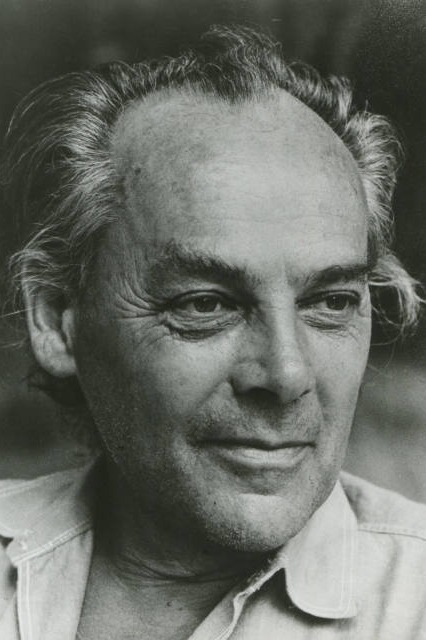
Edit pageGyorgy Kepes
Biography
György Kepes (October 4, 1906 – December 29, 2001) was a Hungarian-born American painter, designer, photographer, educator, and theorist whose work profoundly influenced modern art, design, and visual communication. Best known for integrating art, science, and technology, Kepes explored the relationships between light, perception, and visual form. As a teacher and founder of the Center for Advanced Visual Studies (CAVS) at the Massachusetts Institute of Technology (MIT), he inspired generations of artists, architects, designers, and scientists.
Early Life and Education
György Kepes was born on October 4, 1906, in Selyp, Hungary. He initially studied painting at the Royal Academy of Fine Arts in Budapest, where he developed an interest in modern art and design.
Early in his career, Kepes worked with the influential Hungarian artist and designer László Moholy-Nagy, a leading member of the Bauhaus movement. This collaboration introduced him to experimental ideas about photography, typography, industrial design, and the relationship between art and technology.
In the 1930s, Kepes lived and worked in Berlin, London, and later the United States after political unrest in Europe prompted many modernist artists to emigrate.
Career
In 1937, Kepes moved to the United States with Moholy-Nagy to help establish the New Bauhaus in Chicago, where he taught design and visual theory. His teaching emphasized experimentation and interdisciplinary collaboration.
In 1944, he published his landmark book Language of Vision, which became one of the most influential texts on visual perception, design, and art education. The book examined how people understand images, patterns, and visual relationships, influencing generations of artists, architects, and graphic designers.
In 1946, Kepes joined the faculty of the Massachusetts Institute of Technology (MIT), where he taught visual design and explored the intersection of art and scientific research.
His most significant institutional achievement came in 1967, when he founded the Center for Advanced Visual Studies (CAVS) at MIT. The center brought together artists, engineers, architects, and scientists to collaborate on projects involving light, technology, environmental art, and public installations.
Throughout his artistic career, Kepes created paintings, photographs, collages, photograms, murals, and environmental artworks, continually experimenting with light, geometry, and natural forms.
Artistic Style
György Kepes' work is characterized by:
- Abstract geometric compositions.
- Experimental use of light and shadow.
- Integration of art, science, and technology.
- Photography and photograms.
- Environmental and public art.
- Bauhaus-inspired design principles.
- Exploration of visual perception and communication.
His work sought to reveal the hidden structures and patterns underlying both nature and human-made environments.
Notable Works
Some of György Kepes' most significant works and publications include:
- Language of Vision (1944)
- The New Landscape in Art and Science (1956)
- Structure in Art and Science (1965)
- Various photograms and abstract paintings
- Environmental light installations
- Public art commissions created through MIT's Center for Advanced Visual Studies
His writings remain foundational texts in visual design and interdisciplinary art education.
Awards and Recognition
Kepes received numerous honors for his contributions to art, education, and design. His works have been exhibited internationally and are included in the collections of major institutions such as the Museum of Modern Art (MoMA), the Smithsonian American Art Museum, the Museum of Fine Arts, Boston, and the MIT Museum.
He is widely recognized as one of the pioneers of interdisciplinary art and one of the most influential educators in modern visual culture.
Personal Life
Throughout his life, Kepes remained committed to fostering collaboration between artists and scientists. His teaching philosophy emphasized creativity, innovation, and the importance of visual literacy in modern society.
He spent much of his professional career in Cambridge, Massachusetts, where he continued teaching, writing, and creating art well into his later years.
Death
György Kepes died on December 29, 2001, in Cambridge, Massachusetts, at the age of 95.