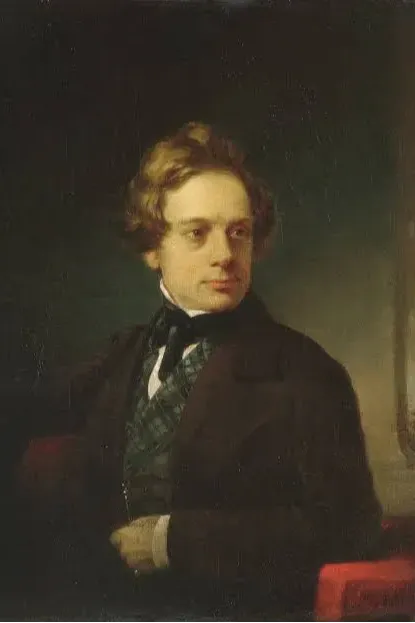
Personal info
Known for
Ultimate Talent
Gender
Male
Birthday
20 October
Location
New York, United States
Edit pageHenry Inman
Biography
Henry Inman (October 20, 1801 – January 17, 1846) was an American portrait, genre, and landscape painter regarded as one of the leading artists of the early 19th century. Renowned for his refined portraiture and depictions of prominent political leaders, Native Americans, and frontier figures, Inman played an important role in the development of American art during its formative years. His paintings are admired for their realism, elegant composition, and historical significance.
Early Life and Education
Henry Inman was born on October 20, 1801, in Utica, New York, United States. His family moved to New York City during his childhood, where he developed an early interest in art.
At the age of 14, Inman became an apprentice to the celebrated American painter John Wesley Jarvis, one of the country's foremost portrait artists. Under Jarvis's guidance, he received extensive training in portrait painting and quickly developed exceptional technical skills.
Career
Inman established himself as an independent portrait painter in New York City during the 1820s. His ability to capture both the physical likeness and personality of his subjects earned him commissions from many of America's leading politicians, writers, merchants, and military officers.
He was among the founding members of the National Academy of Design in 1825 and later served as its vice president, helping promote professional standards for American artists.
Inman became widely known for his portraits of notable historical figures, including President Andrew Jackson, President Martin Van Buren, and author Washington Irving. He also painted several portraits of Native American leaders based on the work and observations of artist and explorer George Catlin.
In the 1840s, Inman traveled to England, where he painted portraits of prominent British figures and exhibited his work to favorable reviews. His success abroad further enhanced his reputation as one of America's leading portrait painters.
In addition to portraiture, Inman produced landscapes and genre paintings inspired by American frontier life, contributing to the growing appreciation of national subjects in American art.
Artistic Style
Henry Inman's work is characterized by:
- Elegant and realistic portraiture.
- Careful attention to facial expression and character.
- Soft, balanced color harmonies.
- Refined composition and brushwork.
- Historical and frontier subjects.
- Influences from both American and European portrait traditions.
His paintings combine technical precision with warmth and psychological insight.
Notable Works
Some of Henry Inman's best-known works include:
- Ricketts's Circus (1832)
- Portrait of Andrew Jackson
- Portrait of Martin Van Buren
- Portrait of Washington Irving
- Portraits of Native American leaders based on George Catlin's studies
- Numerous portraits of prominent American statesmen and cultural figures
His portraits remain important visual records of many influential figures from early American history.
Awards and Recognition
During his lifetime, Inman was regarded as one of America's finest portrait painters. His works were widely exhibited and commissioned by leading public figures in both the United States and England.
Today, his paintings are held in major collections, including the Smithsonian American Art Museum, the Metropolitan Museum of Art, the National Portrait Gallery, the New-York Historical Society, and numerous other museums and historical institutions.
Personal Life
Henry Inman married Jane Miller and balanced a successful artistic career with family life. He remained active in New York's artistic community and played a significant role in advancing the professional status of American artists through the National Academy of Design.
Death
Henry Inman died on January 17, 1846, in New York City at the age of 44.