Personal info
Known for
Ultimate Talent
Gender
Male
Birthday
28 October
Location
New York, United States
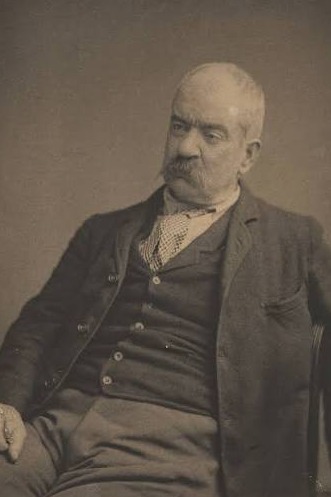
Edit pageHomer Dodge Martin
Biography
Homer Dodge Martin (October 28, 1836 – February 12, 1897) was an American landscape painter associated with the Hudson River School and later with the development of American Impressionism. Known for his atmospheric landscapes, subtle use of color, and poetic interpretations of nature, Martin became one of the most respected American landscape artists of the 19th century. His later works moved toward a more modern and expressive approach, influencing the transition from traditional landscape painting to modern American art.
Early Life and Education
Homer Dodge Martin was born on October 28, 1836, in Albany, New York, United States. He showed an early interest in art and began studying painting with local artist William Hart, a member of the Hudson River School.
Unlike many artists of his time, Martin received limited formal training and developed much of his artistic ability through observation, practice, and independent study. He was inspired by the landscapes of New York State and the traditions of American nature painting.
Career
Martin began his professional career in the 1850s, creating detailed landscapes influenced by the Hudson River School's emphasis on nature, light, and atmosphere. His early works featured carefully composed scenes of forests, rivers, mountains, and rural landscapes.
In the 1860s and 1870s, Martin gained recognition for his paintings of the American countryside. He became associated with the National Academy of Design and exhibited regularly in New York.
During the 1880s, Martin traveled to Europe and spent several years in France, where he was influenced by French Barbizon painters and emerging Impressionist ideas. His style gradually became less focused on precise realism and more interested in mood, atmosphere, and emotional response.
After returning to the United States, he continued creating landscapes with increasingly simplified forms and subtle tonal effects. His later paintings showed a transition toward modernist approaches to landscape painting.
Artistic Style
Homer Dodge Martin's work is characterized by:
- Atmospheric landscape painting.
- Subtle and harmonious color.
- Poetic interpretations of nature.
- Influence from the Hudson River School.
- Later influence from Barbizon and Impressionism.
- Emphasis on mood, light, and emotion.
- Soft, expressive brushwork.
His landscapes often evoke a sense of quietness, mystery, and natural beauty.
Notable Works
Some of Homer Dodge Martin's most celebrated works include:
- A Road in the Mountains (1860s)
- The Adirondacks
- The Iron Mine
- The North Woods
- View from the Mountains
- The Last of the Buffalo
His later landscapes are especially admired for their atmospheric qualities and emotional depth.
Awards and Recognition
Martin received significant recognition during his lifetime and became a member of the National Academy of Design in 1874. His paintings were exhibited widely and were acquired by major collectors and institutions.
Today, his works are held in important museum collections, including the Metropolitan Museum of Art, the Smithsonian American Art Museum, the National Gallery of Art, and other leading American museums.
Personal Life
Homer Dodge Martin married Mary J. Taylor in 1860. He lived and worked mainly in New York but also spent extended periods in Europe, particularly France, where he continued to develop his artistic style.
In his later years, Martin suffered from declining eyesight, which affected his ability to paint but did not diminish his influence or reputation.
Death
Homer Dodge Martin died on February 12, 1897, in St. Paul, Minnesota, at the age of 60.