Personal info
Known for
Ultimate Talent
Gender
Male
Birthday
22 February
Location
Pennsylvania, United States
Edit pageHorace Pippin
Biography
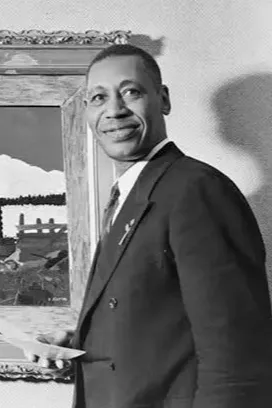
Horace Pippin (1888–1946) was an American self-taught painter and one of the most important African American artists of the first half of the 20th century. Born in West Chester, Pennsylvania, he became known for his powerful paintings depicting African American life, war, history, religion, landscapes and everyday experiences. Despite having no conventional artistic education, Pippin developed a highly individual style distinguished by bold outlines, strong colors and simplified forms.
Early Life
Horace Pippin was born on February 22, 1888, in West Chester, Pennsylvania, to Horace Pippin and Harriet Johnson Pippin. His grandparents had been enslaved. When he was about two years old, his family moved to Goshen, New York, where he spent much of his childhood.
Pippin showed an interest in drawing from an early age. In 1898, when he was about ten years old, he won a box of crayons in a drawing contest. He later recalled making drawings of horses and jockeys associated with the famous Goshen racetrack. However, financial difficulties forced him to leave school after completing the eighth grade in 1902. He subsequently worked at a variety of jobs, including as a hotel porter, laborer, mover and iron molder.
Military Service and World War I
A major turning point in Pippin's life came during World War I. In 1917, he enlisted in the U.S. Army and served with the 369th Infantry Regiment, an African American unit that fought in France. The regiment became famous for its combat service and was later associated with the nickname "Harlem Hellfighters."
During the fighting, Pippin was shot in the right shoulder by a German sniper. The injury permanently weakened and partially paralyzed his right arm. He returned to the United States in early 1919, received an honorable discharge and was awarded a disability pension. He was also awarded the French Croix de Guerre, while his Purple Heart was granted retroactively in 1945.
His wartime experiences became an important source of inspiration for his later paintings. His drawings and paintings about soldiers, trenches and the psychological effects of war became some of the most powerful elements of his artistic legacy.
Return to Art
After the war, Pippin married Jennie Ora Fetherstone Wade Giles in 1920 and settled in West Chester, Pennsylvania. Because his injured arm prevented him from returning easily to heavy manual labor, he took various jobs and struggled financially.
Art gradually became an important part of his recovery. Around 1925, he began creating images by burning designs into wooden panels with a heated poker, a technique known as pyrography. He worked with his left hand to support and guide his injured right arm. He eventually began experimenting with oil paint.
Pippin completed his first major oil painting, The End of the War: Starting Home, around 1930. The work drew on his own memories of military service and established war as one of the recurring themes of his career.
Rise to National Recognition
Pippin's artistic career developed rapidly during the late 1930s. Artist N. C. Wyeth and art critic Christian Brinton became interested in his work and helped arrange his first solo exhibition at the West Chester Community Center in 1937.
The following year, four of Pippin's paintings were included in the traveling exhibition Masters of Popular Painting, organized by the Museum of Modern Art. This exposure introduced his work to a national audience and helped establish him as an important self-taught American artist.
In 1939, Pippin met Philadelphia art dealer Robert Carlen, who became his dealer. Carlen also introduced him to collector Albert C. Barnes, who purchased several of his works. Following a successful exhibition at the Carlen Galleries in 1940, Pippin's productivity increased considerably, and his paintings were exhibited and collected across the United States.
Major Works
Some of Pippin's best-known paintings include:
The End of the War: Starting Home
This important early painting reflects Pippin's memories of World War I and the experience of soldiers returning from combat. It is regarded as one of his significant antiwar works.
John Brown Going to His Hanging
Pippin used the historical figure John Brown to explore themes of slavery, abolition and American racial history. The painting demonstrates his ability to transform historical events into emotionally powerful compositions.
Prejudice
Painted in 1943, Prejudice addresses racial discrimination and injustice. It is one of the works that demonstrates the social and political dimension of Pippin's art.
Domino Players
This 1943 painting depicts African American social life and demonstrates Pippin's interest in ordinary moments and community activities.
Abe Lincoln, The Great Emancipator
Pippin also painted historical figures such as Abraham Lincoln, connecting American history with questions of freedom and racial equality.
Final Years and Death
During the 1940s, Pippin became increasingly successful. His paintings were exhibited in galleries and museums, and important collectors began acquiring his work. He became one of the most prominent African American painters of his generation.
Pippin's career, however, was relatively brief. He died of a stroke on July 6, 1946, in West Chester, Pennsylvania, at the age of 58.