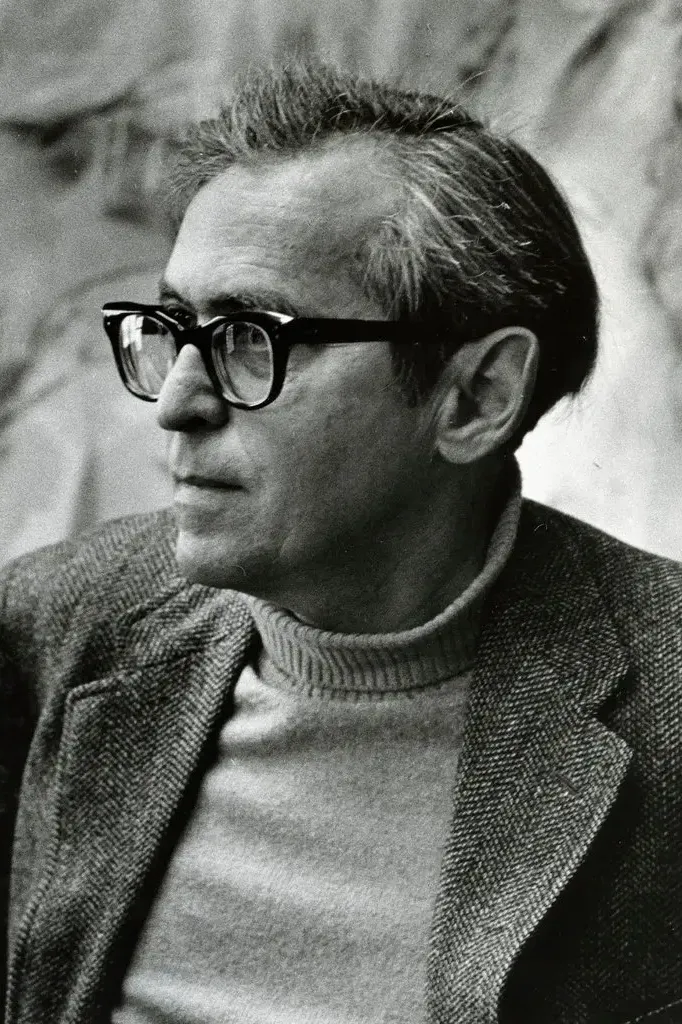
Personal info
Known for
Ultimate Talent
Gender
Male
Birthday
03 January
Location
Massachusetts, United States
Edit pageJack Levine
Biography
Jack Levine (January 3, 1915 – November 8, 2010) was an American painter and printmaker renowned for his satirical figurative works that criticized political corruption, war, greed, and social injustice. Combining elements of Social Realism, Expressionism, and the techniques of the Old Masters, Levine created powerful paintings filled with symbolism, moral commentary, and psychological insight. He is regarded as one of the most important American social realist artists of the 20th century.
Early Life and Education
Jack Levine was born on January 3, 1915, in Boston, Massachusetts, United States, to Lithuanian Jewish immigrant parents. He grew up in the South End of Boston, where the realities of working-class life and urban poverty deeply influenced his artistic outlook.
Levine displayed artistic talent from an early age and studied at the School of the Museum of Fine Arts, Boston, where he received classical training in drawing and painting. He was influenced by European masters such as Rembrandt, El Greco, and Francisco Goya, whose dramatic use of light and social commentary would later shape his own work.
Career
Levine began exhibiting his work in the 1930s while participating in the Works Progress Administration (WPA) Federal Art Project, a New Deal program that supported American artists during the Great Depression.
His breakthrough came in 1937 with the painting Feast of Pure Reason, a satirical portrayal of politicians, military officers, and businessmen gathered around a banquet table. The painting established Levine as a fearless critic of political power and social inequality.
Throughout the 1940s and 1950s, Levine continued producing figurative works that addressed themes of war, religion, corruption, and human morality. His paintings often featured exaggerated facial expressions, theatrical compositions, and symbolic imagery that exposed the flaws of individuals and institutions.
Although Abstract Expressionism dominated the American art world after World War II, Levine remained committed to figurative painting, believing that narrative art could effectively address contemporary social and political issues.
Over a career spanning more than seven decades, he exhibited widely in the United States and internationally, earning recognition for both his technical skill and his uncompromising social vision.
Artistic Style
Jack Levine's work is characterized by:
- Satirical figurative painting.
- Social and political commentary.
- Rich, dark color palettes.
- Dramatic lighting inspired by the Old Masters.
- Expressive, exaggerated human figures.
- Symbolism and moral allegory.
- Influences from Social Realism and Expressionism.
His paintings combine classical techniques with biting criticism of power, hypocrisy, and injustice.
Notable Works
Some of Jack Levine's most celebrated works include:
- Feast of Pure Reason (1937)
- The Card Game (1942)
- Welcome Home (1946)
- Gangster Funeral (1950)
- Cain and Abel II
- Birmingham '63
These works demonstrate his mastery of narrative painting and his lifelong commitment to social criticism.
Awards and Recognition
Levine received numerous honors throughout his career and was elected to the American Academy of Arts and Letters. His works are held in the collections of major institutions, including the Museum of Modern Art (MoMA), the Metropolitan Museum of Art, the Whitney Museum of American Art, the Smithsonian American Art Museum, the Museum of Fine Arts, Boston, and many other museums.
He is regarded as one of the leading figures in American Social Realism.
Personal Life
Jack Levine remained committed to figurative painting throughout his life, even as abstract art dominated the postwar art world. He believed that artists had a responsibility to engage with social and political issues through their work.
Known for his wit and intellectual curiosity, Levine continued painting and exhibiting well into his later years, maintaining an active role in the American art community.
Death
Jack Levine died on November 8, 2010, in New York City at the age of 95.