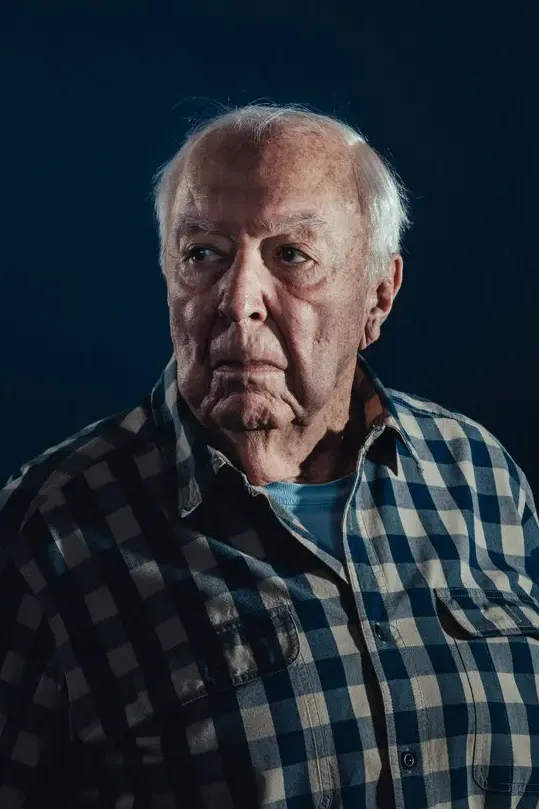
Personal info
Known for
Ultimate Talent
Gender
Male
Birthday
15 May
Location
Georgia, United States
Edit pageJasper Johns
Biography
Jasper Johns (born May 15, 1930) is an American painter, sculptor, printmaker, and one of the most influential artists of the 20th and 21st centuries. Best known for his paintings of familiar symbols such as the American flag, targets, numbers, maps, and letters, Johns challenged traditional ideas about representation and meaning in art. His innovative work helped bridge the gap between Abstract Expressionism, Neo-Dada, and Pop Art, making him a pivotal figure in the evolution of modern and contemporary art.
Early Life and Education
Jasper Johns was born on May 15, 1930, in Augusta, Georgia, United States, and was raised in Allendale, South Carolina. From an early age, he showed an interest in drawing and painting despite having limited exposure to art.
After graduating from high school, Johns briefly attended the University of South Carolina before moving to New York City in 1949 to study at the Parsons School of Design. His studies were interrupted by military service during the Korean War, during which he served in the United States Army from 1952 to 1954.
After completing his military service, Johns returned to New York, where he became involved with the city's vibrant avant-garde art scene.
Career
Johns' breakthrough came in the mid-1950s with his groundbreaking painting Flag (1954–1955), which depicted the American flag using encaustic (pigmented wax) and collage. Rather than treating the flag as a political symbol, Johns presented it as an everyday object, encouraging viewers to reconsider the relationship between image and meaning.
His early works featuring targets, numbers, alphabets, maps, and everyday objects attracted widespread attention and distinguished him from the dominant Abstract Expressionist movement. By focusing on universally recognizable symbols, Johns shifted attention from personal expression to perception and interpretation.
Throughout the 1960s and 1970s, Johns expanded his practice to include sculpture, printmaking, and mixed media. He experimented with layering, texture, symbolism, and complex visual references, producing works that explored memory, language, and the nature of artistic representation.
Johns maintained close friendships and collaborations with composer John Cage, choreographer Merce Cunningham, and artist Robert Rauschenberg, all of whom influenced his creative development.
Over the following decades, he continued producing innovative works while remaining one of the most respected figures in contemporary art.
Artistic Style
Jasper Johns' work is characterized by:
- Everyday symbols such as flags, targets, maps, and numbers.
- Encaustic painting techniques.
- Layered textures and collage.
- Minimal yet conceptually rich compositions.
- Exploration of perception, memory, and meaning.
- Influences from Neo-Dada, Pop Art, and Conceptual Art.
His work often invites viewers to question the relationship between familiar images and their cultural significance.
Notable Works
Some of Jasper Johns' most celebrated works include:
- Flag (1954–1955)
- Target with Four Faces (1955)
- Three Flags (1958)
- Map (1961)
- Painted Bronze (1960)
- Numbers in Color (1958–1959)
These works are considered landmarks of postwar American art and continue to influence artists worldwide.
Awards and Recognition
Jasper Johns has received numerous prestigious honors throughout his career. Among his many awards are:
- Golden Lion for Lifetime Achievement at the Venice Biennale (1988).
- National Medal of Arts (1990).
- Presidential Medal of Freedom (2011), the highest civilian honor in the United States.
- Praemium Imperiale for Painting (1996).
His works are held in the collections of major museums, including the Museum of Modern Art (MoMA), the Whitney Museum of American Art, the Metropolitan Museum of Art, the National Gallery of Art, the Art Institute of Chicago, the Tate Modern, and many other institutions worldwide.
Personal Life
Jasper Johns has lived and worked primarily in New York and Connecticut. Throughout his career, he has maintained a relatively private personal life, allowing his work to remain the primary focus of public attention.
His long association with artists, musicians, writers, and dancers has contributed significantly to his multidisciplinary approach to art.