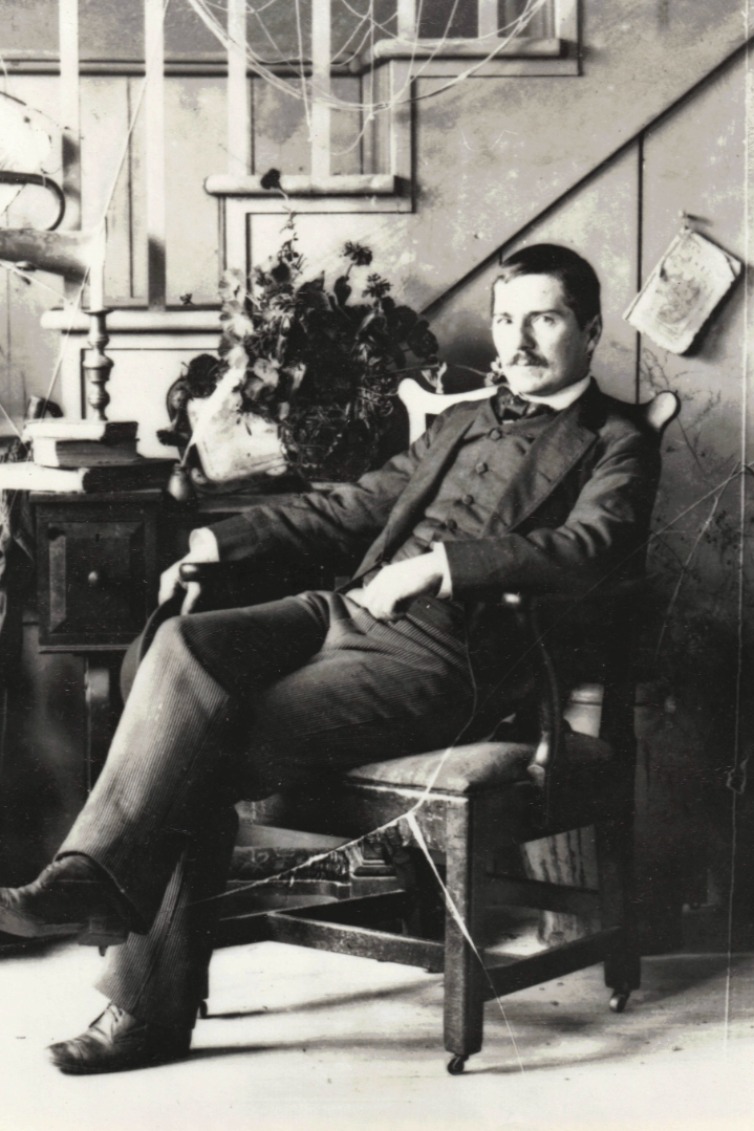
Personal info
Known for
Ultimate Talent
Gender
Male
Birthday
21 May
Location
Pennsylvania, United States
Edit pageJohn Frederick Peto
Biography
John Frederick Peto (May 21, 1854 – November 23, 1907) was an American painter best known for his trompe-l'œil still-life paintings. A major figure in American Realism, Peto created highly detailed compositions that transformed ordinary objects such as letters, books, pipes, and everyday items into thoughtful reflections on memory, time, and human experience. Although he was less recognized during his lifetime, he is now considered one of the finest American still-life painters of the 19th century.
Early Life and Education
John Frederick Peto was born on May 21, 1854, in Philadelphia, Pennsylvania, United States. He came from a family with artistic interests and developed a passion for painting at an early age.
He studied at the Pennsylvania Academy of the Fine Arts in Philadelphia, one of America's leading art schools. There he trained in traditional painting techniques and became influenced by the realism and still-life traditions of earlier artists.
During his time in Philadelphia, Peto became friends with fellow still-life painter William Harnett, who greatly influenced the development of trompe-l'œil painting.
Career
Peto began his career as a painter in Philadelphia, creating still lifes and participating in exhibitions. In the 1870s and 1880s, he worked alongside William Harnett and became associated with the American trompe-l'œil movement.
Unlike Harnett, who often painted objects with a bright and polished appearance, Peto developed a more emotional and atmospheric style. His paintings frequently showed worn, aged, or forgotten objects, suggesting themes of nostalgia, memory, and the passage of time.
In 1889, Peto moved to Island Heights, New Jersey, where he lived and worked for the rest of his life. Away from major art centers, his reputation declined during his later years, but he continued producing remarkable still-life paintings.
His works often featured objects pinned or arranged against wooden backgrounds, creating the illusion that they were physically attached to the surface.
Artistic Style
John Frederick Peto’s work is characterized by:
- Trompe-l'œil realism.
- Still-life compositions.
- Detailed rendering of everyday objects.
- Muted colors and dramatic lighting.
- Themes of memory and time.
- Emotional interpretation of ordinary items.
- Strong sense of texture and material.
His paintings often gave common objects a sense of personal history and emotional meaning.
Notable Works
Some of John Frederick Peto’s best-known works include:
- The Old Violin (1890)
- Reminiscences of 1865 (1901)
- Poor Man’s Store (1901)
- Take Your Choice (1885)
- Books, Pipes and Letters series
- Various trompe-l'œil still lifes
These works demonstrate his ability to turn simple objects into powerful visual stories.
Awards and Recognition
Although Peto received limited recognition during his lifetime, his reputation grew significantly in the 20th century. Today, he is regarded as one of the leading American trompe-l'œil painters.
His works are included in major collections such as the Metropolitan Museum of Art, the National Gallery of Art, the Philadelphia Museum of Art, and the Smithsonian American Art Museum.
Personal Life
John Frederick Peto married Christine Neuberg in 1887. After moving to Island Heights, New Jersey, he lived a quieter life away from the main art world.
Despite limited public attention, he remained dedicated to painting and continued exploring the artistic possibilities of still life.
Death
John Frederick Peto died on November 23, 1907, in Island Heights, New Jersey, at the age of 53.