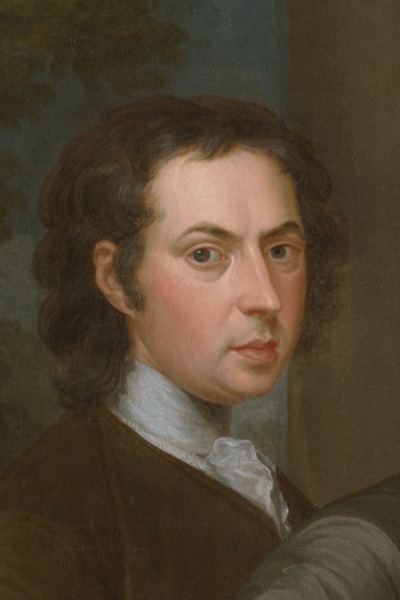
Personal info
Known for
Ultimate Talent
Gender
Male
Birthday
24 March
Location
Scotland, United Kingdom
Edit pageJohn Smibert
Biography
John Smibert (March 24, 1688 – April 2, 1751) was a Scottish-American painter and portrait artist who played an important role in the development of colonial American art. He is regarded as one of the earliest academically trained painters to establish a successful career in the American colonies. He was particularly known for his formal portraits of prominent political, religious, and wealthy figures.
Early Life and Education
John Smibert was born on March 24, 1688, in Edinburgh, Scotland. He was the son of John Smibert, a wool dyer, and Alison Bell. At the age of fourteen, he became an apprentice to a house painter and plasterer, where he developed his artistic skills.
In 1709, he moved to London, where he worked as a coach painter and copied paintings by European masters. He later studied at the Great Queen Street Academy under the influence of renowned portrait painter Sir Godfrey Kneller. Between 1719 and 1722, he travelled to Italy, visiting Rome and Florence, where he studied classical art and copied works by celebrated Renaissance painters.
Career
After returning from Italy, Smibert established himself as a portrait painter in London. He gained recognition for his ability to create detailed and realistic portraits of wealthy patrons, professionals, and aristocratic figures.
In 1728, he joined Irish philosopher and clergyman George Berkeley on an expedition to establish a college in Bermuda, where Smibert was expected to teach painting and drawing. The project ultimately failed, and after arriving in America in 1729, he settled in Boston, Massachusetts.
There, he established a successful portrait-painting studio and became one of the most sought-after artists in colonial New England. He painted numerous prominent individuals, including religious leaders, merchants, politicians, and wealthy families. His work helped introduce European academic painting traditions to the American colonies.
Smibert also operated an art shop selling paintings, prints, and artistic supplies. In addition to painting, he contributed to architectural design and prepared the original plans for Boston's Faneuil Hall in 1742.
Notable Works and Artistic Style
Smibert was recognised for his traditional European portrait style, characterised by realistic facial expressions, careful attention to clothing and formal compositions. His most celebrated painting is The Bermuda Group (1729–1731), a large group portrait featuring George Berkeley and members of his expedition.
Other notable works include portraits of Benjamin Colman, Peter Faneuil, Judge Edmund Quincy, and Catherine Page Brinley Lyde. His paintings provide valuable historical records of prominent people and society in eighteenth-century colonial America.
Personal Life and Death
Smibert married Mary Williams in Boston in 1730, and they had children, including a son, Nathaniel Smibert, who also became a painter. John Smibert continued working as an artist until his later years. He died on April 2, 1751, in Boston, Massachusetts, at the age of 63.