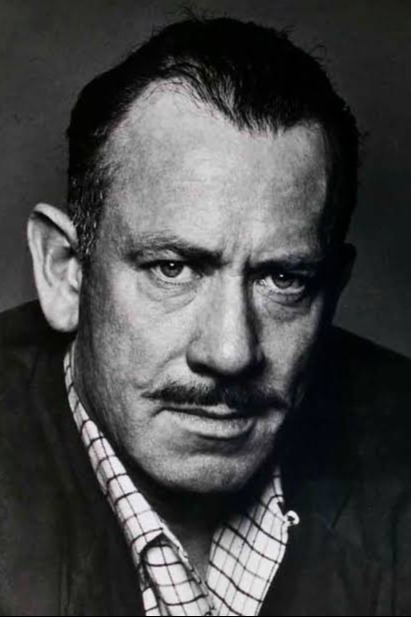
Personal info
Known for
Writer
Gender
Male
Birthday
27 February
Location
California, United States
Edit pageJohn Steinbeck
Biography
John Steinbeck (February 27, 1902 – December 20, 1968) was an American novelist, short-story writer, and journalist who became one of the most influential writers of 20th-century American literature. His works often explored poverty, social injustice, migration, working-class life, and the struggles of ordinary people.
Early Life
John Ernst Steinbeck Jr. was born on February 27, 1902, in Salinas, California. He grew up in the fertile Salinas Valley, an area that later became the setting for many of his stories.
He attended Stanford University, where he studied intermittently but did not complete a degree. While at Stanford, he developed his interest in writing and worked at various jobs to support himself.
Literary Career
Steinbeck published his first novel, Cup of Gold, in 1929. Although it attracted limited attention, he continued writing and gradually established himself as an important American author.
His breakthrough came with novels such as Tortilla Flat (1935) and Of Mice and Men (1937). His writing combined realistic descriptions of American life with compassion for people living on society's margins.
The Grapes of Wrath
Steinbeck's most famous novel, The Grapes of Wrath, was published in 1939. The novel follows the Joad family, who leave Oklahoma during the Great Depression and travel to California in search of work and a better life.
The book became a major literary and cultural success. It won the Pulitzer Prize for Fiction in 1940 and is widely regarded as one of the most important American novels of the 20th century.
The novel was adapted into the acclaimed 1940 film The Grapes of Wrath, directed by John Ford.
Other Major Works
Steinbeck produced a substantial body of fiction and nonfiction. His important works include:
- The Pastures of Heaven (1932)
- Tortilla Flat (1935)
- In Dubious Battle (1936)
- Of Mice and Men (1937)
- The Grapes of Wrath (1939)
- The Moon Is Down (1942)
- Cannery Row (1945)
- The Pearl (1947)
- East of Eden (1952)
- The Winter of Our Discontent (1961)
- Travels with Charley: In Search of America (1962)
Themes and Writing Style
Steinbeck frequently focused on working-class communities, agricultural laborers, migrants, and economically disadvantaged families. His experiences growing up in California gave him firsthand knowledge of farming communities and the social conditions surrounding them.
His writing combined vivid natural descriptions with straightforward storytelling and strong social commentary. He often examined how poverty and economic hardship affected families and communities.
World War II and Journalism
During World War II, Steinbeck worked as a war correspondent and wrote about the experiences of American soldiers. His wartime observations influenced some of his later writing.
He also traveled extensively and wrote nonfiction based on his observations of American society.
Nobel Prize
In 1962, Steinbeck was awarded the Nobel Prize in Literature for his distinguished contribution to American literature. The award recognized his realistic and imaginative writing and his ability to combine humor, social awareness, and human understanding.
Personal Life
Steinbeck was married three times. His wives were Carol Henning, Gwyn Conger, and Elaine Scott. He had two sons from his second marriage.
He maintained strong connections to California throughout his life, although his work and travels took him to many parts of the United States and the world.
Death
John Steinbeck died on December 20, 1968, in New York City, at the age of 66. He died of heart disease.