Personal info
Known for
Ultimate Talent
Gender
Male
Birthday
19 March
Location
North Rhine-Westphalia, Germany
Edit pageJosef Albers
Biography
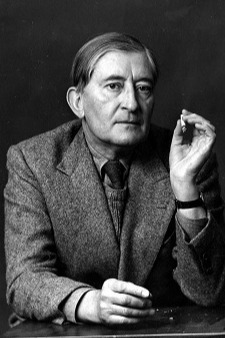
Josef Albers (1888–1976) was a German-born artist, educator, and theorist, widely recognized for his groundbreaking work in color theory and geometric abstraction. Born in Bottrop, Germany, Albers initially trained as a craftsman before studying at the Bauhaus, the influential German art school known for its modernist approach to art, design, and architecture.
At the Bauhaus, he worked under masters such as Paul Klee and Wassily Kandinsky, experiences that shaped his disciplined approach to form, color, and visual perception.
Albers’s career was marked by both his artistic practice and his teaching. He emigrated to the United States in 1933, following the closure of the Bauhaus under the Nazi regime, and joined Black Mountain College in North Carolina, where he became an influential instructor. Later, he taught at Yale University, mentoring generations of artists while developing his own unique visual language.
Albers is best known for his series “Homage to the Square, begun in 1949, which explored the interaction of colors within nested squares. Through meticulous experimentation, he demonstrated how perception of color can change depending on context, lighting, and juxtaposition. His writings, especially Interaction of Color, remain essential references in art education and design, emphasizing that color is relative, dynamic, and deeply experiential.
Throughout his life, Albers participated in exhibitions around the world and contributed significantly to modern art and design. His legacy endures not only in his own works but also in his influence on generations of artists, designers, and educators who continue to study his principles of color and form.