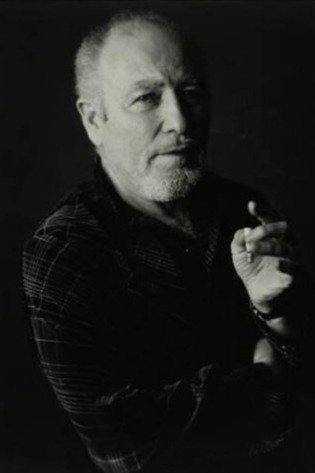
Personal info
Known for
Ultimate Talent
Gender
Male
Birthday
27 March
Location
Chernihivska, Ukraine
Edit pageJules Olitski
Biography
Jules Olitski (born Julius Oleinik; March 27, 1922 – February 4, 2007) was an American painter, printmaker, sculptor, and educator best known as one of the leading figures of Color Field painting. Recognized for his innovative use of sprayed paint, luminous colors, and atmospheric surfaces, Olitski expanded the possibilities of abstract painting in the second half of the 20th century. His works explored color, light, and space with a focus on visual experience rather than traditional imagery.
Early Life and Education
Jules Olitski was born on March 27, 1922, in Snovsk, Ukraine (then part of the Soviet Union). His family emigrated to the United States when he was an infant and settled in New York City.
He developed an interest in art at an early age and studied at the National Academy of Design and the Beaux-Arts Institute of Design in New York. He later attended the École des Beaux-Arts in Paris after receiving support from the French government.
His early exposure to European art, especially the works of modern masters, influenced his later exploration of abstraction.
Career
Olitski began his career as a figurative painter but gradually moved toward abstraction. During the 1950s, he became interested in the expressive possibilities of color and surface, moving away from traditional forms and recognizable subjects.
In the 1960s, Olitski became closely associated with the Color Field movement, alongside artists such as Mark Rothko, Helen Frankenthaler, and Morris Louis. Unlike Abstract Expressionists who emphasized brush gestures, Olitski focused on the physical qualities of paint itself.
He became famous for his technique of spraying paint directly onto large canvases, creating soft, floating fields of color. These works often appeared to have no visible brushwork, allowing color and atmosphere to become the central focus.
During the 1970s and later years, Olitski continued experimenting with texture, metallic pigments, and layered surfaces. He also worked in sculpture and printmaking, demonstrating his versatility as an artist.
Artistic Style
Jules Olitski's work is characterized by:
- Color Field painting.
- Large areas of intense color.
- Spray-painted surfaces.
- Exploration of light and atmosphere.
- Abstract compositions without figures.
- Emphasis on texture and spatial effects.
- Experimental use of materials.
His paintings often created the illusion of colors floating in space, inviting viewers to experience painting as a purely visual and emotional encounter.
Notable Works
Some of Jules Olitski’s most important works include:
- Cleopatra Flesh (1962)
- Instant Loveland (1968)
- Highway (1965)
- Patutsky in the Sky (1968)
- Woman in Landscape series
- Magic Number series
These works represent his lifelong exploration of color, surface, and perception.
Awards and Recognition
Olitski received major recognition during his career and was considered one of the most important American abstract painters of his generation.
He represented the United States at the Venice Biennale in 1966 and received numerous honors, including election to the American Academy of Arts and Letters.
His works are held in major museum collections, including the Museum of Modern Art (MoMA), the Guggenheim Museum, the Whitney Museum of American Art, and the National Gallery of Art.
Personal Life
Jules Olitski was married several times and maintained studios in New York, Vermont, and New Hampshire. He continued painting, writing, and experimenting with new techniques throughout his life.
In addition to his artistic career, he taught at institutions including Bennington College and influenced many younger artists through his ideas about color and abstraction.
Death
Jules Olitski died on February 4, 2007, in New York City, at the age of 84.