Personal info
Known for
Music Director
Gender
Male
Birthday
13 September
Location
Missouri, United States
Edit pageLeith Stevens
Biography
Leith Stevens was an American composer, conductor, arranger, and music director whose career covered Hollywood films, radio, and television. He became particularly known for his distinctive film scores and his work on science-fiction, drama, and crime films.
Early Life
Leith Stevens was born on September 13, 1909, in Mount Moriah, Missouri, United States. He was a musical prodigy and began performing professionally as a pianist at a very young age. By his teenage years, he was already working as a conductor.
In the 1920s, Stevens received a Juilliard Foundation Fellowship, further developing his musical education. He later worked with the Chicago Opera Company before moving into radio.
Radio Career
Stevens established himself in radio during the 1930s, working as a pianist, arranger, conductor, and composer.
After moving to Hollywood, he became involved with radio programs including Big Town and composed music for numerous radio productions. His radio career continued for many years and included work on programs such as Suspense, Escape, Lights Out, and Yours Truly, Johnny Dollar.
During World War II, Stevens worked with the U.S. Office of War Information, directing radio programming for the Southwest Pacific area.
Film Career
Stevens began composing for Hollywood films in the 1940s. One of his early important film projects was ** Night Song**, for which his piano concerto was incorporated into the story.
He subsequently became a prolific film composer, working across drama, science fiction, adventure, crime, and musical productions.
His notable film credits included:
- Syncopation (1942)
- Night Song (1948)
- All My Sons (1948)
- Destination Moon (1950)
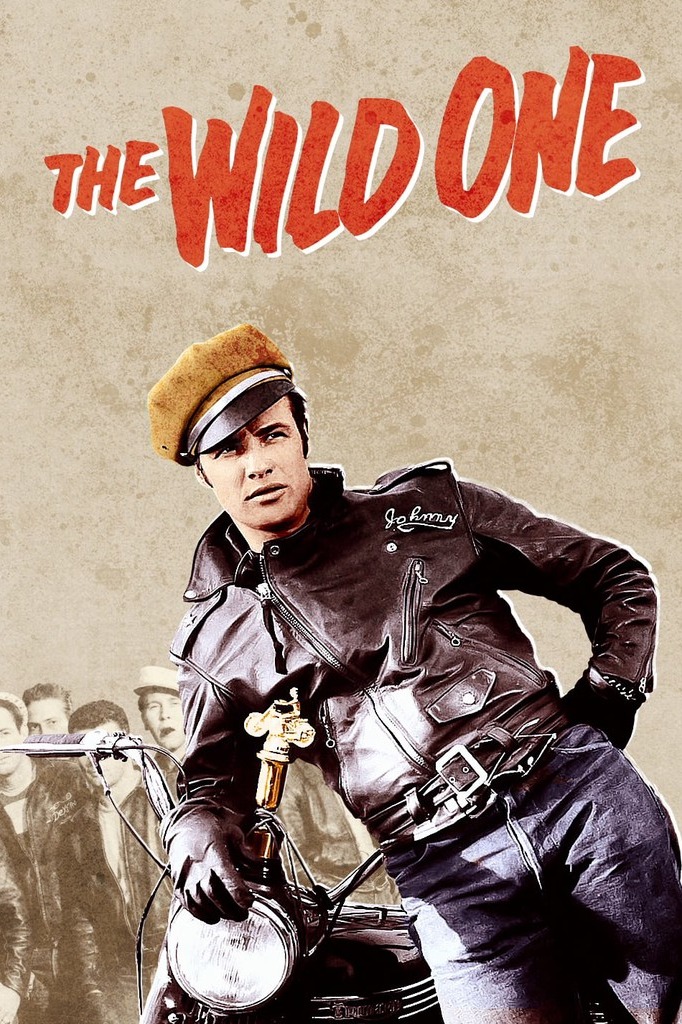
- The Wild One (1953)
- The War of the Worlds (1953)
- The James Dean Story (1957)
- The Five Pennies (1959)
Destination Moon
Stevens composed the score for ** Destination Moon (1950)**, one of the earliest major American science-fiction films to portray space travel in a relatively realistic manner.
The film became an important production in the development of science-fiction cinema, and Stevens' music helped establish its atmosphere of technological wonder and suspense.
His work on the film earned him significant recognition, including a Golden Globe nomination.
The Wild One
Stevens is particularly remembered for his score for ** The Wild One (1953)**, starring Marlon Brando.
The film follows a rebellious motorcycle gang led by Johnny Strabler. Stevens' music helped reinforce the film's themes of alienation, youthful rebellion, tension, and freedom.
His score incorporated elements of jazz and contemporary popular music, giving the film a distinctive sound that complemented its modern subject matter.
The War of the Worlds
Another major achievement was his music for ** The War of the Worlds (1953)**.
Directed by Byron Haskin, the science-fiction film was an adaptation of H. G. Wells' novel. Stevens' dramatic score contributed to the film's sense of danger and large-scale alien invasion.
The film remains one of the most influential science-fiction productions of the 1950s.
The James Dean Story
Stevens also composed the music for ** The James Dean Story (1957)**, a documentary about actor James Dean.
For this project, Stevens created a score influenced by jazz and modern musical styles. His music reflected Dean's troubled public image and the emotional themes surrounding his short life.
The soundtrack later became notable in its own right among jazz and film-music enthusiasts.
Academy Award Recognition
Stevens received several Academy Award nominations during his career.
He was nominated for his musical work, including for the song "Julie" from the 1956 film of the same name and for his score for ** The Five Pennies (1959)**.
His career ultimately earned him three Oscar nominations.
Television Career
Stevens later became highly active in television. He composed, arranged, and supervised music for numerous television productions during the 1950s and 1960s.
He worked on programs including ** Mannix, Mission: Impossible, The Odd Couple, The Brady Bunch, Daniel Boone, Voyage to the Bottom of the Sea, The Time Tunnel,** and Land of the Giants.
He also served as a music supervisor on several television series.
Musical Style
Stevens' music combined traditional orchestral scoring with elements of jazz, swing, popular music, and modern composition.
His ability to adapt his musical style to different genres made him a versatile Hollywood composer. He could create atmospheric scores for science-fiction films, energetic jazz-influenced music for youth dramas, and more traditional orchestral compositions for serious dramas.
Personal Life
Stevens was married to Mary McCoy and later to Elizabeth Stevens. He continued working in the entertainment industry throughout the 1960s.
Death
Leith Stevens died on July 23, 1970, in Los Angeles, California, at the age of 60. He suffered a fatal heart attack after learning that his wife had been killed in an automobile accident.