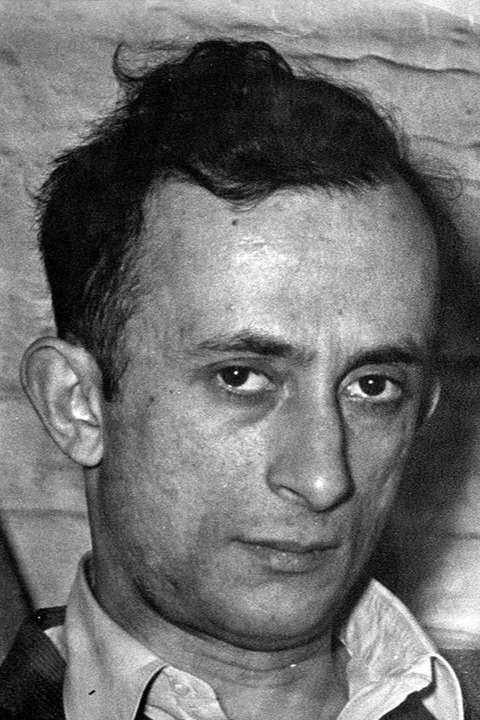
Personal info
Known for
Ultimate Talent
Gender
Male
Birthday
23 January
Location
Illinois, United States
Edit pageLeon Golub
Biography
Leon Golub (January 23, 1922 – August 8, 2004) was an American painter renowned for his large-scale, politically charged artworks that examined themes of power, violence, war, and human conflict. Over a career spanning more than five decades, Golub became one of the most influential figurative artists of the 20th century, using his paintings to confront social injustice, political oppression, and the darker aspects of human nature.
Early Life and Education
Leon Golub was born in Chicago, Illinois, United States. He developed an early interest in art and studied at the School of the Art Institute of Chicago, where he earned both bachelor's and master's degrees in fine arts. During World War II, he served in the U.S. Army, an experience that profoundly influenced his understanding of violence and conflict, themes that would become central to his artistic career.
While at the Art Institute, Golub became associated with a group of artists later known as the Monster Roster, whose emotionally expressive works reflected the anxieties of the post-war era.
Career
Golub began exhibiting his work in the 1950s and quickly established himself as a leading figure in contemporary figurative painting. Unlike many artists of the time who embraced abstraction, Golub remained committed to depicting the human figure, using it to explore political and psychological issues.
His paintings are notable for their monumental scale, rough surfaces, and raw emotional intensity. Golub often scraped the paint with knives and meat cleavers to create textured, distressed surfaces that reinforced the harsh subject matter of his work.
Throughout the 1970s and 1980s, Golub produced his most celebrated series, including paintings depicting mercenaries, interrogations, riots, torture, and political violence. These works challenged viewers to confront uncomfortable realities about war, state power, and human cruelty.
His paintings have been exhibited in major museums and galleries around the world, including retrospectives that celebrated his enduring influence on political art.
Artistic Style
Leon Golub's art is characterized by:
- Monumental figurative paintings.
- Expressive, heavily textured surfaces.
- Themes of violence, warfare, authority, and oppression.
- Psychological tension and moral ambiguity.
- A commitment to political and social commentary.
Rather than idealizing his subjects, Golub portrayed humanity in moments of vulnerability, aggression, and conflict, encouraging viewers to reflect on the consequences of power and violence.
Major Works
Some of Leon Golub's best-known works include:
- Gigantomachy series
- Mercenaries series
- Interrogation series
- White Squad series
- Napalm series
- Riot series
- Vietnam series
These paintings remain among the most significant examples of politically engaged contemporary art.
Awards and Recognition
Throughout his career, Golub received numerous honors recognizing his contribution to modern art. His work has been featured in prestigious international exhibitions, including the Venice Biennale, and is held in the permanent collections of major museums across the United States and Europe.
His influence continues to inspire artists interested in political, social, and human rights issues.
Personal Life
Leon Golub was married to acclaimed American artist Nancy Spero, whose work also explored politics, feminism, and human rights. The couple maintained independent artistic careers while supporting one another's creative development. They had three sons and were regarded as one of the most influential artistic partnerships in contemporary American art.
Death and Legacy
Leon Golub died on August 8, 2004, in New York City at the age of 82.
His legacy endures through his uncompromising exploration of violence, authority, and the human condition. Golub's paintings continue to resonate with contemporary audiences for their fearless engagement with political realities and their powerful visual language. Today, he is remembered as one of America's most important figurative painters and a pioneering voice in politically engaged contemporary art.