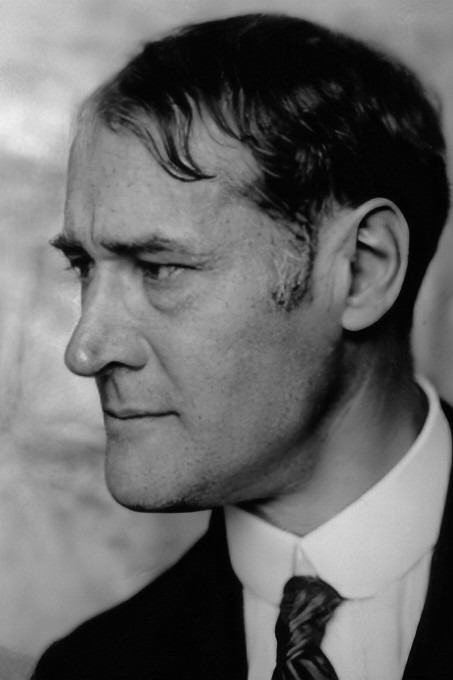
Personal info
Known for
Ultimate Talent
Gender
Male
Birthday
17 July
Location
New Jersey, United States
Edit pageLyonel Feininger
Biography
Lyonel Feininger was a German-American painter, printmaker, and caricaturist associated with Expressionism and the Bauhaus movement. Known for his crystalline architectural forms and prismatic compositions, Feininger developed a distinctive style that blended Cubism, Gothic structure, and modernist abstraction.
Early Life and Education
Lyonel Feininger was born on July 17, 1871, in New York City to German immigrant musicians. As a teenager, he moved to Germany to study music but soon shifted his focus to art. He trained at art academies in Hamburg and Berlin, immersing himself in the European avant-garde scene.
Early Career as a Cartoonist
Before gaining fame as a painter, Feininger worked as a caricaturist and illustrator for German and American publications. His comic strips, including The Kin-der-Kids and Wee Willie Winkie’s World, demonstrated his imaginative storytelling and graphic skill.
Though successful in illustration, he increasingly gravitated toward fine art and painting.
Expressionism and the Bauhaus
Feininger became associated with the German Expressionist movement and was a founding member of the influential artists’ group Die Brücke. His style evolved toward angular, faceted compositions, often depicting:
Gothic churches
Quiet towns and villages
Seascapes
Urban architecture
In 1919, he joined the Bauhaus in Weimar at the invitation of Walter Gropius. Feininger created the iconic woodcut Cathedral for the Bauhaus Manifesto, symbolizing unity between art and craft.
At the Bauhaus, he taught printmaking and became a key figure in the institution’s early years.
Artistic Style
Feininger’s mature style is characterized by:
Geometric, prism-like structures
Light refracted into sharp planes
Spiritual and architectural themes
A blend of Cubism and Expressionism
His paintings often convey a sense of quiet spirituality, with luminous color harmonies and carefully constructed compositions.
Return to the United States
With the rise of the Nazi regime in Germany, Feininger’s modernist works were labeled “degenerate art.” In 1937, he returned to the United States, settling in New York.
During his later years, he continued painting and gained renewed recognition in the American art world.
Legacy
Lyonel Feininger passed away on January 13, 1956. Today, he is celebrated as a vital link between European modernism and American art.