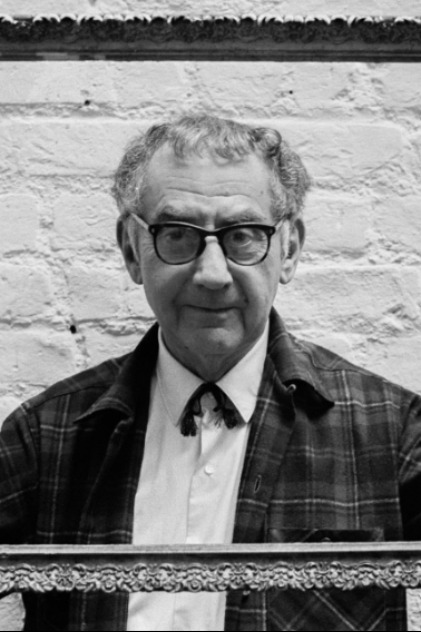
Personal info
Known for
Ultimate Talent
Gender
Male
Birthday
27 August
Location
Pennsylvania, United States
Edit pageMan Ray
Biography
Man Ray (born Emmanuel Radnitzky; August 27, 1890 – November 18, 1976) was an American modernist artist, photographer, painter, filmmaker, and creator best known for his contributions to Dada and Surrealism. A highly influential figure of the 20th-century avant-garde, Man Ray experimented across multiple artistic fields and transformed photography into a medium of conceptual and creative expression. His innovative techniques, including rayographs, solarization, and experimental photography, made him one of the most important artists of the modern era.
Early Life and Education
Man Ray was born on August 27, 1890, in Philadelphia, Pennsylvania, United States, to Russian-Jewish immigrant parents. His birth name was Emmanuel Radnitzky, but he later adopted the name Man Ray as part of his artistic identity.
He grew up in Brooklyn, New York, where he developed an early interest in drawing, painting, and design. As a young artist, he studied at the National Academy of Design and the Art Students League of New York, although he eventually rejected traditional academic training in favor of experimentation and independent exploration.
Career
Man Ray began his career as a painter and became involved with the emerging modern art movements of the early 20th century. In New York, he became associated with the American Dada movement and developed friendships with influential artists such as Marcel Duchamp and Francis Picabia.
In 1921, Man Ray moved to Paris, where he became a central figure in the Dada and Surrealist circles. There, he worked alongside leading artists and writers, including André Breton, Salvador Dalí, and Duchamp.
Although photography became his most recognized medium, Man Ray continued painting, creating films, objects, and mixed-media works throughout his career. He became famous for his innovative portrait photography, photographing many important figures in the worlds of art, literature, fashion, and culture.
His experimental photographic technique, known as the rayograph, involved placing objects directly onto photographic paper and exposing them to light, creating abstract images without the use of a camera. He also helped develop the solarization process, which produced striking reversed tones and dramatic effects in photographs.
During the 1940s, Man Ray lived in Los Angeles, where he continued painting and working in photography before returning to Paris in 1951.
Artistic Style
Man Ray's work is characterized by:
- Surrealist and Dadaist ideas.
- Experimental photography.
- Abstract compositions.
- Exploration of chance and imagination.
- Humor and unconventional techniques.
- Blending of art, science, and technology.
- Interest in dreams and the subconscious.
He believed that photography could be a form of fine art and used it to challenge traditional ideas about representation.
Notable Works
Some of Man Ray's most celebrated works include:
- Le Violon d'Ingres (1924)
- Noire et Blanche (1926)
- Rayographs series (1920s)
- Larmes (Tears) (1930)
- The Gift (1921)
- Emak-Bakia (1926, film)
- L'Étoile de mer (1928, film)
These works demonstrate his ability to combine creativity, experimentation, and visual innovation.
Awards and Recognition
Man Ray received international recognition for his contributions to modern art. His work has been exhibited in major museums and galleries around the world, including the Museum of Modern Art (MoMA), the Centre Pompidou, the Tate Modern, and the Smithsonian American Art Museum.
He received the Grand Prize for Photography at the Venice Biennale in 1961 and was honored with major retrospectives during his lifetime and after his death.
Personal Life
Man Ray had several important relationships that influenced his artistic career, including his relationship with model and photographer Kiki de Montparnasse, who became one of his most famous subjects.
He married dancer and artist Adon Lacroix (Donna Lecoeur) in 1913, though the marriage ended in divorce. Later in life, he married Juliet Browner in 1946, who supported and preserved his artistic legacy.
Death
Man Ray died on November 18, 1976, in Paris, France, at the age of 86. He was buried at the Montparnasse Cemetery in Paris.