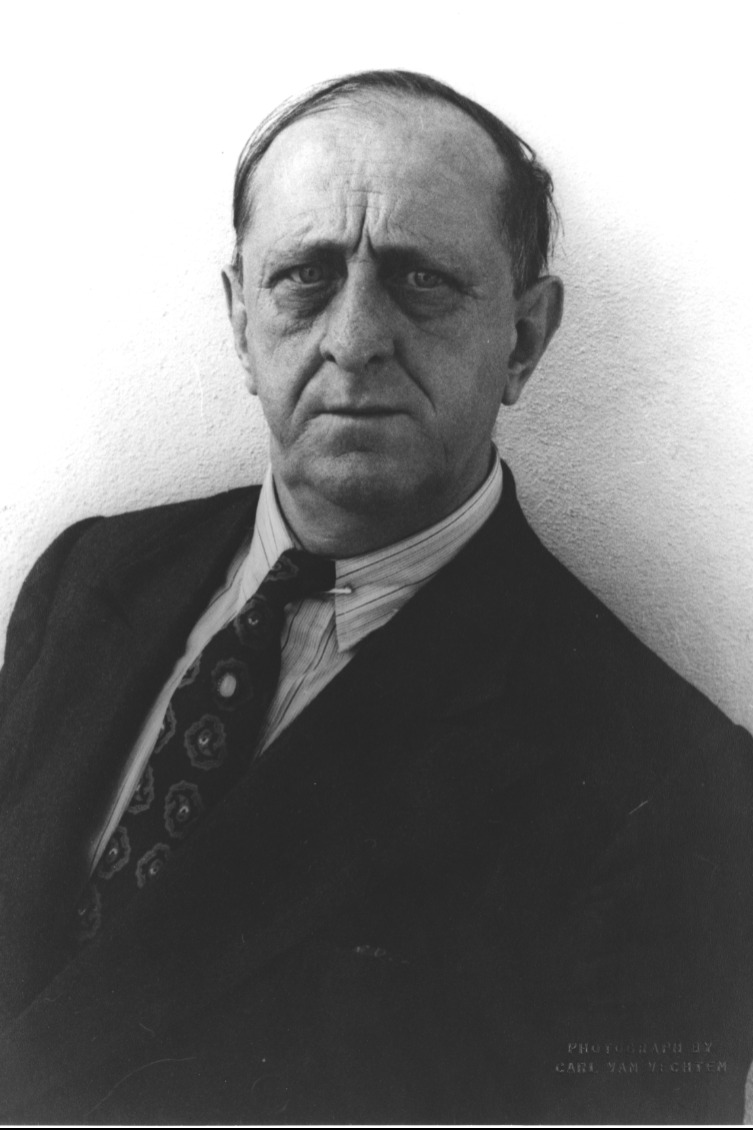
Personal info
Known for
Ultimate Talent
Gender
Male
Birthday
04 January
Location
Maine, United States
Edit pageMarsden Hartley
Biography
Marsden Hartley (January 4, 1877 – September 2, 1943) was an American modernist painter, poet, and writer whose bold and innovative works helped shape the development of modern art in the United States. Known for his expressive landscapes, symbolic abstractions, and vibrant portraits, Hartley blended elements of European modernism with distinctly American themes. He is regarded as one of the most important American painters of the early 20th century.
Early Life and Education
Marsden Hartley was born Edmund Hartley on January 4, 1877, in Lewiston, Maine, United States. After the death of his mother, he was raised primarily by relatives. As a young man, he adopted the name "Marsden" in honor of his stepmother.
Hartley studied at the Cleveland School of Art before moving to New York City, where he attended the National Academy of Design under the guidance of painter William Merritt Chase. His early artistic influences included American Impressionism and Tonalism, but he soon embraced more experimental approaches.
Career
Hartley's career gained momentum in the early 1900s when photographer and art promoter Alfred Stieglitz recognized his talent and gave him his first solo exhibition at the famous 291 Gallery in New York. Stieglitz remained one of Hartley's strongest supporters throughout his career.
Between 1912 and 1915, Hartley traveled extensively in Europe, particularly in France and Germany, where he encountered the works of leading modernist artists. Influenced by Cubism, Fauvism, and German Expressionism, he developed a bold, symbolic style characterized by vivid colors and geometric forms.
While living in Berlin before World War I, Hartley produced some of his most celebrated abstract paintings, inspired by military pageantry, symbolism, and the culture of Imperial Germany. Following the outbreak of the war, he returned to the United States and later traveled through Europe, Mexico, Bermuda, Nova Scotia, and New Mexico, drawing inspiration from diverse landscapes and cultures.
During the 1930s and early 1940s, Hartley focused increasingly on the American landscape, particularly the rugged scenery and coastal communities of his native Maine. His late paintings are among the most admired works of American Regional Modernism.
In addition to painting, Hartley was an accomplished poet and essayist, publishing several books on art, travel, and literature.
Artistic Style
Marsden Hartley's work is characterized by:
- Bold, expressive color palettes.
- Influences from German Expressionism and Cubism.
- Symbolic and abstract compositions.
- Monumental landscapes and seascapes.
- Spiritual and emotional themes.
- Portraits emphasizing psychological depth.
- A distinctive fusion of European modernism and American subjects.
His artistic style evolved throughout his career, ranging from lyrical Impressionism to abstraction and later to expressive realism.
Notable Works
Some of Marsden Hartley's most celebrated paintings include:
- Portrait of a German Officer (1914)
- The Last Stone Walls, Dogtown (1936)
- Lobster Fishermen (1940–1941)
- Mount Katahdin series
- Painting No. 50 (1914–1915)
- Madawaska—Acadian Light-Heavy (1940)
These works are considered landmarks of American modernist painting.
Awards and Recognition
Although Hartley was often underappreciated during his lifetime, his reputation grew significantly after his death. Today, he is recognized as one of the pioneers of American Modernism.
His works are held in the collections of major museums, including the Museum of Modern Art (MoMA), the Metropolitan Museum of Art, the Whitney Museum of American Art, the National Gallery of Art, the Museum of Fine Arts, Boston, and numerous other institutions.
Personal Life
Hartley remained unmarried throughout his life. His extensive travels and deep appreciation for literature, philosophy, and spirituality profoundly influenced his artistic vision. His close relationships with fellow artists, writers, and patrons also played an important role in his creative development.
Death
Marsden Hartley died on September 2, 1943, in Ellsworth, Maine, at the age of 66.