Mirza Musharraf
Biography
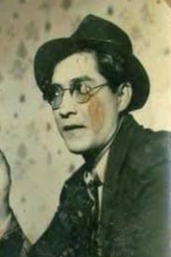
Mirza Musharraf (12 June 1912 – 10 January 1991) was a versatile figure in Hindi cinema—an actor, writer, lyricist, singer, and director—whose career spanned several decades. Best remembered for his performances in Naukar (1943), Teesra Kaun (1965), and Anokha (1975), he was especially celebrated for his work as a comedian in more than 400 films between 1938 and 1972.
Early Life and Education
Mirza Musharraf was born in Sujahanabad, Punjab, in undivided India (now in Pakistan), into a family of royal lineage. His father, Mirza Anwar Hussain, served in the police department and was posted at various locations across Punjab. Musharraf completed his matriculation from Deen Dayal High School in Lahore.
From an early age, he showed a keen interest in writing and debating. In 1930, he contributed articles to publications such as Dainik Zamindar, Tariyar, and Shariq, and also wrote for the Muslim Nationalist Party of Punjab. He was politically active as well, serving as Secretary of the Lahore Congress Committee and later becoming a member of the Punjab Congress Working Committee and Organising Secretary of the All India Moghul Federation.
Entry into Cinema
Musharraf’s involvement in journalism and politics indirectly led him to the film world. His activism earned him discounted tickets at Lahore’s Majestic Cinema Hall. A dispute with the theatre manager over ticket concessions led Musharraf to organize a protest against the screening of the 1924 film Adal-e-Jahangir, alleging it misrepresented the Mughal era. Summoned by the City Magistrate, he was asked to preview the film before the protest proceeded. Finding nothing objectionable, he approved its release—an episode that marked his first close encounter with the film industry.
Film Career
Mirza Musharraf began his acting career with Qazzak Ki Ladaki (1937), followed by Prem Yatra (1937). After appearing in several films in Lahore, he moved to Calcutta to work with director A. R. Kardar in Milap (1937), alongside Gul Hamid and Vimla Kumari. He also acted in Mandir (1937).
Later, he relocated to Bombay to collaborate again with Kardar in Baghban (1938). In this film, Musharraf not only acted—playing the role of a convict—but also demonstrated his talent as a lyricist and composer. Of the film’s ten songs, he wrote nine; only one was penned by Hafeez Jalandhari. The songs were well-received and added to his growing reputation in the industry.
Following the success of Baghban, Musharraf married and became a favorite collaborator of A. R. Kardar. Gradually, he began specializing in comic roles, eventually becoming one of Hindi cinema’s most prolific comedians. Over the course of his career, he appeared in more than 400 films, carving out a distinct identity through his expressive style and impeccable comic timing.
Work as a Lyricist and Singer
In addition to acting, Musharraf contributed as a lyricist and occasionally as a playback singer. He sang in films such as Piya Milan (1945), Captain Kishore (1957), and Gharib Ka Laal (1959). His song “Tujhe Bibbo kahun ya Sulochana...” from Gharib Ka Laal gained popularity.
He also performed in the song “Hum to tere Dil ke bangle mein aana mangta...” with Meena Kumari in her first social film Magroor (1950). Musharraf claimed to have given Meena Kumari’s father, Master Ali Baksh, an opportunity as a music director in the film Vaada, though Ali Baksh had previously composed for Dost. Despite the modest response to Vaada’s music, Musharraf’s association with such talents reflected his wide-ranging involvement in cinema.
Later Years and Legacy
Though primarily recognized as a comedian, Mirza Musharraf’s contributions extended across writing, composing, singing, and direction. His multifaceted abilities made him a valuable presence in the evolving landscape of Hindi cinema from the 1930s through the early 1970s.
Mirza Musharraf passed away on 10 January 1991, leaving behind a rich legacy of entertainment. His long and varied career stands as a testament to his adaptability and passion for the performing arts, ensuring his place among the memorable character artists of classic Hindi cinema.