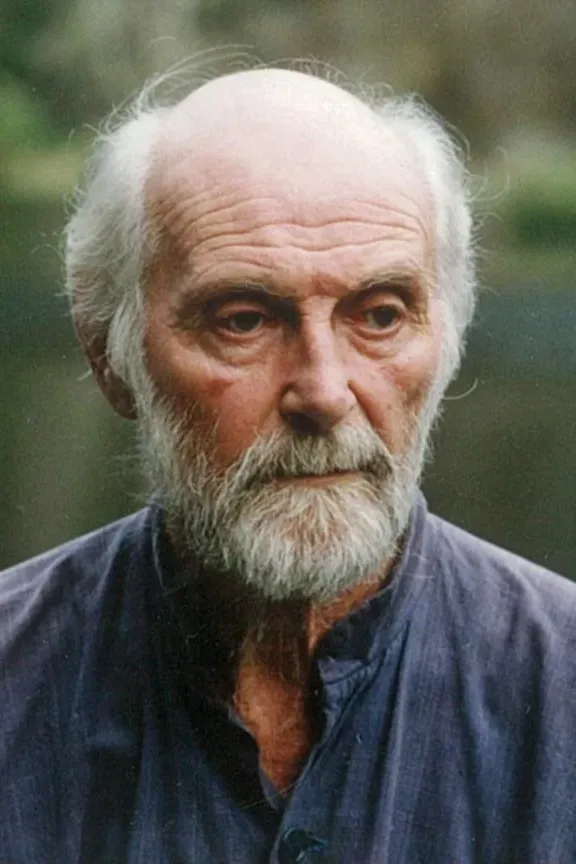
Personal info
Known for
Ultimate Talent
Gender
Male
Birthday
28 August
Location
Oregon, United States
Edit pageMorris Graves
Biography
Morris Graves (August 28, 1910 – May 5, 2001) was an American painter best known for his mystical and contemplative works inspired by nature, spirituality, and East Asian philosophy. A leading member of the Northwest School, Graves created symbolic paintings of birds, flowers, animals, and natural landscapes that explored themes of inner peace, transcendence, and the relationship between humanity and the natural world.
Early Life and Education
Morris Graves was born in Fox Valley, Oregon, United States. When he was a child, his family moved to Seattle, Washington, where he developed a deep appreciation for the forests, mountains, and wildlife of the Pacific Northwest.
Unlike many of his contemporaries, Graves had little formal artistic training. He briefly attended high school before leaving to work various jobs, including serving as a cabin boy on merchant ships. His travels to Asia exposed him to Chinese and Japanese art, Buddhism, Taoism, and calligraphy, influences that became central to his artistic vision.
Career
Graves began exhibiting his paintings during the 1930s and soon became associated with the Northwest School, alongside artists such as Mark Tobey, Kenneth Callahan, and Guy Anderson. Together, they developed a distinctive regional style that combined modernism with spiritual and natural themes.
During the 1940s, Graves gained national recognition through exhibitions at major American museums and galleries. His paintings of birds, owls, and other animals became particularly admired for their symbolic meaning and meditative quality.
Throughout his career, Graves sought to portray the spiritual essence of living beings rather than their physical appearance. His work often reflected his interest in Eastern philosophy, meditation, and the interconnectedness of all life.
Later in life, Graves lived in Ireland for several years before returning to the United States. He continued painting and experimenting with different artistic techniques throughout his career.
Artistic Style
Morris Graves' work is characterized by:
- Symbolic depictions of birds, animals, and plants.
- Spiritual and mystical themes.
- Influences from Buddhism, Taoism, and East Asian art.
- Delicate brushwork and luminous colors.
- Atmospheric compositions emphasizing silence and contemplation.
- A deep connection with nature.
His paintings often blur the boundary between realism and abstraction, creating dreamlike images that invite quiet reflection.
Notable Works
Some of Morris Graves' best-known works include:
- Blind Bird
- Little Known Bird of the Inner Eye
- Bird Singing in the Moonlight
- Dove of Peace
- Night Owl
- The White Heron
These paintings exemplify his fascination with birds as symbols of spiritual awareness and freedom.
Awards and Recognition
Graves received widespread acclaim during the 1940s and remained one of the most respected artists of the Pacific Northwest throughout his life. His work has been exhibited in leading museums and galleries across the United States and internationally.
His paintings are included in the collections of major institutions, including the Museum of Modern Art (MoMA), the Smithsonian American Art Museum, the Seattle Art Museum, and other prominent museums.
Personal Life
Morris Graves lived a quiet and independent life, preferring rural settings surrounded by nature. He was deeply interested in philosophy, meditation, literature, and environmental conservation, all of which influenced his artistic practice.
He maintained close friendships with fellow Northwest School artists while remaining committed to his own distinctive creative vision.
Death
Morris Graves died on May 5, 2001, in Loleta, California, at the age of 90.