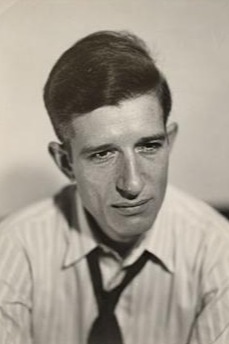
Personal info
Known for
Ultimate Talent
Gender
Male
Birthday
28 November
Location
Maryland, United States
Edit pageMorris Louis
Biography
Morris Louis (born Morris Louis Bernstein; November 28, 1912 – September 7, 1962) was an American painter and one of the leading figures of the Color Field painting movement. Known for his large-scale canvases, flowing washes of transparent color, and innovative staining techniques, Louis helped redefine abstract painting in postwar America. Alongside artists such as Mark Rothko, Barnett Newman, and Helen Frankenthaler, he played a major role in moving abstraction away from gesture and toward pure color and form.
Early Life and Education
Morris Louis was born on November 28, 1912, in Baltimore, Maryland, United States. He grew up in a working-class Jewish family and developed an interest in art at an early age.
Louis studied at the Maryland Institute College of Art (MICA) in Baltimore from 1929 to 1933. After completing his studies, he worked various jobs while continuing to develop his painting skills.
During the 1930s, Louis became involved with the Works Progress Administration (WPA) Federal Art Project, where he worked alongside other artists and gained valuable experience in large-scale painting and public art.
Career
Louis moved to New York City in the 1930s, where he became connected with the emerging modern art movement. In the 1950s, he met fellow artist Helen Frankenthaler, whose innovative technique of staining diluted paint directly into unprimed canvas had a profound influence on his work.
After visiting Frankenthaler's studio in 1953, Louis began experimenting with a similar approach, developing his own method of pouring thinned acrylic paint onto canvas. This technique allowed colors to soak into the fabric rather than sit on the surface, creating luminous fields of color with a sense of depth and movement.
Louis returned to Washington, D.C., in 1952, where he spent the remainder of his career. He created several important series, including Veils, Unfurleds, Stripes, and Columns, which explored the emotional and visual power of color.
Despite limited public recognition during much of his lifetime, Louis became increasingly influential among younger artists and helped establish Washington, D.C., as an important center for modern painting.
Artistic Style
Morris Louis's work is characterized by:
- Color Field abstraction.
- Stained canvas technique.
- Large-scale compositions.
- Transparent layers of flowing color.
- Emphasis on color relationships rather than imagery.
- Minimalist and meditative qualities.
- Use of acrylic paint.
His paintings removed traditional brushwork and focused on the interaction between color, surface, and space.
Notable Works
Some of Morris Louis's most celebrated works include:
- Saraband (1959)
- Point of Tranquility (1959)
- Alpha-Phi (1961)
- Unfurled series (1960–1961)
- Veil series (1954–1960)
- Stripe series (1961–1962)
These works represent some of the most important achievements in Color Field painting.
Awards and Recognition
Although Louis did not achieve widespread fame during his lifetime, his reputation grew rapidly after his death. His works are now held in major museum collections, including the Museum of Modern Art (MoMA), the Whitney Museum of American Art, the National Gallery of Art, the Solomon R. Guggenheim Museum, and the Tate Modern.
He is considered one of the most important American abstract painters of the postwar period.
Personal Life
Morris Louis married Marcella Siegel in 1947, and the couple had two daughters. He was known as a private and dedicated artist who focused intensely on developing his unique approach to painting.
Much of his work was created in isolation, with limited public exposure during his lifetime, but his artistic innovations had a lasting influence on modern painting.
Death
Morris Louis died on September 7, 1962, in Washington, D.C., at the age of 49, after complications from lung cancer.