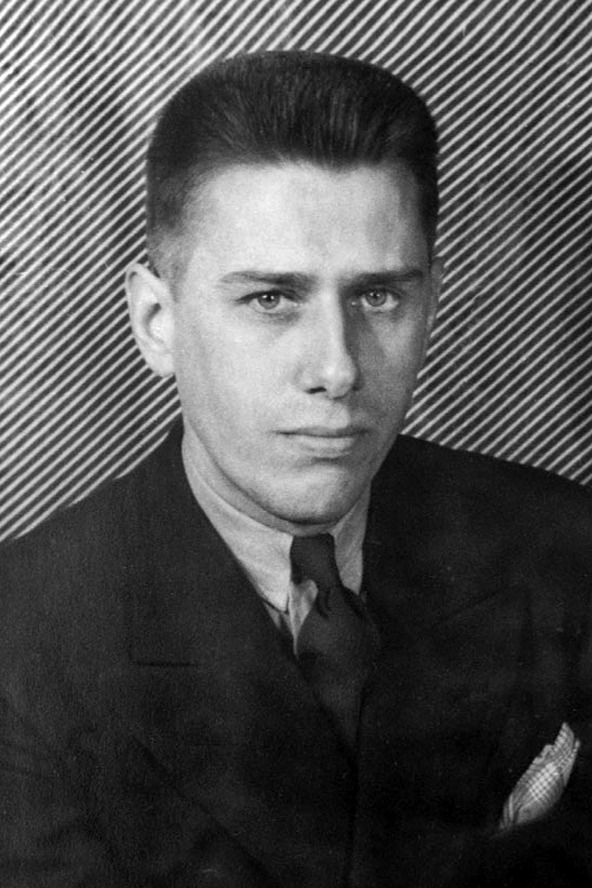
Personal info
Known for
Ultimate Talent
Gender
Male
Birthday
17 December
Location
New York, United States
Edit pagePaul Cadmus
Biography
Paul Cadmus was an American painter known for his technically precise style, satirical edge, and unflinching depictions of social life. Blending classical draftsmanship with modern subject matter, Cadmus produced works that challenged public sensibilities and exposed the tensions, hypocrisies, and desires underlying American society in the 20th century.
Early Life and Education
Paul Cadmus was born on December 17, 1904, in New York City, into an artistic family. His father was a commercial illustrator, and his mother was an amateur painter, which encouraged his early interest in art. Cadmus showed exceptional drawing ability from a young age and pursued formal training to refine his skills.
He studied at the National Academy of Design and later at the Art Students League of New York, where he trained under artists who emphasized rigorous draftsmanship and classical technique. He was also deeply influenced by Renaissance art, particularly Italian Mannerism, which shaped his approach to the human figure.
Career and Early Recognition
Cadmus began gaining attention in the 1930s during the Great Depression, a period when many American artists turned toward social realism. His breakthrough came in 1934 with the painting The Fleet’s In!, which depicted U.S. sailors engaging in drunken, sexually charged behavior with civilians. The work was considered scandalous and was removed from public exhibition, sparking widespread debate about censorship, morality, and artistic freedom.
The controversy brought Cadmus national recognition and established his reputation as a bold and uncompromising artist. Though his work was often labeled as social critique, Cadmus approached his subjects with a mix of satire, psychological insight, and moral ambiguity rather than political messaging.
Artistic Style and Themes
Paul Cadmus was known for his meticulous technique, smooth surfaces, and sharply defined figures. His paintings often resemble staged scenes, populated by exaggerated characters whose poses and expressions reveal underlying emotions and tensions. He frequently used distortion and caricature to heighten the psychological drama within his compositions.
Recurring themes in Cadmus’s work include sexuality, moral hypocrisy, power dynamics, and the contrast between public respectability and private behavior. Many of his paintings explore homoerotic themes, though these were often coded or masked due to social restrictions of the time.
Cadmus’s interest in the male nude and classical anatomy set him apart from many of his contemporaries and connected his work to older artistic traditions while addressing modern social realities.
Personal Life and Relationships
Cadmus was openly gay within his artistic circle, though he lived during a period when homosexuality was socially stigmatized. His personal experiences strongly informed his work, particularly his exploration of desire, identity, and social constraint.
He was part of a close-knit group of artists and creatives, including Jared French and George Tooker. Together, they formed a supportive artistic community that valued craftsmanship and figurative art during an era increasingly dominated by abstraction.
Later Career and Recognition
As Abstract Expressionism rose to prominence in the mid-20th century, Cadmus’s realist style fell out of favor. Despite this, he continued to work steadily, focusing increasingly on drawing, printmaking, and portraits.
Beginning in the 1980s, Cadmus experienced a significant revival in interest. Retrospectives and renewed scholarship highlighted the originality, technical mastery, and cultural importance of his work, particularly its contributions to queer art history.
Paul Cadmus died on December 12, 1999, in Weston, Connecticut, just days before his 95th birthday.