Personal info
Known for
Ultimate Talent
Gender
Male
Birthday
22 February
Location
New Mexico, United States
Edit pagePeter Hurd
Biography
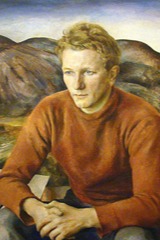
Peter Hurd (February 22, 1904 – July 9, 1984) was an American painter, muralist, illustrator, and printmaker best known for his realistic depictions of the landscapes, ranches, and people of the American Southwest. His highly detailed paintings captured the vast beauty of New Mexico and West Texas, establishing him as one of the leading Regionalist artists of the 20th century. Hurd was also recognized for his portraiture and major public murals, which reflected his deep appreciation for rural American life.
Early Life and Education
Peter Hurd was born on February 22, 1904, in Roswell, New Mexico Territory (now New Mexico), United States. He grew up on a ranch, where he developed a lifelong connection to the Southwestern landscape that would become the defining subject of his art.
After graduating from high school, Hurd attended the New Mexico Military Institute before enrolling at the United States Military Academy at West Point. Realizing that a military career was not his true calling, he left the academy and pursued art.
Hurd later studied at the Pennsylvania Academy of the Fine Arts in Philadelphia, where he trained under the renowned American illustrator N. C. Wyeth. During this period, he refined his technical skills and developed a realistic painting style. He also married Wyeth's eldest daughter, Henriette Wyeth, who became a distinguished painter in her own right.
Career
Hurd began his professional career as an illustrator before concentrating on fine art. During the 1930s and 1940s, he gained national recognition for his detailed landscapes and portraits that celebrated the people and scenery of the American Southwest.
His paintings often depicted ranchers, farmers, adobe buildings, open plains, and dramatic skies, capturing the region's unique atmosphere with precision and sensitivity. Hurd became closely associated with the American Regionalist movement, although his work retained a distinctive realism influenced by both traditional academic painting and the Wyeth family's artistic legacy.
In addition to easel paintings, Hurd completed several major mural commissions. One of his best-known works is the mural The Future Belongs to Those Who Prepare for It, created for the United States Department of the Interior in Washington, D.C. He also painted murals for post offices and other public buildings as part of federal art programs.
Hurd was an accomplished portrait painter whose subjects included military leaders, politicians, and notable public figures. In 1962, he painted the official White House portrait of President Lyndon B. Johnson, although the president reportedly disliked the finished work.
Throughout his career, Hurd exhibited extensively across the United States and remained an important advocate for representational painting.
Artistic Style
Peter Hurd's work is characterized by:
- Detailed realism.
- Expansive Southwestern landscapes.
- Careful attention to light and atmosphere.
- Precise rendering of architectural and natural forms.
- Portraits with psychological depth.
- Regionalist themes celebrating rural America.
His paintings often emphasize the quiet beauty and vast scale of the American Southwest.
Notable Works
Some of Peter Hurd's best-known works include:
- The Future Belongs to Those Who Prepare for It (mural)
- Official portrait of President Lyndon B. Johnson
- The Sentinel
- The White Fence
- Numerous landscapes of New Mexico and West Texas
- Public murals created during the New Deal era
His paintings remain admired for their technical excellence and faithful portrayal of the Southwestern landscape.
Awards and Recognition
Throughout his career, Hurd received numerous honors and exhibited his work in leading museums and galleries. His paintings are held in the collections of institutions such as the Smithsonian American Art Museum, the National Cowboy & Western Heritage Museum, the New Mexico Museum of Art, and other major public collections.
He is regarded as one of the foremost painters of the American Southwest.
Personal Life
Peter Hurd married artist Henriette Wyeth in 1929, and the couple settled at Sentinel Ranch near San Patricio, New Mexico. Their home became an important center for artists and visitors interested in Southwestern culture.
Hurd remained devoted to painting throughout his life, drawing continual inspiration from the landscapes and people of his native New Mexico.
Death
Peter Hurd died on July 9, 1984, in San Patricio, New Mexico, at the age of 80.