Personal info
Known for
Ultimate Talent
Gender
Male
Birthday
27 June
Location
Quebec, Canada
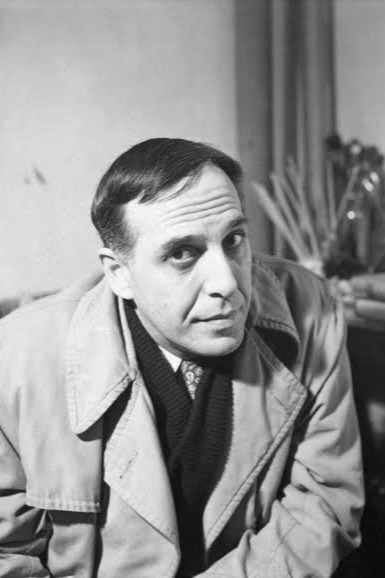
Edit pagePhilip Guston
Biography
Philip Guston (born Phillip Goldstein; June 27, 1913 – June 7, 1980) was a Canadian-born American painter, muralist, printmaker, and educator. He was one of the most influential artists of the 20th century, initially gaining recognition as a leading figure in Abstract Expressionism before dramatically shifting to a distinctive figurative style in the late 1960s. His later works, featuring cartoon-like imagery and deeply personal symbolism, challenged the conventions of modern art and cemented his reputation as a groundbreaking and innovative artist.
Early Life and Education
Philip Guston was born in Montreal, Quebec, Canada, to Jewish immigrants who had fled persecution in Eastern Europe. In 1919, his family moved to Los Angeles, California, where he spent most of his childhood.
Guston developed an early passion for drawing and painting. He briefly attended the Otis Art Institute in Los Angeles but left after only a few months, preferring to educate himself through independent study. He was strongly influenced by Renaissance masters, Mexican muralists, and modern European artists, particularly Giorgio de Chirico and Pablo Picasso.
Career
Guston began his career in the 1930s by creating murals and socially conscious paintings influenced by the Mexican mural movement. During the Great Depression, he worked for the Works Progress Administration (WPA), producing public murals and developing his skills as a large-scale painter.
In the 1940s and 1950s, Guston became one of the leading members of the Abstract Expressionist movement. His lyrical abstract paintings, characterized by soft brushwork and subtle color harmonies, earned widespread acclaim and were exhibited alongside works by artists such as Jackson Pollock, Willem de Kooning, and Mark Rothko.
In 1970, Guston shocked the art world by abandoning abstraction in favor of figurative painting. His new works featured simplified, cartoon-like forms depicting shoes, cigarettes, clocks, books, light bulbs, and hooded figures inspired by the Ku Klux Klan. These paintings explored themes of violence, racism, guilt, political corruption, and the human condition.
Initially criticized by many critics and fellow artists, Guston's later paintings were eventually recognized as some of the most important and influential works in postwar American art.
In addition to his artistic practice, Guston taught at several institutions, including the University of Iowa, Washington University in St. Louis, and Boston University, where he mentored many young artists.
Artistic Style
Philip Guston's work is characterized by:
- Early lyrical abstraction.
- Bold figurative imagery.
- Cartoon-inspired forms.
- Thick, expressive brushstrokes.
- Muted pinks, reds, grays, and earthy color palettes.
- Exploration of identity, morality, politics, and memory.
- Symbolic everyday objects and hooded figures.
His willingness to reinvent his artistic style made him one of the most original voices in modern painting.
Notable Works
Some of Philip Guston's most celebrated works include:
- The Studio (1969)
- City Limits (1969)
- The Line (1978)
- Painting, Smoking, Eating (1973)
- Bad Habits (1970)
- Edge of Town (1969)
These paintings are widely regarded as landmarks of contemporary art.
Awards and Recognition
Throughout his career, Guston received numerous honors and exhibited extensively in major museums across North America and Europe. His works are housed in prominent institutions, including the Museum of Modern Art (MoMA), the Metropolitan Museum of Art, the Tate, the National Gallery of Art, and the Art Institute of Chicago.
Although controversial during his lifetime for his stylistic transformation, Guston is now regarded as one of the most influential painters of the postwar era.
Personal Life
Philip Guston married artist and poet Musa McKim in 1937. The couple remained together for the rest of his life and had one daughter. Guston maintained close friendships with several leading artists, including Jackson Pollock and Willem de Kooning, while continuing to pursue his own independent artistic vision.
Death
Philip Guston died of a heart attack on June 7, 1980, in Woodstock, New York, at the age of 66.