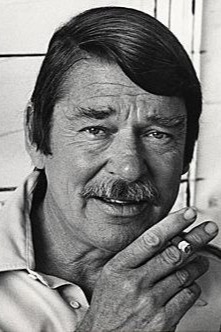
Personal info
Known for
Ultimate Talent
Gender
Male
Birthday
22 April
Location
Oregon, United States
Edit pageRichard Diebenkorn
Biography
Richard Diebenkorn was an influential American painter whose work bridged Abstract Expressionism and figurative art. Best known for his luminous Ocean Park series, he developed a distinctive visual language marked by spacious compositions, subtle color harmonies, and architectural structure. His career reflects a continuous exploration between abstraction and representation.
Early Life and Education
Richard Diebenkorn was born on April 22, 1922, in Portland, Oregon, and grew up in San Francisco, California. He attended Stanford University before serving in the U.S. Marine Corps during World War II. After the war, he pursued further studies at the California School of Fine Arts (now the San Francisco Art Institute).
During this period, he was exposed to the growing Abstract Expressionist movement, which heavily influenced his early work.
Abstract Expressionist Beginnings
In the late 1940s and early 1950s, Diebenkorn produced gestural, abstract paintings characterized by bold brushwork and dynamic compositions. His early canvases reflected the influence of artists like Clyfford Still and Willem de Kooning, yet he maintained a distinctive sense of spatial balance.
Unlike many New York–based Abstract Expressionists, Diebenkorn developed his style on the West Coast, contributing to what became known as the Bay Area Figurative Movement.
Return to Figuration
In the mid-1950s, Diebenkorn made a surprising shift back to figurative painting. He began creating interiors, landscapes, and seated figures, blending abstract structure with recognizable subjects. These works maintained the painterly energy of abstraction while reintroducing representation.
This transition played a major role in defining the Bay Area Figurative Movement, which combined modernist abstraction with traditional subject matter.
The Ocean Park Series
Diebenkorn’s most celebrated body of work is the Ocean Park series, begun in 1967 after he moved to Southern California. These large-scale abstract paintings are characterized by:
Geometric divisions of space
Translucent layers of color
Light-filled compositions
Subtle references to landscape and architecture
The Ocean Park works reflect the influence of California’s coastal light and open spaces. Their calm yet complex structures have made them iconic examples of late 20th-century American abstraction.
Teaching and Influence
Diebenkorn was also an influential teacher, holding positions at institutions including UCLA and other California art schools. His commitment to both abstraction and representation inspired generations of artists to move fluidly between styles.
He believed in the importance of revision and discovery in painting, often reworking surfaces extensively to achieve balance and depth.
Legacy
Richard Diebenkorn passed away on March 30, 1993. Today, he is regarded as one of the most important American painters of the postwar era. His works are held in major museums worldwide, and the Ocean Park series remains especially celebrated for its quiet complexity and luminous beauty.