Personal info
Known for
Ultimate Talent
Gender
Male
Birthday
14 May
Location
Illinois, United States
Edit pageRichard Estes
Biography
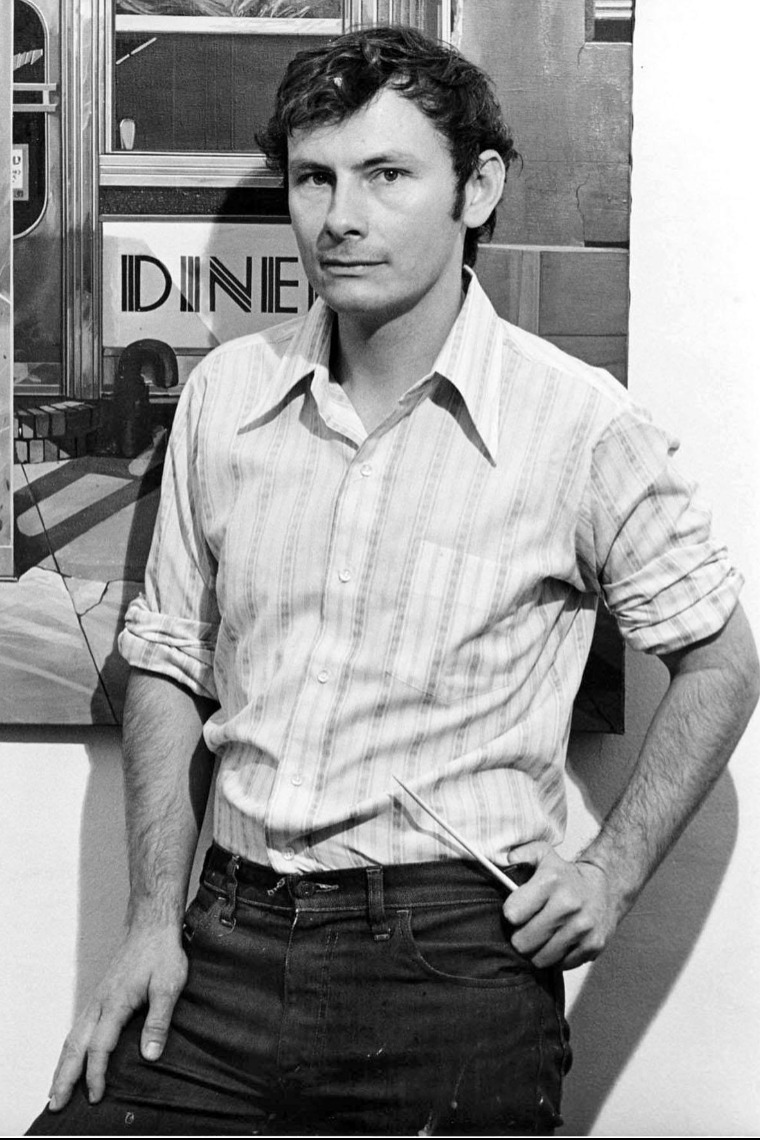
Richard Estes is an American painter best known as a leading figure in the Photorealism movement. Renowned for his highly detailed urban landscapes, reflective surfaces, and meticulous technique, Estes creates paintings that resemble high-resolution photographs while maintaining a carefully composed artistic structure.
Early Life and Education
Richard Estes was born on May 14, 1932, in Kewanee, Illinois, USA. He studied at the School of the Art Institute of Chicago, where he received traditional training in painting and drawing.
After completing his studies, Estes worked as a commercial illustrator in New York City during the 1950s and early 1960s. This experience sharpened his technical precision and attention to detail.
Emergence of Photorealism
In the late 1960s, Estes began developing the style that would define his career. Using photographs as references, he painted detailed scenes of city streets, storefronts, diners, and reflective glass windows.
Unlike spontaneous or expressive painters, Estes carefully composed his works by combining multiple photographic sources to create idealized urban scenes. His paintings often depict:
Reflections in glass and metal
Clean, sharply defined architectural lines
Empty or minimally populated streets
Bright, natural light
Though based on photography, his work is not a simple reproduction; he refines and edits reality to achieve clarity and balance.
Style and Technique
Richard Estes’ art is characterized by:
Crisp, precise brushwork
Complex reflections and layered imagery
Balanced, symmetrical compositions
Emphasis on urban modernity
He typically removes distracting elements and human clutter, creating a calm, almost timeless atmosphere within busy city environments.
Major Themes
New York City has been one of Estes’ primary subjects. His paintings capture the architecture and commercial facades of American cities, often highlighting reflective surfaces that merge multiple perspectives within a single frame.
By focusing on reflections and transparency, he challenges viewers to question what is real and what is mirrored.
Recognition and Legacy
Richard Estes became one of the most prominent artists associated with Photorealism in the 1970s, alongside artists such as Chuck Close and Audrey Flack. His work has been exhibited internationally and is held in major museum collections, including the Museum of Modern Art.
Estes’ paintings continue to influence contemporary artists interested in realism, urban imagery, and the relationship between photography and painting.