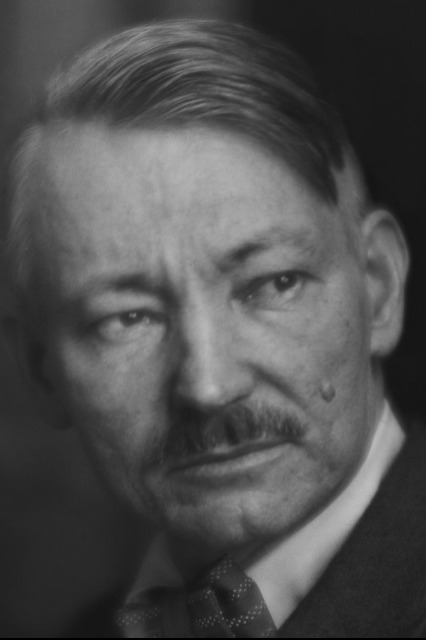
Personal info
Known for
Ultimate Talent
Gender
Male
Birthday
24 June
Location
Ohio, United States
Edit pageRobert Henri
Biography
Robert Henri (June 24, 1865 – July 12, 1929) was an American painter, teacher, and influential leader of the Ashcan School, a movement that transformed American art by depicting the realities of everyday urban life. Renowned for his expressive portraits and scenes of ordinary people, Henri encouraged artists to paint modern life with honesty and emotional depth. As both an artist and educator, he played a pivotal role in shaping early 20th-century American realism.
Early Life and Education
Robert Henri was born Robert Henry Cozad on June 24, 1865, in Cincinnati, Ohio, United States. Following a family tragedy in 1882, his family changed their surname to Henri and relocated, allowing him to begin a new chapter in his life.
Henri studied at the Pennsylvania Academy of the Fine Arts in Philadelphia under the renowned realist painter Thomas Anshutz. He later continued his studies in Paris at the Académie Julian and the École des Beaux-Arts, where he was exposed to both traditional academic methods and emerging modern artistic ideas.
Career
Henri began his professional career in Philadelphia before moving to New York City, where he became a central figure in the city's progressive art community. Rejecting idealized academic painting, he urged artists to portray contemporary life with authenticity and vigor.
He became the leader of the Ashcan School, a group of artists that included George Luks, John Sloan, Everett Shinn, William Glackens, and George Bellows. Their paintings focused on city streets, working-class neighborhoods, theaters, parks, and everyday life, offering a realistic view of urban America.
In 1908, Henri played a key role in organizing the landmark exhibition known as "The Eight," which challenged the conservative standards of the National Academy of Design and helped pave the way for modern American art.
Henri was also an influential teacher. He taught at the New York School of Art, where he mentored many important artists, including Edward Hopper, George Bellows, Rockwell Kent, and Stuart Davis. His teaching emphasized individuality, direct observation, and emotional sincerity rather than strict academic rules.
His book The Art Spirit, published after his death, remains one of the most respected works on artistic philosophy and education.
Artistic Style
Robert Henri's work is characterized by:
- Realistic portrayals of everyday people.
- Expressive and energetic brushwork.
- Rich, subdued color palettes.
- Psychological depth in portraiture.
- Urban scenes filled with vitality and movement.
- A focus on individuality and human character.
Henri believed that art should reflect life honestly and capture the spirit of the subject rather than merely reproduce appearances.
Notable Works
Some of Robert Henri's most celebrated paintings include:
- Snow in New York (1902)
- The Laughing Child (1907)
- Salome (1909)
- Gertrude Vanderbilt Whitney (1916)
- Irish Lad (1913)
- Mary Agnes, Irish Girl (1927)
His portraits and city scenes remain among the defining works of American Realism.
Awards and Recognition
During his lifetime, Henri received numerous honors and exhibited extensively in the United States and Europe. His paintings are held in major museum collections, including the Metropolitan Museum of Art, the Whitney Museum of American Art, the National Gallery of Art, the Smithsonian American Art Museum, and the Philadelphia Museum of Art.
Today, he is recognized as one of the most influential American artists and teachers of the early 20th century.
Personal Life
Henri married artist Linda Craige in 1905. Together, they traveled widely, visiting Europe, Ireland, Spain, and the American Southwest, where Henri found inspiration for many of his portraits and landscapes.
He remained committed to both painting and teaching throughout his career, inspiring generations of artists through his work and philosophy.
Death
Robert Henri died on July 12, 1929, in New York City, at the age of 64.