Personal info
Known for
Cinematographer
Gender
Male
Birthday
09 August
Location
Kentucky, United States
Edit pageRobert Surtees
Biography
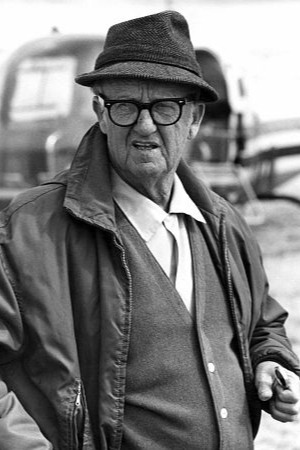
Robert Lee Surtees was an American cinematographer who became one of the most influential figures in the history of Hollywood cinematography. With a career spanning nearly five decades, he was admired for his technical innovation, elegant compositions, and ability to create stunning images in both black-and-white and color films.
Early Life
Robert Surtees was born on August 9, 1906, in Covington, Kentucky, United States. He developed an interest in photography during his youth and initially worked as a portrait photographer and retoucher.
He later moved into filmmaking, beginning his Hollywood career as a camera assistant at Universal Pictures in the late 1920s. During his early years, he learned from experienced cinematographers including Gregg Toland, Joseph Ruttenberg, and Hal Mohr, which helped shape his approach to visual storytelling.
Early Hollywood Career
Surtees gained experience working at several studios, including Universal, Warner Bros., and First National. In 1943, he joined Metro-Goldwyn-Mayer (MGM), where he became one of the studio's leading cinematographers.
At MGM, he developed a reputation for creating glamorous and visually rich images, especially in large-scale productions, musicals, and historical dramas.
Academy Award Success
Surtees received 16 Academy Award nominations for Best Cinematography and won the Oscar three times:
- ** King Solomon's Mines (1950)**
- ** The Bad and the Beautiful (1952)**
- ** Ben-Hur (1959)**
His work demonstrated exceptional skill in handling complex locations, large sets, and innovative filming techniques.
King Solomon's Mines
Surtees won his first Academy Award for ** King Solomon's Mines (1950)**.
The adventure film was filmed partly on location in Africa, where Surtees created breathtaking landscapes and dramatic action sequences. His ability to work with natural light and challenging environments made the film visually impressive.
The Bad and the Beautiful
For ** The Bad and the Beautiful (1952)**, Surtees created a stylish black-and-white visual design that matched the film's Hollywood story.
His photography helped capture the glamour, ambition, and emotional struggles of characters working in the film industry.
Ben-Hur
One of Surtees' greatest achievements was his cinematography for ** Ben-Hur (1959)**, directed by William Wyler.
The epic historical drama featured enormous sets, thousands of extras, and the famous chariot race sequence. Surtees' innovative camera work and use of widescreen photography helped make the film one of the most visually spectacular productions in cinema history.
The film won 11 Academy Awards, including Best Cinematography for Surtees.
Mutiny on the Bounty
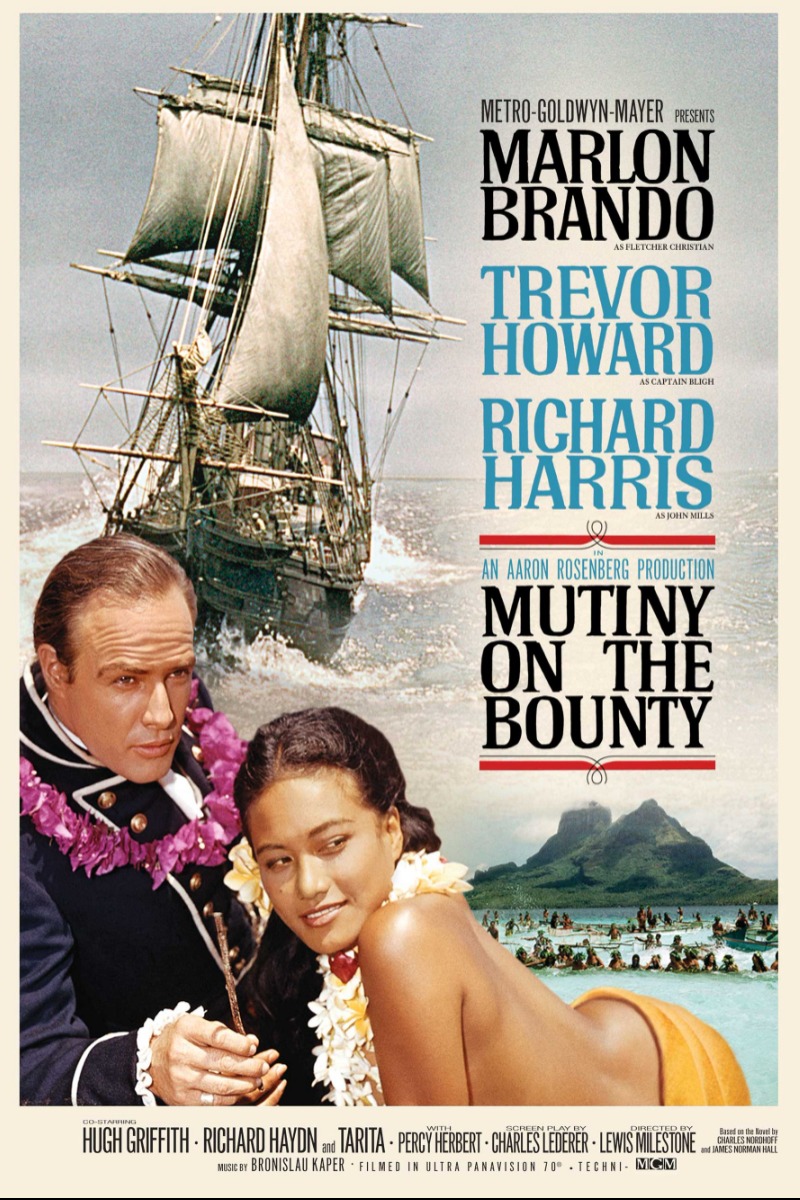
Surtees served as cinematographer on ** Mutiny on the Bounty (1962)**, starring Marlon Brando and Trevor Howard.
The historical epic follows an 18th-century British naval voyage to Tahiti and the conflict between Captain William Bligh and Fletcher Christian. Surtees' photography captured the beauty of the ocean locations and the dramatic atmosphere of the story.
The Graduate
Surtees photographed ** The Graduate (1967)**, directed by Mike Nichols and starring Dustin Hoffman and Anne Bancroft.
The film's modern visual style, creative camera angles, and innovative use of lenses helped define the look of late-1960s American cinema. Surtees' work earned another Academy Award nomination.
The Last Picture Show
In ** The Last Picture Show (1971)**, directed by Peter Bogdanovich, Surtees returned to black-and-white cinematography.
His photography captured the loneliness and fading atmosphere of a small Texas town, earning him another Academy Award nomination.
The Sting
Surtees' work on ** The Sting (1973)** became one of his most admired achievements.
The film used a warm, nostalgic visual style inspired by old photographs and helped create the atmosphere of 1930s America. The movie won seven Academy Awards, including Best Picture.
Other Notable Films
Robert Surtees' extensive filmography includes:
- Thirty Seconds Over Tokyo (1944)
- Quo Vadis (1951)
- Oklahoma! (1955)
- Raintree County (1957)
- The Graduate (1967)
- Summer of '42 (1971)
- The Cowboys (1972)
- The Sting (1973)
- The Hindenburg (1975)
- A Star Is Born (1976)
- Same Time, Next Year (1978)
Personal Life
Robert Surtees was married to Maydell Lois James, and they had four children. His son Bruce Surtees also became a successful cinematographer, known for films such as Dirty Harry and Beverly Hills Cop.
Death
Robert Surtees died on January 5, 1985, in Monterey, California, United States, at the age of 78.