Personal info
Known for
Ultimate Talent
Gender
Male
Birthday
28 August
Location
New York, United States
Edit pageRoger Tory Peterson
Biography
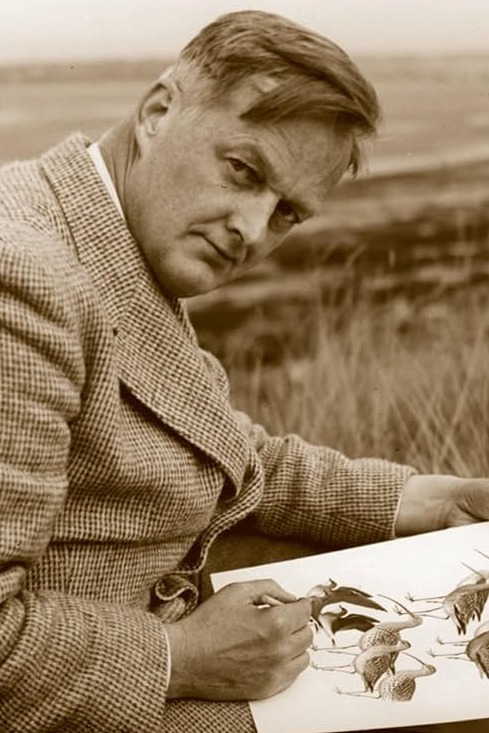
Roger Tory Peterson (August 28, 1908 – July 28, 1996) was an American naturalist, ornithologist, educator, photographer, and artist best known for creating the modern field guide and revolutionizing the way people study and identify birds. Through his books, illustrations, and conservation work, Peterson inspired millions of people to explore nature and became one of the most influential figures in 20th-century bird conservation.
Early Life and Education
Roger Tory Peterson was born on August 28, 1908, in Jamestown, New York, United States. His interest in nature began during childhood, when he spent time observing birds and wildlife.
He studied at the National Academy of Design in New York City and developed his skills in painting and illustration. While studying art, he became increasingly interested in natural history and scientific illustration.
Peterson combined his artistic ability with his passion for birds, creating a unique approach to wildlife observation.
Career
Peterson began his career as an art teacher and naturalist. In the 1930s, he created his groundbreaking book A Field Guide to the Birds (1934), which introduced a new method of bird identification using clear illustrations, descriptions, and visual markings known as “field marks.”
The guide became extremely popular and transformed birdwatching from a specialized hobby into a widespread activity. It was one of the first practical guides designed for ordinary people to identify birds in the field.
Throughout his career, Peterson wrote and illustrated numerous field guides covering birds, insects, mammals, and other aspects of the natural world. His books became essential resources for generations of scientists, students, and nature enthusiasts.
He also worked as a conservationist, supporting efforts to protect wildlife habitats and endangered species. His writings and lectures encouraged environmental awareness and appreciation of biodiversity.
Artistic Style
Roger Tory Peterson’s illustrations are characterized by:
- Scientific accuracy.
- Clear and educational presentation.
- Detailed observation of natural forms.
- Simple compositions for easy identification.
- Realistic depictions of birds and wildlife.
- Combination of art and scientific information.
His artwork balanced accuracy with accessibility, making complex natural observations understandable to the general public.
Notable Works
Some of Roger Tory Peterson’s most important works include:
- A Field Guide to the Birds (1934)
- A Field Guide to Western Birds
- A Field Guide to Eastern Birds
- Wild America (with James Fisher, 1955)
- Birds of America
- Numerous wildlife illustrations and educational publications
His field guides became models for many later nature identification books.
Awards and Recognition
Peterson received many honors for his contributions to science, education, and conservation. He was awarded the Presidential Medal of Freedom in 1980 and received recognition from organizations including the National Audubon Society and the American Ornithologists’ Union.
His name is associated with the Roger Tory Peterson Institute of Natural History in Jamestown, New York, which continues his mission of conservation and environmental education.
Personal Life
Roger Tory Peterson married Barbara Coulter in 1936, and later married Barbara Peterson. He spent much of his life traveling, observing wildlife, photographing nature, and creating educational materials.
He was known for his ability to communicate scientific knowledge in an engaging way and for encouraging people of all ages to connect with the natural world.
Death
Roger Tory Peterson died on July 28, 1996, in Old Lyme, Connecticut, at the age of 87.