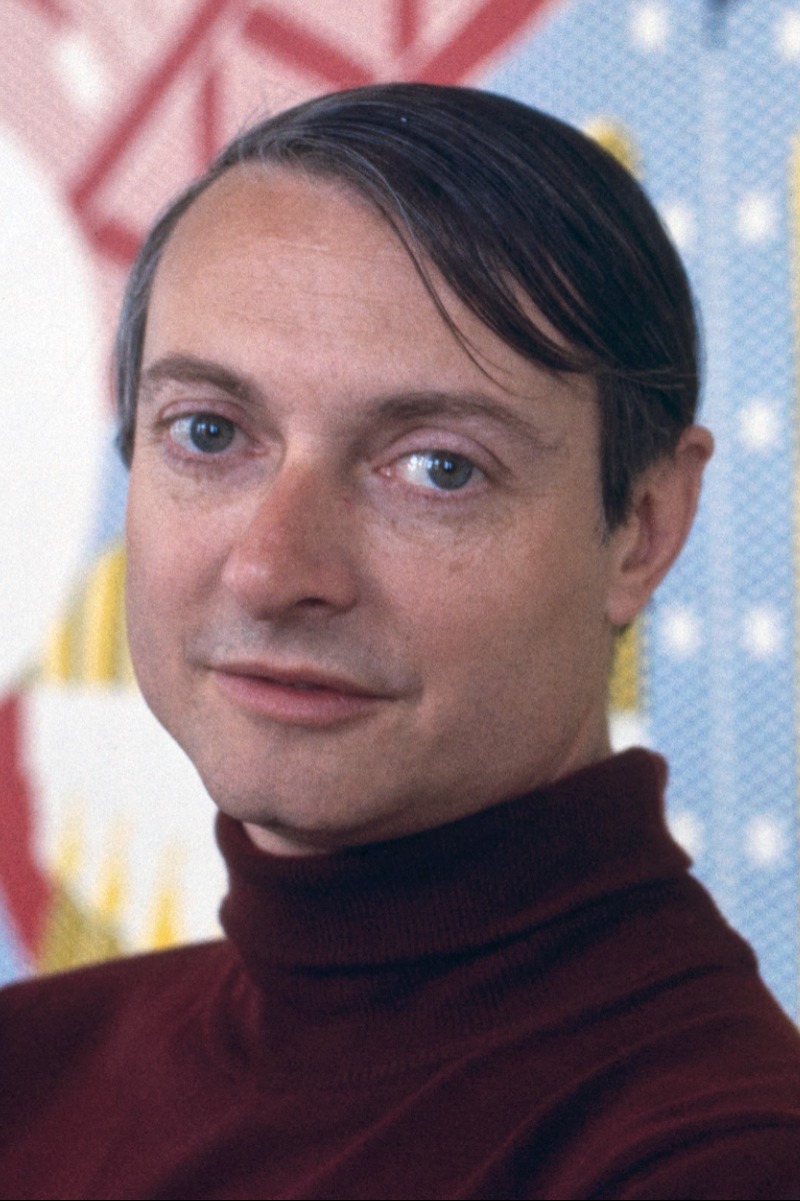
Personal info
Known for
Ultimate Talent
Gender
Male
Birthday
27 October
Location
New York, United States
Edit pageRoy Lichtenstein
Biography
Roy Lichtenstein (October 27, 1923 – September 29, 1997) was an American painter, sculptor, and printmaker who became one of the leading figures of the Pop Art movement. Famous for transforming comic book imagery and commercial advertising into large-scale works of fine art, Lichtenstein developed a distinctive style featuring bold outlines, vibrant primary colors, and Ben-Day dots. His innovative approach challenged traditional ideas about art, popular culture, and mass media, making him one of the most influential artists of the 20th century.
Early Life and Education
Roy Lichtenstein was born on October 27, 1923, in New York City, United States, to a middle-class family. From an early age, he showed an interest in drawing, jazz music, and modern art.
He studied at the Art Students League of New York, where he received instruction from painter Reginald Marsh. In 1940, he enrolled at Ohio State University, where he studied fine arts. His education was interrupted by World War II, during which he served in the United States Army from 1943 to 1946. After the war, he returned to Ohio State University, earning both bachelor's and master's degrees in fine arts.
Career
Lichtenstein began his professional career in the late 1940s, experimenting with various styles, including Cubism and Abstract Expressionism. During the 1950s, he taught art while continuing to develop his own artistic voice.
His breakthrough came in 1961 with the painting Look Mickey, which introduced his signature comic-book style. Inspired by newspaper comics, advertisements, and popular culture, Lichtenstein enlarged everyday printed images onto monumental canvases, meticulously recreating the mechanical appearance of commercial printing through hand-painted Ben-Day dots.
Throughout the 1960s, he produced many of his best-known works, including dramatic comic-book scenes, romance stories, and depictions of everyday consumer products. His paintings explored themes of love, war, heroism, and mass communication while questioning the distinction between high art and popular culture.
In later decades, Lichtenstein expanded his work to include sculpture, murals, ceramics, prints, and reinterpretations of masterpieces by artists such as Pablo Picasso, Claude Monet, Henri Matisse, and Piet Mondrian.
Artistic Style
Roy Lichtenstein's work is characterized by:
- Comic book-inspired imagery.
- Ben-Day dots.
- Bold black outlines.
- Flat, vibrant primary colors.
- Influences from advertising and commercial printing.
- Pop Art aesthetics.
- Humor and visual irony.
His paintings transformed familiar mass-media images into sophisticated works of contemporary art.
Notable Works
Some of Roy Lichtenstein's most celebrated works include:
- Look Mickey (1961)
- Whaam! (1963)
- Drowning Girl (1963)
- Hopeless (1963)
- Brushstroke series
- Mirror series
These works are among the most iconic examples of Pop Art.
Awards and Recognition
Lichtenstein achieved international acclaim throughout his career. His works have been exhibited in leading museums around the world and are included in the collections of the Museum of Modern Art (MoMA), the Whitney Museum of American Art, the Metropolitan Museum of Art, the Solomon R. Guggenheim Museum, the Tate Modern, the National Gallery of Art, and many other institutions.
He is widely regarded as one of the defining artists of the Pop Art movement alongside Andy Warhol, Claes Oldenburg, and James Rosenquist.
Personal Life
Roy Lichtenstein married Isabel Wilson in 1949, and after their divorce, he married Dorothy Herzka in 1968. He spent much of his career living and working in New York City, where he maintained an active studio practice.
Despite his international fame, Lichtenstein was known for his thoughtful and disciplined approach to art, carefully planning each composition to achieve its distinctive visual impact.
Death
Roy Lichtenstein died on September 29, 1997, in New York City at the age of 73 after complications from pneumonia.