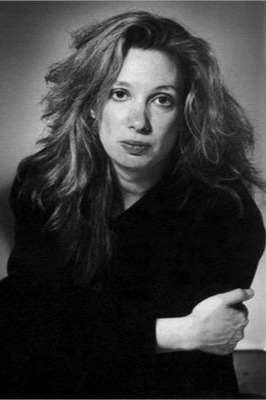
Personal info
Known for
Ultimate Talent
Gender
Female
Birthday
17 April
Location
Pennsylvania, United States
Edit pageSherrie Levine
Biography
Sherrie Levine (born April 17, 1947) is an American conceptual artist, photographer, painter, and sculptor best known for her groundbreaking work in appropriation art. By re-photographing, reproducing, and reinterpreting famous works of art, Levine challenges traditional ideas of originality, authorship, authenticity, and artistic ownership. As one of the leading figures of the Pictures Generation, she has had a profound influence on contemporary art and critical theory.
Early Life and Education
Sherrie Levine was born on April 17, 1947, in Hazleton, Pennsylvania, United States. She spent much of her childhood in St. Louis, Missouri, where she developed an early interest in art and literature.
Levine studied at the University of Wisconsin–Madison, earning a Bachelor of Fine Arts (BFA) in 1969 and a Master of Fine Arts (MFA) in 1973. During her studies, she became interested in Conceptual Art, Minimalism, photography, and feminist theory, all of which would shape her artistic career.
Career
Levine began exhibiting her work in the 1970s and gained widespread recognition in the early 1980s as a member of the Pictures Generation, a group of artists who examined the role of mass media, photography, and cultural reproduction in contemporary society.
Her breakthrough came with the After Walker Evans series (1981), in which she re-photographed images originally taken by renowned photographer Walker Evans. Rather than presenting these works as copies, Levine used them to question ideas about originality, artistic authorship, copyright, and the cultural authority of museums and artists.
Throughout the 1980s and 1990s, Levine expanded her practice to include paintings, sculptures, watercolors, and cast bronze works inspired by artists such as Marcel Duchamp, Constantin Brâncuși, Claude Monet, Kazimir Malevich, and Edgar Degas. By recreating and recontextualizing iconic artworks, she encouraged viewers to reconsider how meaning changes through repetition and reinterpretation.
Levine's work has been exhibited extensively in museums and galleries throughout North America, Europe, and Asia, making her one of the most influential conceptual artists of her generation.
Artistic Style
Sherrie Levine's work is characterized by:
- Appropriation and reinterpretation of existing artworks.
- Conceptual art practices.
- Photography, sculpture, painting, and installation.
- Exploration of originality and authorship.
- Feminist critiques of art history.
- Minimalist presentation.
- Engagement with postmodern theory.
Her art often invites viewers to question the nature of creativity, ownership, and the role of images in contemporary culture.
Notable Works
Some of Sherrie Levine's most significant works include:
- After Walker Evans (1981)
- After Edward Weston (1981)
- Fountain (After Marcel Duchamp) (1991)
- After Joan Miró
- President Collage series
- Meltdown series
These works have become central examples of postmodern and appropriation art.
Awards and Recognition
Levine has received widespread international recognition for her contributions to contemporary art. Her works are included in the collections of major museums, including the Museum of Modern Art (MoMA), the Whitney Museum of American Art, the Metropolitan Museum of Art, the Solomon R. Guggenheim Museum, the Tate Modern, the Centre Pompidou, and many other leading institutions.
She is regarded as one of the most influential conceptual artists of the late 20th and early 21st centuries.
Personal Life
Sherrie Levine has maintained a relatively private personal life, preferring to let her work and ideas remain the focus of public attention. Throughout her career, she has been closely associated with discussions of feminism, postmodernism, and critical theory, contributing significantly to debates about artistic practice and cultural representation.