Personal info
Known for
Ultimate Talent
Gender
Male
Birthday
08 July
Location
Virginia, United States
Edit pageStanton Macdonald-Wright
Biography
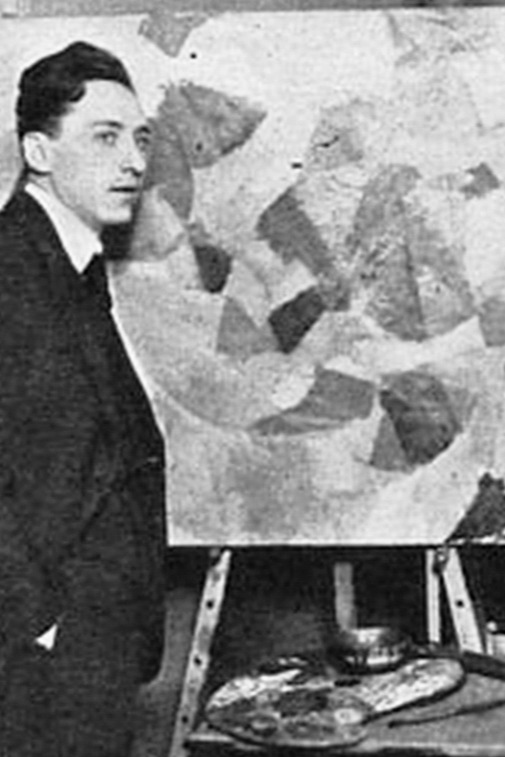
Stanton Macdonald-Wright (July 8, 1890 – August 22, 1973) was an American painter, printmaker, and educator best known as a pioneer of Synchromism, one of the earliest abstract art movements in the United States. Along with artist Morgan Russell, he developed Synchromism, which explored the emotional and expressive power of color. Macdonald-Wright played a significant role in introducing European modernist ideas to American art and became one of the important figures in the development of American abstraction.
Early Life and Education
Stanton Macdonald-Wright was born on July 8, 1890, in Charlottesville, Virginia, United States. He grew up in California, where he developed an early interest in art and creativity.
As a teenager, Macdonald-Wright studied painting and drawing, later moving to Paris in 1909 to continue his artistic education. There, he attended the Académie Julian and became familiar with the groundbreaking developments of European modernism, including the works of Paul Cézanne, Henri Matisse, and the Cubists.
His experiences in Paris exposed him to new ideas about abstraction, color theory, and the relationship between music and visual art.
Career
While living in Paris, Macdonald-Wright met American artist Morgan Russell, and together they developed Synchromism around 1912. The movement was based on the idea that colors could be arranged like musical notes to create emotional and visual harmony. The artists believed that color itself could become the primary subject of painting.
The first Synchromist exhibitions were held in Paris in 1913 and later introduced to American audiences in New York. Although the movement was short-lived, it represented one of the earliest American contributions to abstract art.
After returning to the United States, Macdonald-Wright became an influential advocate for modern art. He taught, wrote about art, and organized exhibitions to promote new artistic ideas.
During the 1920s, he moved to Los Angeles, where he became an important figure in the Southern California art scene. He taught at the University of California, Los Angeles (UCLA) and helped establish modern art education in the region.
In the 1930s, Macdonald-Wright worked on public art projects through the Works Progress Administration (WPA) and created murals that reflected his interest in mythology, spirituality, and symbolism.
Throughout his later career, he continued exploring abstraction, Asian art influences, and color relationships, producing paintings that combined modernist ideas with personal philosophy.
Artistic Style
Stanton Macdonald-Wright's work is characterized by:
- Abstract compositions.
- Vibrant and expressive use of color.
- Synchromist color theory.
- Influences from Cubism and modern European art.
- Geometric and rhythmic forms.
- Exploration of visual equivalents of music.
His paintings sought to create emotional experiences through color rather than through recognizable subjects.
Notable Works
Some of Stanton Macdonald-Wright's significant works include:
- Synchromy in Green (1913)
- Oriental (1920s)
- Airplane Synchromy series
- Color Compositions
- Various WPA murals and abstract paintings
These works demonstrate his innovative approach to color and abstraction.
Awards and Recognition
Macdonald-Wright received recognition for his contributions to modern American art and was honored through exhibitions at major museums and galleries. His works are included in collections such as the Museum of Modern Art (MoMA), the Whitney Museum of American Art, the Los Angeles County Museum of Art, and other leading institutions.
He is remembered as one of the pioneers who helped introduce abstract painting to the United States.
Personal Life
Macdonald-Wright was married to painter Helene O'Brien, and throughout his life he maintained a deep interest in philosophy, spirituality, and Eastern art traditions.
In his later years, he continued painting, teaching, and writing, remaining an influential voice in American modernism.
Death
Stanton Macdonald-Wright died on August 22, 1973, in Pacific Palisades, California, at the age of 83.